
UN Declares Sudan a Neglected Crisis as Civil War Approaches Third Anniversary
Here's what it means for you.
The escalating humanitarian crisis in Sudan could impact global markets and increase refugee flows, affecting international stability.
Why it matters
The ongoing violence and displacement in Sudan represent a significant humanitarian challenge, with potential ripple effects on global food and fuel prices.
What happened (in 30 seconds)
- UN Humanitarian Coordinator Denise Brown declared Sudan a 'neglected crisis' as the civil war nears its third anniversary.
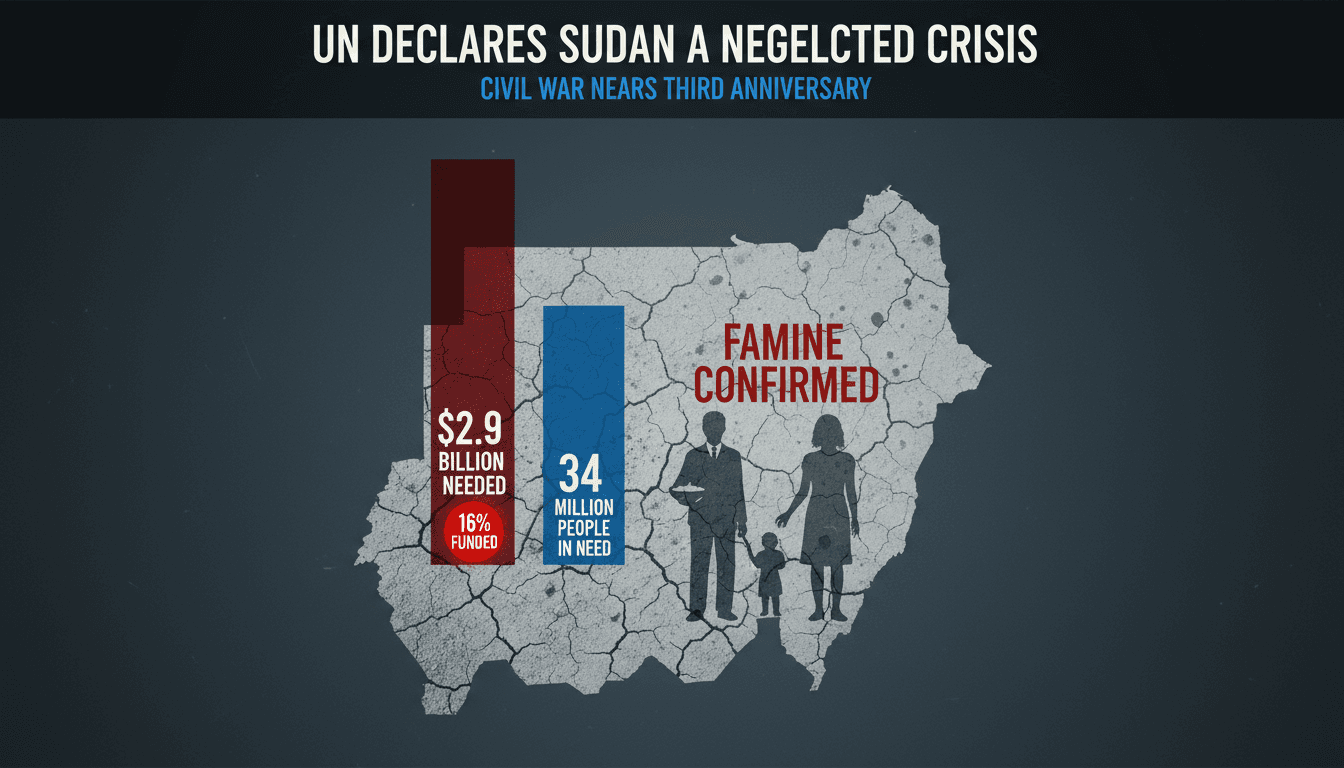
- Funding for humanitarian aid is critically low, with only 16% of the $2.9 billion appeal met, exacerbating the crisis.
- Over 34 million people are in need of assistance, with confirmed famine in parts of Darfur and Kordofan.
The context you actually need
- The civil war began on April 15, 2023, following a power struggle between the Sudanese Armed Forces (SAF) and the Rapid Support Forces (RSF).
- Ethnic tensions and historical grievances, particularly in Darfur, have fueled violence, leading to mass displacement and humanitarian needs.
- International response has been inadequate, with significant funding shortfalls and limited access for humanitarian aid workers.
What's really happening
The conflict in Sudan, ignited by a power struggle between the SAF and RSF, has spiraled into a humanitarian catastrophe characterized by widespread violence, sexual assaults, and mass displacement. As of April 2026, the UN reports that 33.7 million people require humanitarian assistance, the highest globally, reflecting a 3.3 million increase from the previous year. This crisis is compounded by the ongoing civil war, which has seen the RSF capture key territories like El Fasher, resulting in thousands of civilian deaths and further entrenching the cycle of violence.
The UN's appeal for $2.9 billion in humanitarian aid remains critically underfunded, with only 16% of the necessary funds secured. This funding shortfall has dire implications for the millions in need, as it limits the ability of humanitarian organizations to provide essential services, including food, medical care, and shelter. The situation is exacerbated by ongoing drone strikes and infrastructure destruction, which hinder access to affected areas and complicate relief efforts.
The international community's response has been tepid, with calls for a ceasefire and increased funding largely unheeded. The Berlin conference on April 15, 2026, highlighted the urgent need for unrestricted aid access and full funding, yet the conflict continues unabated. The UAE's recent gold embargo on Sudan further complicates the situation, collapsing official exports and pushing the country towards increased smuggling activities.
As the crisis unfolds, the implications extend beyond Sudan's borders. The humanitarian disaster is likely to affect global markets, particularly in food and fuel, as disrupted supply chains and increased demand for aid create volatility. Additionally, the emotional toll on the Sudanese diaspora, particularly in places like Dubai, where remittances play a crucial role in supporting families back home, adds another layer of complexity to the crisis.
Who feels it first (and how)
- Humanitarian organizations: Struggling to secure funding and access to affected areas.
- Sudanese diaspora: Facing emotional strain and increased remittance demands as family members suffer.
- Global markets: Experiencing potential volatility in food and fuel prices due to disrupted supply chains.
- Local populations: Enduring famine, violence, and displacement, with millions in urgent need of assistance.
What to watch next
- Funding levels for humanitarian aid: Monitoring whether the UN appeal receives increased support will indicate the international community's commitment to addressing the crisis.
- Ceasefire negotiations: Any developments in peace talks between the SAF and RSF could signal a shift in the conflict dynamics and humanitarian access.
- Regional stability: Observing how the crisis affects neighboring countries and international relations will provide insight into broader geopolitical implications.
The humanitarian crisis in Sudan is severe, with millions in need of assistance.
Continued violence and displacement will exacerbate the humanitarian situation and impact global markets.
The effectiveness of international diplomatic efforts to secure a ceasefire and increase funding remains uncertain.
Frequently Asked Questions
- Why it matters?
- The ongoing violence and displacement in Sudan represent a significant humanitarian challenge, with potential ripple effects on global food and fuel prices.
- What happened (in 30 seconds)?
- UN Humanitarian Coordinator Denise Brown declared Sudan a 'neglected crisis' as the civil war nears its third anniversary. Funding for humanitarian aid is critically low, with only 16% of the $2.9 billion appeal met, exacerbating the crisis. Over 34 million people are in need of assistance, with confirmed famine in parts of Darfur and Kordofan.
- What's really happening?
- The conflict in Sudan, ignited by a power struggle between the SAF and RSF, has spiraled into a humanitarian catastrophe characterized by widespread violence, sexual assaults, and mass displacement. As of April 2026, the UN reports that 33.7 million people require humanitarian assistance, the highest globally, reflecting a 3.3 million increase from the previous year. This crisis is compounded by the ongoing civil war, which has seen the RSF capture key territories like El Fasher, resulting in th
- Who feels it first (and how)?
- Humanitarian organizations: Struggling to secure funding and access to affected areas. Sudanese diaspora: Facing emotional strain and increased remittance demands as family members suffer. Global markets: Experiencing potential volatility in food and fuel prices due to disrupted supply chains. Local populations: Enduring famine, violence, and displacement, with millions in urgent need of assistance.
- What to watch next?
- Funding levels for humanitarian aid: Monitoring whether the UN appeal receives increased support will indicate the international community's commitment to addressing the crisis. Ceasefire negotiations: Any developments in peace talks between the SAF and RSF could signal a shift in the conflict dynamics and humanitarian access. Regional stability: Observing how the crisis affects neighboring countries and international relations will provide insight into broader geopolitical implications.
Arabic-language coverage of Saudi, regional, and international affairs.
"Al Bilad offers mainstream Saudi newspaper coverage across domestic and broader Arab topics."
— A47 Editor
وسط تصاعد العنف والنزوح.. الأمم المتحدة: السودان يواجه «أزمة مهملة»
The United Nations Coordinator in Sudan, Denise Brown, condemned what she termed a 'neglected crisis' as the country approaches the third anniversary of the outbreak of war. In a video briefing, she warned of the ongoing cycle of violence, displaceme...
International coverage from The Guardian's global desks.
"The Guardian is known for its progressive editorial stance and in-depth analysis."
— A47 Editor
Anger at ‘bloody unacceptable’ efforts to end Sudan’s war as conflict enters fourth year
As Sudan's war enters its fourth year, top UN official Denise Brown has condemned the lack of global urgency to address the escalating humanitarian crisis, which has displaced 14 million people and left tens of thousands missing.
Arabic-language coverage of political affairs and current events.
"Okaz political coverage typically follows mainstream Saudi framing on national and regional affairs."
— A47 Editor
تحول إلى «أزمة مهمَلة».. الأمم المتحدة: السودان عالق في دوامة فظاعات
The United Nations expressed its discontent over the situation in Sudan, describing it as a 'neglected crisis' as the country approaches the third anniversary of the ongoing war. UN humanitarian coordinator for Sudan, Denise Brown, warned of escalati...