
UN Investigation Links Deaths of Indonesian Peacekeepers to Israeli and Hezbollah Actions in Lebanon
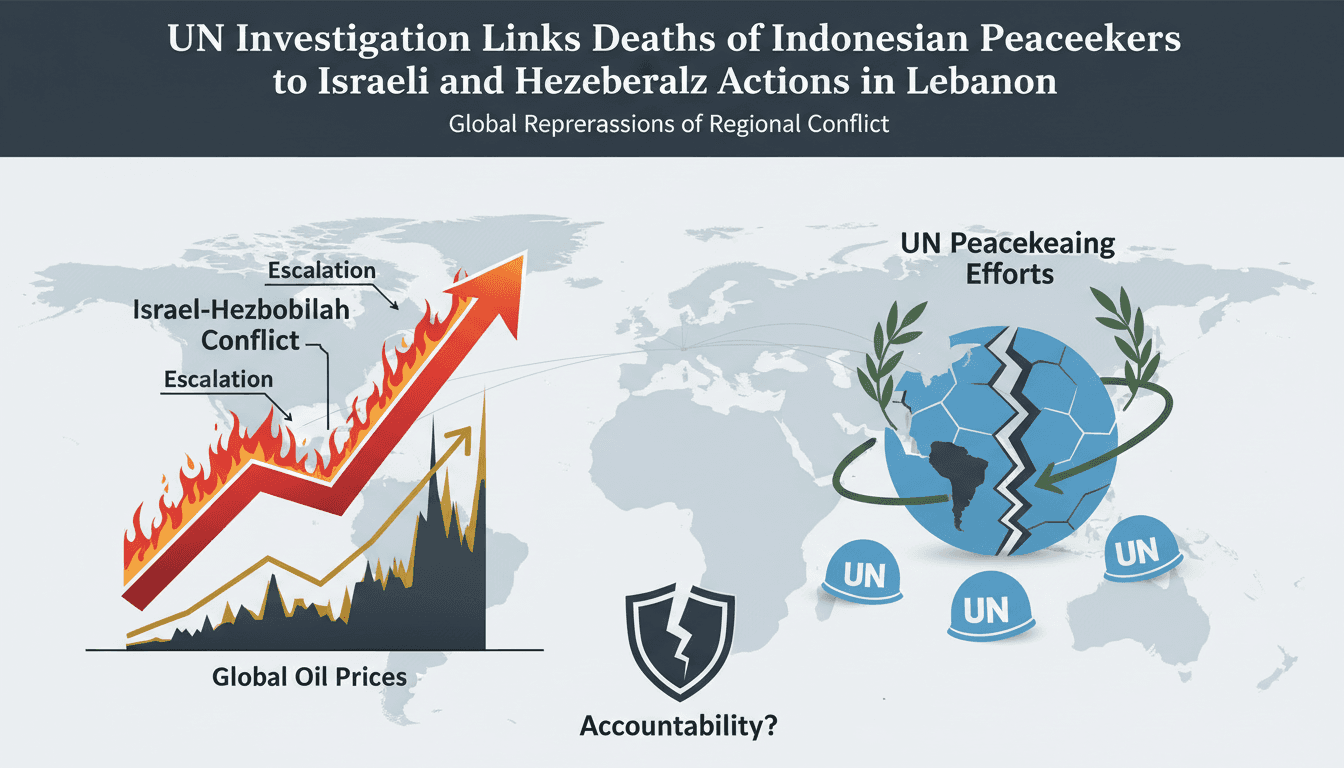
Here's what it means for you.
Rising geopolitical tensions in the Middle East could lead to increased costs and instability in global markets, affecting your travel and energy expenses.
Why it matters
The deaths of UN peacekeepers in Lebanon highlight the fragility of international peacekeeping efforts, which can have direct repercussions on global energy prices and regional stability.
What happened (in 30 seconds)
- Three Indonesian UNIFIL peacekeepers were killed during the ongoing Israel-Hezbollah conflict in southern Lebanon on March 29-30, 2026.
- Preliminary UN investigations attribute the deaths to an Israeli tank shell and a Hezbollah roadside IED, raising concerns of potential war crimes.
- UN Secretary-General António Guterres condemned the incidents and called for accountability, while Israel and Indonesia initiated their own investigations.
The context you actually need
- UNIFIL has been deployed since 1978 to monitor the Israel-Lebanon border, yet it faces increasing threats from ongoing hostilities.
- The Israel-Hezbollah conflict escalated significantly on March 2, 2026, following U.S.-Israeli strikes on Iran, intensifying regional instability.
- Hezbollah has launched 165 rockets into areas near UNIFIL positions since the conflict began, indicating a dangerous escalation in hostilities.
What's really happening
The recent deaths of three Indonesian peacekeepers in southern Lebanon during the Israel-Hezbollah conflict underscore a troubling escalation in regional violence and the challenges faced by international peacekeeping forces. The UN Interim Force in Lebanon (UNIFIL) was initially established to maintain peace along the Israel-Lebanon border, but its mission has become increasingly perilous amid rising tensions. The conflict reignited on March 2, 2026, following U.S.-Israeli military actions against Iran, which have had a cascading effect on the already volatile situation in Lebanon.
The preliminary findings of the UN investigation indicate that one peacekeeper was killed by an Israeli tank shell, while two others died from a roadside improvised explosive device (IED) attributed to Hezbollah. This attribution raises significant concerns about the conduct of both parties involved in the conflict. The UN's description of these incidents as potential war crimes reflects a serious breach of international law, which could lead to further diplomatic repercussions and calls for accountability.
The ongoing conflict has not only resulted in tragic loss of life but has also intensified scrutiny on the effectiveness of UN peacekeeping missions. With over 7,500 troops from 47 nations, UNIFIL's mandate is to monitor the Blue Line and enforce UN Security Council Resolution 1701. However, the increasing frequency of crossfire incidents and Hezbollah's positioning near UNIFIL sites have put peacekeepers at risk, prompting calls from various nations for enhanced protection measures.
The broader implications of these events extend beyond the immediate region. The escalation of hostilities has already impacted global oil markets, with Brent crude prices spiking and driving jet fuel costs to $150-200 per barrel. This surge in energy prices can lead to increased travel costs for consumers, particularly in regions like Dubai, where aviation and trade are critical to the economy. The UAE markets have already seen a significant decline, erasing $120 billion in value amid the conflict, which could further strain economic conditions.
As investigations continue, the international community will closely monitor the situation, assessing the potential for further escalations and their impact on global stability. The deaths of the peacekeepers serve as a stark reminder of the fragility of peace in conflict zones and the far-reaching consequences of military actions on civilian and international efforts.
Who feels it first (and how)
- Travelers: Increased airfares and travel costs due to rising fuel prices.
- Investors: Volatility in energy markets may affect stock valuations and investment strategies.
- Local businesses in Dubai: Economic downturns from regional instability could reduce consumer spending and tourism.
What to watch next
- Investigative outcomes: The results of the UN and national investigations into the deaths could influence international relations and peacekeeping policies.
- Energy price fluctuations: Monitor Brent crude prices as ongoing conflicts may lead to further spikes, impacting global markets.
- Diplomatic responses: Watch for statements from the UN and involved nations regarding accountability and potential sanctions.
The deaths of the peacekeepers were caused by actions attributed to Israeli and Hezbollah forces.
Continued scrutiny and diplomatic pressure on Israel and Hezbollah regarding their conduct in the conflict.
The long-term implications for UNIFIL's operational effectiveness and the potential for increased violence in the region.
Frequently Asked Questions
- Why it matters?
- The deaths of UN peacekeepers in Lebanon highlight the fragility of international peacekeeping efforts, which can have direct repercussions on global energy prices and regional stability.
- What happened (in 30 seconds)?
- Three Indonesian UNIFIL peacekeepers were killed during the ongoing Israel-Hezbollah conflict in southern Lebanon on March 29-30, 2026. Preliminary UN investigations attribute the deaths to an Israeli tank shell and a Hezbollah roadside IED, raising concerns of potential war crimes. UN Secretary-General António Guterres condemned the incidents and called for accountability, while Israel and Indonesia initiated their own investigations.
- What's really happening?
- The recent deaths of three Indonesian peacekeepers in southern Lebanon during the Israel-Hezbollah conflict underscore a troubling escalation in regional violence and the challenges faced by international peacekeeping forces. The UN Interim Force in Lebanon (UNIFIL) was initially established to maintain peace along the Israel-Lebanon border, but its mission has become increasingly perilous amid rising tensions. The conflict reignited on March 2, 2026, following U.S.-Israeli military actions agai
- Who feels it first (and how)?
- Travelers: Increased airfares and travel costs due to rising fuel prices. Investors: Volatility in energy markets may affect stock valuations and investment strategies. Local businesses in Dubai: Economic downturns from regional instability could reduce consumer spending and tourism.
- What to watch next?
- Investigative outcomes: The results of the UN and national investigations into the deaths could influence international relations and peacekeeping policies. Energy price fluctuations: Monitor Brent crude prices as ongoing conflicts may lead to further spikes, impacting global markets. Diplomatic responses: Watch for statements from the UN and involved nations regarding accountability and potential sanctions.
Regional coverage and analysis focused on politics, diplomacy, and business across the Middle East.
"Al-Monitor is known for analytical reporting on Middle East politics and policy developments."
— A47 Editor
Preliminary UN probe blames Israel and likely Hezbollah for peacekeeper deaths
A preliminary U.N. investigation into the deaths of three Indonesian peacekeepers in Lebanon has determined that one was killed by an Israeli tank shell, while two others likely died from an improvised explosive device attributed to Hezbollah. This f...
Pan-Arab news coverage spanning politics, business, sports, and regional affairs.
"Asharq Al-Awsat reflects a broad Arab editorial perspective with strong attention to regional geopolitics."
— A47 Editor
الأمم المتحدة: جنود اليونيفيل في جنوب لبنان قُتلوا بنيران إسرائيلية وعبوة لـ«حزب الله»
Initial findings from a United Nations investigation indicate that three Indonesian peacekeepers from the UN Interim Force in Lebanon (UNIFIL) were killed by Israeli gunfire and an explosive device linked to Hezbollah. This incident highlights the on...
Arabic-language UAE newspaper coverage focused on domestic affairs, public institutions, business, society, and regional developments.
"Al Khaleej coverage generally reflects a mainstream UAE editorial lens with strong attention to public affairs, institutions, and regional developments."
— A47 Editor
تحقيق أممي: جنود «اليونيفيل» قُتلوا بنيران إسرائيلية وعبوة لـ «حزب الله»
An initial United Nations investigation has revealed that three Indonesian members of the United Nations Interim Force in Lebanon (UNIFIL) were killed by Israeli fire and an explosive device attributed to Hezbollah. This incident raises serious conce...