
Funeral for Lebanese Forces Official Killed in Israeli Airstrike Sparks Sectarian Tensions
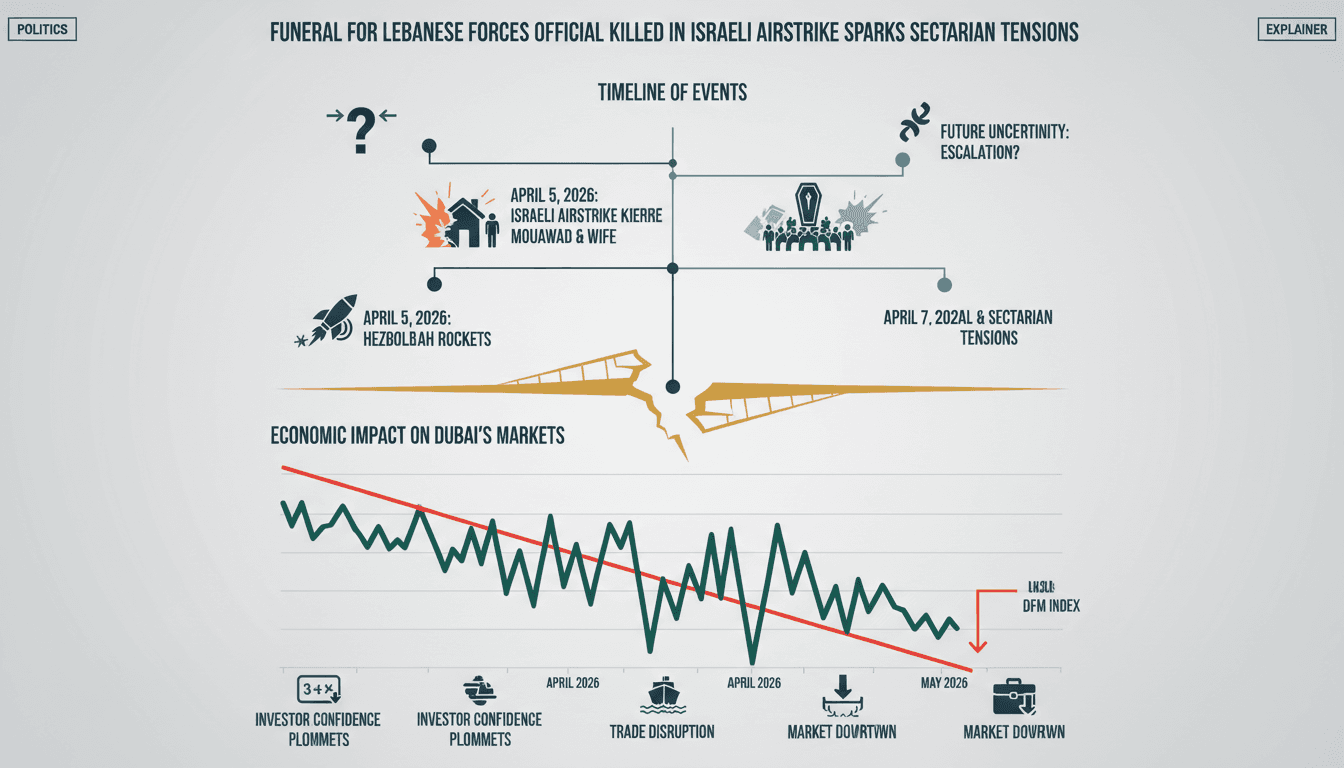
Here's what it means for you.
The ongoing conflict in Lebanon has direct implications for expatriates and investors in the UAE, impacting economic stability and market performance.
Why it matters
The escalation of violence in Lebanon exacerbates regional tensions, affecting global markets and international relations.
What happened (in 30 seconds)
- On April 5, 2026, an Israeli airstrike targeted a residential building in Ain Saadeh, killing Pierre Mouawad, a Lebanese Forces official, his wife Flavia, and another woman.
- On April 7, 2026, hundreds attended their funeral in Yahshoush, expressing anger towards both Israel and Hezbollah amid rising sectarian tensions.
- The incident is part of a broader escalation in hostilities, with over 1,500 fatalities reported in Lebanon since March 2, 2026.
The context you actually need
- The airstrike occurred during heightened conflict between Israel and Hezbollah, initiated by Hezbollah rocket attacks in solidarity with Iran.
- Lebanon's army is investigating the airstrike, while the Israeli military claims it targeted a "terrorist" operative.
- Economic repercussions are already being felt in Dubai, with significant market volatility and declines in housing and tourism.
What's really happening
The airstrike that killed Pierre Mouawad and his family is emblematic of the escalating violence between Israel and Hezbollah, which has roots in a complex web of regional conflicts. The incident occurred against the backdrop of Hezbollah's rocket attacks on northern Israel, which were framed as a show of solidarity with Iran amidst ongoing tensions involving U.S. and Israeli operations against Iranian interests. In response, Israel has intensified its military actions, including airstrikes that have increasingly targeted areas beyond traditional Hezbollah strongholds, such as Ain Saadeh, a Christian-majority region.
The targeting of Mouawad, a prominent figure in the Lebanese Forces, highlights the sectarian dimensions of the conflict. His death has sparked significant public outcry, with mourners at his funeral expressing frustration not only towards Israel but also towards Hezbollah, which they accuse of exacerbating the situation by harboring militants in civilian areas. This sentiment reflects a growing fear of sectarian division within Lebanon, as various groups react to the violence in ways that could deepen existing fissures.
The Lebanese Forces, led by Samir Geagea, have accused Hezbollah of creating a "deep state" that endangers civilians by allowing militant operations to take place in populated areas. This rhetoric is likely to resonate with many Lebanese who feel abandoned by the state amid the rising violence. The Lebanese army's investigation into the airstrike found no evidence of new tenants in the targeted building, raising questions about the intelligence used by Israeli forces and the broader implications of their military strategy.
The aftermath of the airstrike has led to increased security measures in Ain Saadeh, as local authorities brace for potential unrest. While there have been no immediate shifts in the Lebanese market, the regional implications are significant. The Dubai Financial Market index has already seen a 16% decline since late February 2026, with housing sales dropping by 25% and tourism sharply declining. This economic downturn is a direct reflection of the instability in the region, which has led to a loss of $120 billion in value across UAE markets.
Who feels it first (and how)
- Expatriates in the UAE: Economic uncertainty may lead to job losses and reduced spending power.
- Investors: Market volatility could impact investment portfolios and real estate values.
- Lebanese citizens: Increased sectarian tensions may lead to civil unrest and further violence.
What to watch next
- Investigations into the airstrike: Outcomes may influence public sentiment and political stability in Lebanon.
- Regional military responses: Any escalation from Hezbollah or further Israeli strikes could heighten tensions and impact markets.
- Economic indicators in Dubai: Monitoring housing sales and tourism trends will provide insight into the broader economic impact of the conflict.
The airstrike resulted in civilian casualties and intensified sectarian tensions in Lebanon.
Continued military actions will exacerbate economic instability in the region, affecting expatriates and investors.
The long-term political ramifications within Lebanon and potential shifts in regional alliances remain uncertain.
Frequently Asked Questions
- Why it matters?
- The escalation of violence in Lebanon exacerbates regional tensions, affecting global markets and international relations.
- What happened (in 30 seconds)?
- On April 5, 2026, an Israeli airstrike targeted a residential building in Ain Saadeh, killing Pierre Mouawad, a Lebanese Forces official, his wife Flavia, and another woman. On April 7, 2026, hundreds attended their funeral in Yahshoush, expressing anger towards both Israel and Hezbollah amid rising sectarian tensions. The incident is part of a broader escalation in hostilities, with over 1,500 fatalities reported in Lebanon since March 2, 2026.
- What's really happening?
- The airstrike that killed Pierre Mouawad and his family is emblematic of the escalating violence between Israel and Hezbollah, which has roots in a complex web of regional conflicts. The incident occurred against the backdrop of Hezbollah's rocket attacks on northern Israel, which were framed as a show of solidarity with Iran amidst ongoing tensions involving U.S. and Israeli operations against Iranian interests. In response, Israel has intensified its military actions, including airstrikes that
- Who feels it first (and how)?
- Expatriates in the UAE: Economic uncertainty may lead to job losses and reduced spending power. Investors: Market volatility could impact investment portfolios and real estate values. Lebanese citizens: Increased sectarian tensions may lead to civil unrest and further violence.
- What to watch next?
- Investigations into the airstrike: Outcomes may influence public sentiment and political stability in Lebanon. Regional military responses: Any escalation from Hezbollah or further Israeli strikes could heighten tensions and impact markets. Economic indicators in Dubai: Monitoring housing sales and tourism trends will provide insight into the broader economic impact of the conflict.
Regional and international reporting focused on Middle Eastern politics, diplomacy, and economics.
"Asharq Al-Awsat is a Saudi-owned international newspaper reflecting mainstream Gulf political perspectives."
— A47 Editor
Anger, Sorrow at Funeral of Lebanese Forces Official Killed by Israel
The funeral of a Lebanese Forces official killed by an Israeli airstrike was marked by deep anger and sorrow, reflecting the heightened tensions in Lebanon amid ongoing military operations. The official's death is part of a broader escalation of viol...
Regional coverage and analysis focused on politics, diplomacy, and business across the Middle East.
"Al-Monitor is known for analytical reporting on Middle East politics and policy developments."
— A47 Editor
Anger, sorrow at funeral of Lebanese anti-Hezbollah party official killed by Israel
Raymonda Mouawad expressed profound anger and sorrow at her brother's funeral, who was killed by an Israeli airstrike amid ongoing conflict with Hezbollah, a group he was not affiliated with. The church was filled with mourners, reflecting the deep e...