
Colombia to Euthanize 80 Invasive Hippos Descended from Pablo Escobar's Zoo
Here's what it means for you.
As invasive species management becomes a global concern, understanding Colombia's approach could inform similar policies in your region.
Why it matters
This decision highlights the complexities of managing invasive species and the ecological balance necessary for biodiversity.
What happened (in 30 seconds)
- On April 13, 2026, Colombia's government approved a plan to euthanize up to 80 invasive hippos descended from those brought by Pablo Escobar.
- The decision follows failed sterilization and relocation efforts, with ecological damage and human safety risks cited as primary concerns.
- Approximately $2 million has been allocated for the euthanasia process, set to begin in the latter half of 2026.
The context you actually need
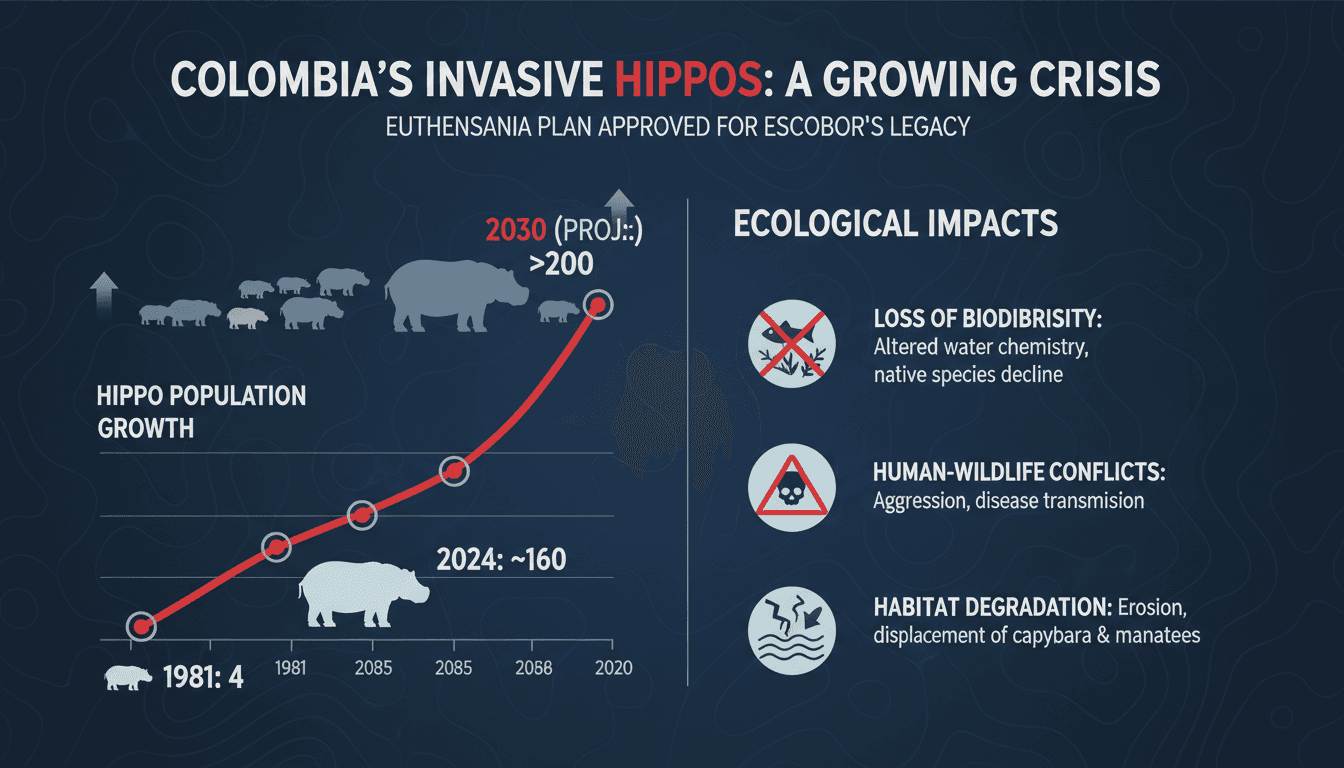
- Pablo Escobar imported four hippos to Colombia in 1981, which escaped and established a feral population after his death in 1993.
- By 2022, the hippo population had grown to over 100, prompting concerns over their impact on local ecosystems and human safety.
- Previous attempts to sterilize or relocate the hippos failed due to logistical challenges and biosecurity issues, leading to the current euthanasia plan.
What's really happening
The Colombian government's decision to euthanize a significant portion of the hippo population is rooted in a complex interplay of ecological, logistical, and ethical considerations. Initially brought to Colombia by drug lord Pablo Escobar, these hippos have proliferated unchecked since their escape in the 1990s, leading to a population that has now exceeded 169 individuals. Their presence has raised alarms among environmentalists and local communities alike, as hippos are known to disrupt aquatic ecosystems through waste pollution, vegetation destruction, and predation on native species.
The Colombian Ministry of Environment, led by Minister Irene Vélez, has cited the urgent need for intervention to protect native biodiversity and human safety. The decision to euthanize 80 hippos is seen as a last resort after sterilization efforts began in 2022 but proved to be slow and costly. These efforts required specialized equipment and posed risks to handlers, further complicating the situation. Additionally, attempts to relocate the hippos to foreign zoos were unsuccessful due to logistical challenges and biosecurity concerns, leaving the government with limited options.
The allocation of approximately $2 million for the euthanasia process underscores the seriousness of the ecological threat posed by these invasive animals. The selected hippos for euthanasia will be chosen based on their size and proximity to human populations, indicating a targeted approach to mitigate risks. Meanwhile, the remaining hippos will continue to be subjected to sterilization and potential relocation within Colombia.
This situation reflects broader global challenges in managing invasive species, where the balance between animal rights and ecological integrity often leads to contentious debates. While some animal rights advocates have condemned the euthanasia plan as cruel, others, including scientists, acknowledge the necessity of intervention to prevent further ecological degradation. The mixed public response highlights the complexities of wildlife management in the face of human and environmental needs.
Who feels it first (and how)
- Local communities: Residents near hippo habitats face risks from potential attacks and ecological disruptions.
- Environmental scientists: Researchers involved in biodiversity conservation are directly impacted by the outcomes of this plan.
- Animal rights advocates: Groups opposing euthanasia will mobilize public opinion and potentially influence future wildlife management policies.
What to watch next
- Public sentiment: Monitor how public opinion shifts regarding the euthanasia plan and its implications for animal rights.
- Ecological impact assessments: Watch for studies evaluating the effects of the euthanasia on local ecosystems and biodiversity.
- Policy changes: Keep an eye on potential changes in wildlife management policies in Colombia and other countries facing similar invasive species challenges.
The Colombian government has approved the euthanasia plan and allocated funding for its implementation.
The hippo population will continue to grow without intervention, potentially reaching 500 by 2030.
The long-term ecological impacts of the euthanasia on local ecosystems remain to be fully understood.
Frequently Asked Questions
- Why it matters?
- This decision highlights the complexities of managing invasive species and the ecological balance necessary for biodiversity.
- What happened (in 30 seconds)?
- On April 13, 2026, Colombia's government approved a plan to euthanize up to 80 invasive hippos descended from those brought by Pablo Escobar. The decision follows failed sterilization and relocation efforts, with ecological damage and human safety risks cited as primary concerns. Approximately $2 million has been allocated for the euthanasia process, set to begin in the latter half of 2026.
- What's really happening?
- The Colombian government's decision to euthanize a significant portion of the hippo population is rooted in a complex interplay of ecological, logistical, and ethical considerations. Initially brought to Colombia by drug lord Pablo Escobar, these hippos have proliferated unchecked since their escape in the 1990s, leading to a population that has now exceeded 169 individuals. Their presence has raised alarms among environmentalists and local communities alike, as hippos are known to disrupt aquat
- Who feels it first (and how)?
- Local communities: Residents near hippo habitats face risks from potential attacks and ecological disruptions. Environmental scientists: Researchers involved in biodiversity conservation are directly impacted by the outcomes of this plan. Animal rights advocates: Groups opposing euthanasia will mobilize public opinion and potentially influence future wildlife management policies.
- What to watch next?
- Public sentiment: Monitor how public opinion shifts regarding the euthanasia plan and its implications for animal rights. Ecological impact assessments: Watch for studies evaluating the effects of the euthanasia on local ecosystems and biodiversity. Policy changes: Keep an eye on potential changes in wildlife management policies in Colombia and other countries facing similar invasive species challenges.
Science and technology stories including AI.
"Longstanding science magazine with thoughtful AI coverage."
— A47 Editor
Colombia will euthanize Pablo Escobar’s invasive ‘cocaine hippos’
Colombia has announced plans to euthanize the invasive hippos introduced by the notorious drug lord Pablo Escobar, following unsuccessful attempts at relocation and sterilization. These hippos, often referred to as 'cocaine hippos,' have posed signif...
Scientific research, technology, environment, and society.
"Scientific American is one of the oldest and most authoritative science magazines, known for deep dives into science, technology, and society."
— A47 Editor
Colombia will euthanize Pablo Escobar’s invasive ‘cocaine hippos’
Colombia has announced plans to euthanize the invasive hippos introduced by the notorious drug lord Pablo Escobar, following unsuccessful attempts at relocation and sterilization. These hippos, often referred to as 'cocaine hippos,' have posed signif...
International coverage of politics, security, and social issues.
"Global News is a mainstream Canadian outlet with a centrist editorial stance, focusing on factual reporting."
— A47 Editor
Dozens of ‘cocaine hippos’ tied to drug lord Pablo Escobar to be culled
Colombian authorities have authorized a plan to cull up to 80 hippos that are descendants of those brought to the country by drug lord Pablo Escobar in the 1980s. These hippos, known as 'cocaine hippos,' escaped from Escobar's ranch after his death i...
24/7 international news from a French perspective in multiple languages.
"France 24 is viewed as a globally focused outlet with balanced coverage and a European perspective."
— A47 Editor
Colombia approves plan to cull roaming hippos linked to Pablo Escobar
Colombian officials have authorized a plan to cull up to 80 hippos that are roaming freely in the center of the country, a decision linked to the animals' descent from those introduced by drug lord Pablo Escobar in the 1980s. The culling is aimed at ...
International news, politics, and culture.
"Sky News is a UK-based 24-hour channel known for fast-breaking news and political coverage."
— A47 Editor
Pablo Escobar's wild hippo herd facing a cull in Colombia
Colombian authorities have announced a plan to cull approximately 80 wild hippos that are descendants of those brought to the country by drug lord Pablo Escobar in the 1980s. This decision is part of efforts to manage the growing population of these ...
Comprehensive coverage of Middle Eastern and global issues.
"Al Jazeera is a prominent voice from the Global South, especially the Middle East, with an emphasis on underreported stories."
— A47 Editor
Colombia to cull up to 80 hippos linked to drug lord Pablo Escobar
Colombian authorities have approved a plan to cull up to 80 hippos that are descendants of those introduced by drug lord Pablo Escobar in the 1980s. This decision arises from concerns that the feral hippos have been displacing native species and posi...
Global news coverage with extensive reporting on Middle Eastern conflicts and geopolitics.
"Al Jazeera is a Qatar-based broadcaster known for wide regional coverage and alternative perspectives."
— A47 Editor
Colombia to cull up to 80 hippos linked to drug lord Pablo Escobar
Colombian authorities have approved a plan to cull up to 80 hippos that are descendants of those introduced by drug lord Pablo Escobar in the 1980s. This decision arises from concerns that the feral hippos have been displacing native species and posi...
International coverage from The Guardian's global desks.
"The Guardian is known for its progressive editorial stance and in-depth analysis."
— A47 Editor
Colombia to cull up to 80 hippos descended from Pablo Escobar zoo
Colombian authorities have authorized a plan to cull up to 80 hippos that are descendants of animals brought to the country by drug lord Pablo Escobar in the 1980s. This decision stems from concerns that these feral hippos have been displacing native...