
US Extends Jones Act Waiver for Foreign Vessels Amid Iran War Supply Disruptions
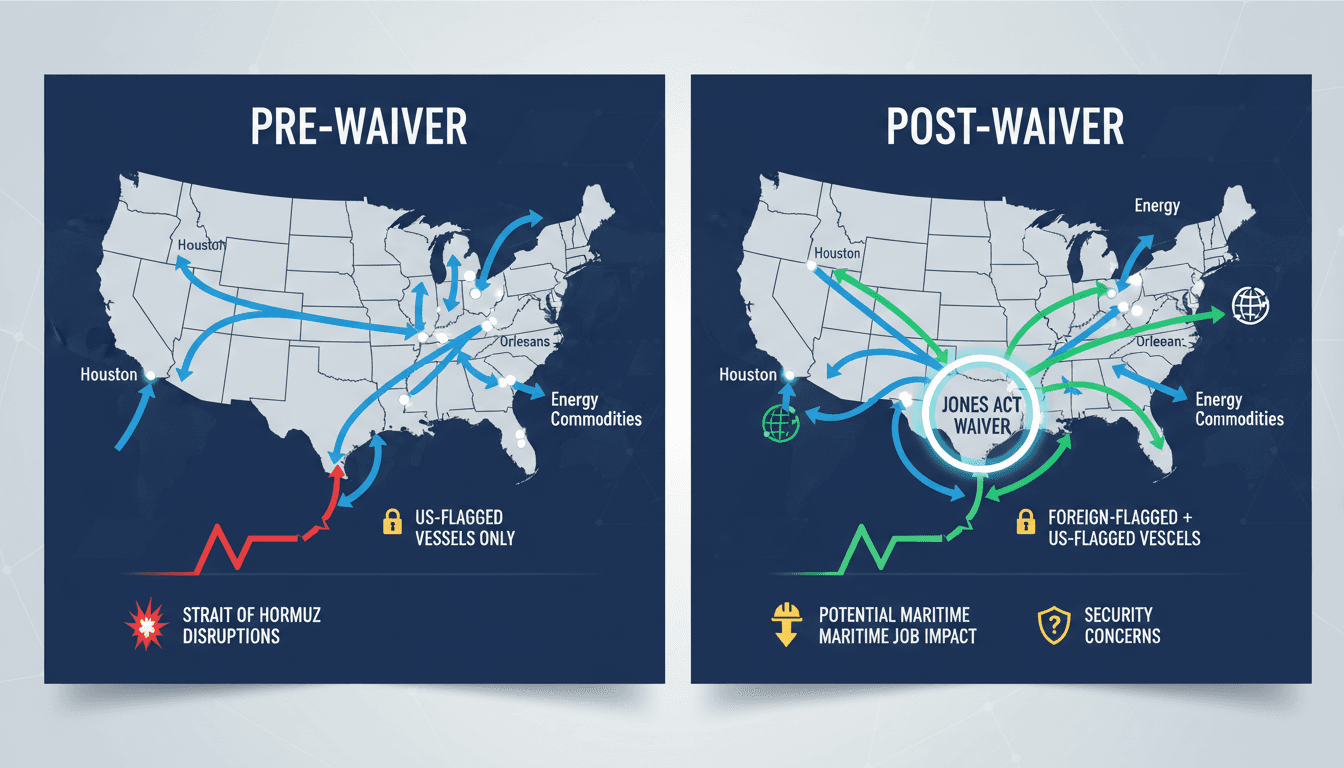
Here's what it means for you.
If you rely on energy commodities, this waiver could stabilize prices and ensure supply continuity.
Why it matters
The extension of the Jones Act waiver is a critical response to supply chain disruptions affecting energy markets.
What happened (in 30 seconds)
- On April 24, 2026, the Trump administration announced a 90-day extension of the Jones Act waiver, allowing foreign-flagged vessels to transport specified goods between U.S. ports.
- This waiver, initially issued on March 17, 2026, was prompted by supply chain disruptions due to the Iran war and the closure of the Strait of Hormuz.
- The extension aims to facilitate the movement of oil, fertilizers, and related products when U.S.-flagged capacity is insufficient.
The context you actually need
- The Jones Act, enacted in 1920, mandates that goods transported between U.S. ports must be carried on U.S.-built, U.S.-flagged, and predominantly U.S.-crewed vessels to protect domestic maritime interests.
- Waivers are rare and typically granted for national defense when U.S. vessels are unavailable, as seen during past hurricanes and now due to geopolitical tensions.
- The current waiver allows for the transport of approximately 659 commodities, including crude oil and fertilizers, which are critical for both national defense and economic stability.
What's really happening
The extension of the Jones Act waiver is a strategic maneuver in response to ongoing geopolitical tensions, particularly the Iran war, which has significantly disrupted global energy supplies. The Strait of Hormuz, a vital shipping lane for oil, has seen a daily removal of approximately 13 million barrels of crude oil and refined products from the world market due to these disruptions. This situation has created a pressing need for alternative supply routes to ensure that U.S. markets remain stable and supplied.
The waiver allows foreign-flagged vessels to fill the gap left by U.S. maritime capacity, which has been deemed insufficient under current conditions. The Department of War's request for the waiver underscores the national defense implications of energy supply continuity. By permitting foreign vessels to transport essential commodities, the administration aims to mitigate potential shortages and stabilize prices in the domestic market.
However, this decision is not without controversy. U.S. maritime organizations have expressed strong opposition, arguing that the waiver undermines domestic jobs and shipbuilding efforts. They view the extension as a detrimental move that could weaken the U.S. maritime industry and compromise national security. In contrast, stakeholders in the oil industry have welcomed the waiver, seeing it as a necessary step to ensure fuel access and price stabilization amid rising global tensions.
The implementation of the waiver has been accompanied by updated guidance from U.S. Customs and Border Protection, which requires pre-voyage notifications and post-voyage reports to ensure compliance and oversight. This regulatory framework aims to balance the need for expedited supply with the necessity of maintaining oversight over foreign vessel operations.
As the waiver remains active until August 16, 2026, its impact will be closely monitored, particularly in terms of how it affects domestic maritime operations and the broader energy market. The ongoing situation in the Middle East and its implications for global energy supplies will continue to shape the discourse around this waiver and its potential extensions.
Who feels it first (and how)
- U.S. maritime workers: Potential job losses and reduced opportunities in the domestic shipping industry.
- Energy sector stakeholders: Improved access to fuel and stabilization of prices, benefiting operations and profitability.
- Consumers: Possible fluctuations in energy prices depending on the effectiveness of the waiver in stabilizing supply.
What to watch next
- Market reactions: Monitor energy prices and supply chain stability as the waiver progresses, which will indicate its effectiveness.
- Legislative responses: Watch for any proposed changes to the Jones Act or further waivers that may arise from ongoing geopolitical tensions.
- Domestic maritime industry developments: Keep an eye on how U.S. maritime organizations respond and adapt to the waiver's implications for their operations.
The waiver allows foreign vessels to transport specified goods between U.S. ports until August 16, 2026.
Continued geopolitical tensions will influence the need for further waivers or adjustments to maritime policy.
The long-term impact on U.S. maritime jobs and the domestic shipping industry remains uncertain.
Frequently Asked Questions
- Why it matters?
- The extension of the Jones Act waiver is a critical response to supply chain disruptions affecting energy markets.
- What happened (in 30 seconds)?
- On April 24, 2026, the Trump administration announced a 90-day extension of the Jones Act waiver, allowing foreign-flagged vessels to transport specified goods between U.S. ports. This waiver, initially issued on March 17, 2026, was prompted by supply chain disruptions due to the Iran war and the closure of the Strait of Hormuz. The extension aims to facilitate the movement of oil, fertilizers, and related products when U.S.-flagged capacity is insufficient.
- What's really happening?
- The extension of the Jones Act waiver is a strategic maneuver in response to ongoing geopolitical tensions, particularly the Iran war, which has significantly disrupted global energy supplies. The Strait of Hormuz, a vital shipping lane for oil, has seen a daily removal of approximately 13 million barrels of crude oil and refined products from the world market due to these disruptions. This situation has created a pressing need for alternative supply routes to ensure that U.S. markets remain sta
- Who feels it first (and how)?
- U.S. maritime workers: Potential job losses and reduced opportunities in the domestic shipping industry. Energy sector stakeholders: Improved access to fuel and stabilization of prices, benefiting operations and profitability. Consumers: Possible fluctuations in energy prices depending on the effectiveness of the waiver in stabilizing supply.
- What to watch next?
- Market reactions: Monitor energy prices and supply chain stability as the waiver progresses, which will indicate its effectiveness. Legislative responses: Watch for any proposed changes to the Jones Act or further waivers that may arise from ongoing geopolitical tensions. Domestic maritime industry developments: Keep an eye on how U.S. maritime organizations respond and adapt to the waiver's implications for their operations.
English-language news from Qatar covering domestic and regional affairs.
"Gulf Times reflects Qatari perspectives on regional developments."
— A47 Editor
US extends waiver allowing foreign ships to transport goods between US ports
The US administration has announced a 90-day extension of its waiver allowing foreign-flagged vessels to transport goods between domestic ports, aimed at facilitating the movement of essential commodities such as oil and fertilizers.
Oil, metals, and agriculture: supply/demand headlines, OPEC chatter, inventories, and price action.
"Solid tape for energy and metals traders tracking macro and micro catalysts."
— A47 Editor
Trump grants 90-day Jones Act waiver extension to curb energy costs
Former President Donald Trump has granted a 90-day extension of the Jones Act waiver, a decision aimed at reducing energy costs amid rising fuel prices and ongoing geopolitical tensions. This extension is expected to facilitate the transportation of ...
Global business headlines with AI angles.
"General business outlet that frequently covers AI."
— A47 Editor
Trump Extends Jones Act Waiver For Another 90 Days To Address Soaring Energy Costs
President Donald Trump has extended the Jones Act waiver for an additional 90 days to help mitigate the rising energy costs affecting consumers and businesses. This decision aims to facilitate the transportation of fuel and energy resources, potentia...
Global news coverage with extensive reporting on Middle Eastern conflicts and geopolitics.
"Al Jazeera is a Qatar-based broadcaster known for wide regional coverage and alternative perspectives."
— A47 Editor
Trump government extends Jones Act waiver by 90 days to dampen oil prices
The Trump administration has extended the waiver for the Jones Act by an additional 90 days, a move aimed at mitigating rising oil prices ahead of the upcoming midterm elections in November. This decision reflects a broader strategy by the US governm...
Comprehensive coverage of Middle Eastern and global issues.
"Al Jazeera is a prominent voice from the Global South, especially the Middle East, with an emphasis on underreported stories."
— A47 Editor
Trump government extends Jones Act waiver by 90 days to dampen oil prices
The Trump administration has extended the waiver for the Jones Act by an additional 90 days, a move aimed at mitigating rising oil prices ahead of the upcoming midterm elections in November. This decision reflects a broader strategy by the US governm...
Conservative-leaning political and national coverage.
"The Washington Times is a conservative-leaning newspaper known for its political coverage and advocacy of right-of-center viewpoints."
— A47 Editor
Trump issues 90-day extension of Jones Act waiver to move goods during Iran war
President Trump has authorized a 90-day extension of the waiver to the Jones Act, a shipping law that restricts the transportation of goods between U.S. ports to American vessels. This decision aims to alleviate economic pressures arising from the on...
Pan-Arab news coverage spanning politics, business, sports, and regional affairs.
"Asharq Al-Awsat reflects a broad Arab editorial perspective with strong attention to regional geopolitics."
— A47 Editor
ترمب يمدد إعفاء «قانون جونز» 90 يوماً لاحتواء تكاليف الطاقة المرتفعة
The White House announced on Friday that President Donald Trump has extended the exemption from the Jones Act for an additional 90 days, a move aimed at facilitating the transportation of oil amid rising energy costs.