
Abu Dhabi Islamic Bank Becomes First UAE Bank Licensed as Open Finance Third-Party Provider
Why it matters
This development enhances the UAE's digital financial ecosystem, promoting transparency and customer-centric services.
What happened (in 30 seconds)
- On April 16, 2026, Abu Dhabi Islamic Bank (ADIB) became the first bank in the UAE to receive a license as a Third-Party Provider under the Central Bank of the UAE's AlTareq Initiative.
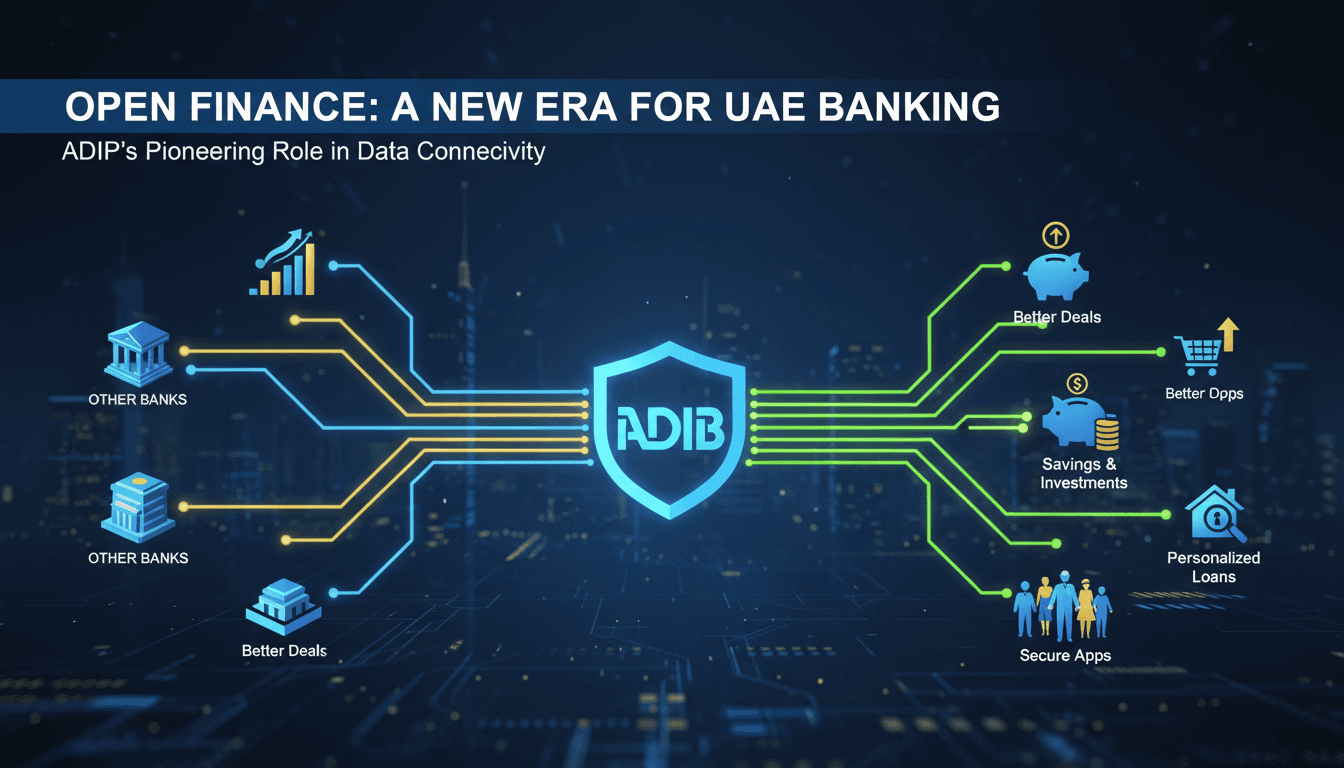
- This license allows ADIB customers to securely aggregate and view financial data from multiple banks via a unified digital interface, based on customer consent.
- ADIB's initiative aligns with its Vision 2035, focusing on innovation and enhanced customer services in the financial sector.
The context you actually need
- The Central Bank of the UAE (CBUAE) introduced the Open Finance Regulation in 2023, establishing a framework for secure data sharing between financial institutions and licensed third-party providers.
- ADIB implemented open finance services in January 2026, becoming the first Islamic bank to do so, which set the stage for the TPP licensing phase.
- The AlTareq initiative aims to create an integrated digital financial system, supporting the CBUAE's strategy for 2023-2026.
What's really happening
The issuance of the inaugural Third-Party Provider (TPP) license to Abu Dhabi Islamic Bank (ADIB) marks a significant milestone in the UAE's financial landscape. This move is part of the Central Bank of the UAE's (CBUAE) broader AlTareq Open Finance Initiative, which aims to foster a secure and efficient digital financial ecosystem. By allowing ADIB to aggregate financial data from multiple banks, the CBUAE is promoting a culture of transparency and customer empowerment in financial decision-making.
The Open Finance Regulation, introduced via Circular 7/2023, establishes a framework for consent-based data sharing through Application Programming Interfaces (APIs). This regulatory framework is designed to enhance competition among financial institutions, ultimately benefiting consumers through improved services and lower costs. ADIB's leadership in this space is particularly noteworthy, as it positions the bank as a pioneer in Islamic finance digitization, aligning with its Vision 2035 strategy that emphasizes innovation and customer-centric services.
The phased implementation of open finance services means that ADIB will gradually roll out features that enhance customer experience. This includes tools for financial oversight, personalized services, and streamlined account management. As a result, customers will have the ability to view and manage their financial data from various banks in one place, reducing the need for extensive documentation and improving overall financial literacy.
Moreover, the successful implementation of this initiative could lead to a ripple effect across the UAE's banking sector. Other banks may follow suit, seeking to obtain TPP licenses and enhance their digital offerings. This competitive environment could drive innovation, leading to better products and services for consumers. The integration of open finance principles is expected to reshape how individuals and businesses interact with financial institutions, making financial management more accessible and efficient.
In summary, the granting of the TPP license to ADIB is not just a regulatory milestone; it represents a shift towards a more integrated and customer-focused financial ecosystem in the UAE. As the digital landscape evolves, consumers can expect to see significant improvements in how they manage their finances, with greater transparency and control over their financial data.
Who feels it first (and how)
- Consumers: Individuals will benefit from easier access to financial data and improved financial management tools.
- Small and Medium Enterprises (SMEs): Businesses can leverage aggregated financial insights for better decision-making and cash flow management.
- Financial Institutions: Other banks may need to innovate and enhance their services to remain competitive in the evolving landscape.
What to watch next
- Phased rollout of services: Monitor how quickly ADIB introduces new features and what additional banks may follow in obtaining TPP licenses.
- Customer adoption rates: Keep an eye on how many customers utilize the new open finance services and their impact on customer satisfaction.
- Regulatory developments: Watch for any changes or expansions in the Open Finance Regulation that could affect the broader financial ecosystem.
ADIB is the first bank in the UAE to receive a TPP license under the AlTareq Initiative.
Other banks will seek TPP licenses to remain competitive and enhance their digital offerings.
The long-term impact on customer behavior and financial literacy in the UAE remains to be seen.
Frequently Asked Questions
- Why it matters?
- This development enhances the UAE's digital financial ecosystem, promoting transparency and customer-centric services.
- What happened (in 30 seconds)?
- On April 16, 2026, Abu Dhabi Islamic Bank (ADIB) became the first bank in the UAE to receive a license as a Third-Party Provider under the Central Bank of the UAE's AlTareq Initiative. This license allows ADIB customers to securely aggregate and view financial data from multiple banks via a unified digital interface, based on customer consent. ADIB's initiative aligns with its Vision 2035, focusing on innovation and enhanced customer services in the financial sector.
- What's really happening?
- The issuance of the inaugural Third-Party Provider (TPP) license to Abu Dhabi Islamic Bank (ADIB) marks a significant milestone in the UAE's financial landscape. This move is part of the Central Bank of the UAE's (CBUAE) broader AlTareq Open Finance Initiative, which aims to foster a secure and efficient digital financial ecosystem. By allowing ADIB to aggregate financial data from multiple banks, the CBUAE is promoting a culture of transparency and customer empowerment in financial decision-mak
- Who feels it first (and how)?
- Consumers: Individuals will benefit from easier access to financial data and improved financial management tools. Small and Medium Enterprises (SMEs): Businesses can leverage aggregated financial insights for better decision-making and cash flow management. Financial Institutions: Other banks may need to innovate and enhance their services to remain competitive in the evolving landscape.
- What to watch next?
- Phased rollout of services: Monitor how quickly ADIB introduces new features and what additional banks may follow in obtaining TPP licenses. Customer adoption rates: Keep an eye on how many customers utilize the new open finance services and their impact on customer satisfaction. Regulatory developments: Watch for any changes or expansions in the Open Finance Regulation that could affect the broader financial ecosystem.
Arabic-language economic and business reporting with strong UAE market relevance.
"Emarat Al Youm business coverage often centers UAE property, banking, consumer issues, and economic policy."
— A47 Editor
"أبوظبي الإسلامي" أول مصرف في الإمارات يحصل على ترخيص لتقديم خدمات التمويل المفتوح "أبوظبي الإسلامي" أول مصرف في الإمارات يحصل على ترخيص لتقديم خدمات التمويل المفتوح
Abu Dhabi Islamic Bank has announced that it has obtained a license to offer open financing services, marking a significant milestone as the first bank in the UAE to achieve this certification. This development reflects the bank's commitment to expan...
Arabic-language digital news outlet covering UAE, regional, and international developments with broad general-news coverage.
"Al Ain News coverage typically blends UAE-focused reporting with wider Arab regional and international news."
— A47 Editor
«أبوظبي الإسلامي» أول مصرف يحصل على ترخيص التمويل المفتوح في الإمارات
Abu Dhabi Islamic Bank has announced that it has obtained a license to provide open financing services as a licensed third-party provider (TPP) in the UAE. This marks a significant milestone for the bank as it becomes the first financial institution ...