
Iranian strikes on Kuwaiti and Bahraini energy infrastructure escalate regional tensions
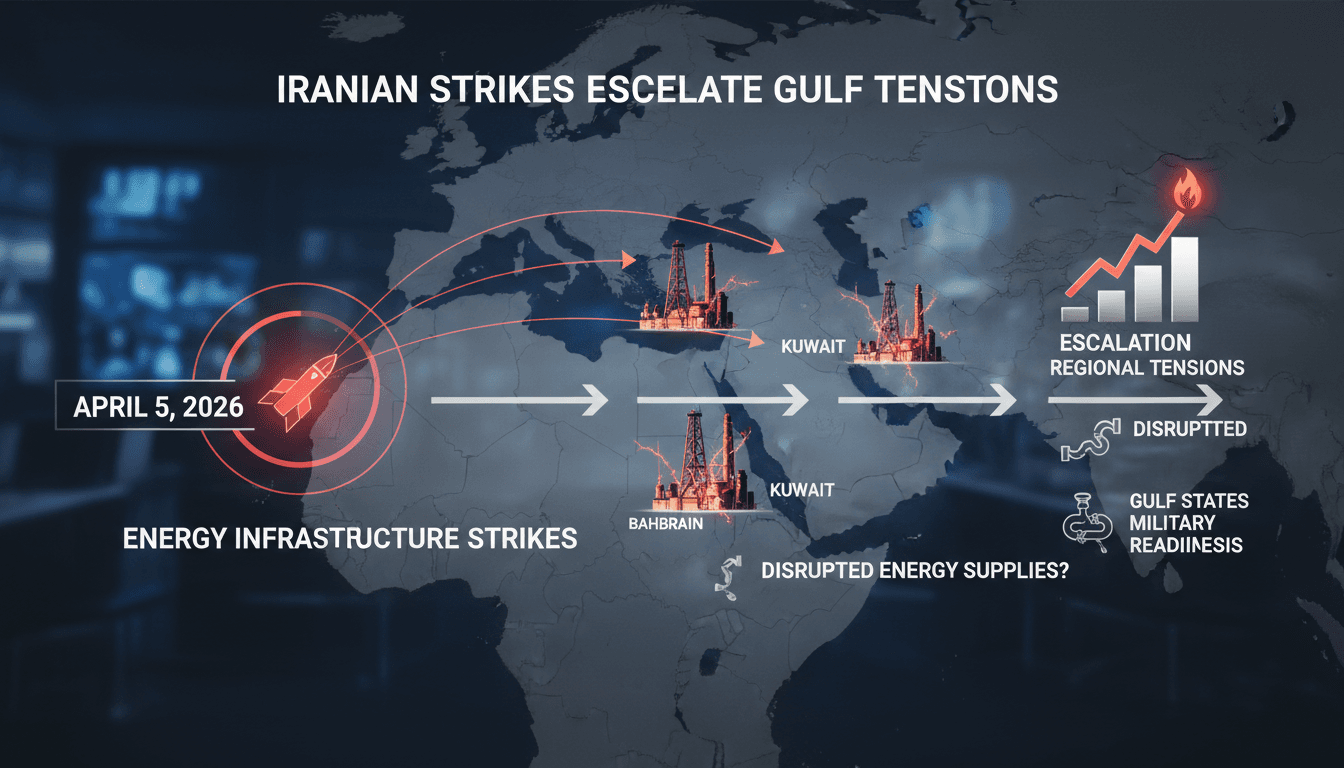
Here's what it means for you.
If you rely on energy imports or are involved in regional trade, the recent strikes could lead to increased costs and supply chain disruptions.
Why it matters
The attacks on energy infrastructure in Kuwait and Bahrain signal a significant escalation in regional tensions, potentially affecting global energy markets.
What happened (in 30 seconds)
- Iranian forces launched drone and missile strikes on energy facilities in Kuwait and Bahrain on April 5, 2026, causing material damage but no casualties.
- Kuwait reported damage to power plants and desalination units, while Bahrain experienced fires at petrochemical storage sites.
- Regional defenses intercepted many of the attacks, limiting the overall impact but highlighting vulnerabilities in Gulf security.
The context you actually need
- Escalating conflict: The strikes are part of a broader pattern of Iranian retaliation against Gulf states perceived to support U.S. and Israeli operations targeting Iranian interests.
- Previous incidents: Prior attacks on UAE, Saudi Arabia, and Qatar infrastructure have raised alarms about regional security and energy supply stability.
- Geopolitical implications: The ongoing conflict may lead to increased military spending and shifts in alliances among Gulf states, impacting economic conditions.
What's really happening
On April 5, 2026, Iranian forces executed a coordinated attack involving 9 ballistic missiles, 4 cruise missiles, and 31 drones aimed at critical energy infrastructure in Kuwait and Bahrain. The strikes targeted key facilities, including power and desalination plants in Kuwait, where two units were taken offline, and the Shuwaikh oil complex, which experienced fires that were quickly extinguished. In Bahrain, 13 drones were intercepted, resulting in fires at Gulf Petrochemical Industries and Bapco Energies storage sites, both of which were controlled without casualties.
These attacks are not isolated incidents but rather part of a broader escalation in the 2026 Iran regional conflict. Since March, Iran has launched repeated drone and missile barrages against Gulf states, retaliating against what it perceives as support for U.S. and Israeli operations targeting Iranian assets. The Gulf states, in turn, have ramped up their defenses, successfully intercepting hundreds of projectiles amid heightened geopolitical tensions.
The strikes have prompted strong reactions from regional leaders, with Kuwaiti civil defense extinguishing fires and suspending visits to damaged sites. Bahrain's King Hamad bin Isa Al Khalifa condemned the attacks, demanding that Iran cease its aggressive actions in line with UN Security Council Resolution 2817. The Arab League Secretary-General also condemned the strikes as "reckless aggression," holding Iran responsible.
Despite the material damage, operational continuity has been maintained in both countries, with facilities assessing damage and resuming operations. However, the attacks have raised concerns about energy market stability, as regional tensions could lead to increased volatility in fuel supply chains, affecting not just local economies but also global energy prices.
Who feels it first (and how)
- Energy sector professionals: Increased operational risks and potential supply chain disruptions could affect job security and project timelines.
- Consumers in the Gulf: Rising energy costs may lead to higher utility bills and fuel prices.
- Global traders: Those involved in energy markets may experience volatility in pricing and availability of oil and gas products.
What to watch next
- Energy market reactions: Monitor fluctuations in oil and gas prices as markets respond to the heightened geopolitical tensions.
- Regional military readiness: Increased military drills and defense spending in Gulf states could indicate a preparation for further escalations.
- International diplomatic efforts: Watch for potential negotiations or interventions from global powers aimed at de-escalating tensions in the region.
The strikes resulted in material damage to energy infrastructure but no casualties.
Increased military readiness and potential for further retaliatory actions from Iran or Gulf states.
The long-term impact on global energy prices and supply chains remains uncertain.
Frequently Asked Questions
- Why it matters?
- The attacks on energy infrastructure in Kuwait and Bahrain signal a significant escalation in regional tensions, potentially affecting global energy markets.
- What happened (in 30 seconds)?
- Iranian forces launched drone and missile strikes on energy facilities in Kuwait and Bahrain on April 5, 2026, causing material damage but no casualties. Kuwait reported damage to power plants and desalination units, while Bahrain experienced fires at petrochemical storage sites. Regional defenses intercepted many of the attacks, limiting the overall impact but highlighting vulnerabilities in Gulf security.
- What's really happening?
- On April 5, 2026, Iranian forces executed a coordinated attack involving 9 ballistic missiles, 4 cruise missiles, and 31 drones aimed at critical energy infrastructure in Kuwait and Bahrain. The strikes targeted key facilities, including power and desalination plants in Kuwait, where two units were taken offline, and the Shuwaikh oil complex, which experienced fires that were quickly extinguished. In Bahrain, 13 drones were intercepted, resulting in fires at Gulf Petrochemical Industries and Bap
- Who feels it first (and how)?
- Energy sector professionals: Increased operational risks and potential supply chain disruptions could affect job security and project timelines. Consumers in the Gulf: Rising energy costs may lead to higher utility bills and fuel prices. Global traders: Those involved in energy markets may experience volatility in pricing and availability of oil and gas products.
- What to watch next?
- Energy market reactions: Monitor fluctuations in oil and gas prices as markets respond to the heightened geopolitical tensions. Regional military readiness: Increased military drills and defense spending in Gulf states could indicate a preparation for further escalations. International diplomatic efforts: Watch for potential negotiations or interventions from global powers aimed at de-escalating tensions in the region.
Arabic-language UAE newspaper coverage focused on domestic affairs, public institutions, business, society, and regional developments.
"Al Khaleej coverage generally reflects a mainstream UAE editorial lens with strong attention to public affairs, institutions, and regional developments."
— A47 Editor
اعتداءات إيرانية غاشمة على مرافق الطاقة في الكويت والبحرين
Iran launched attacks on energy facilities in Kuwait and Bahrain on Sunday, resulting in the disruption of some operations and damage to others. This aggressive action underscores ongoing tensions in the region and raises concerns about the security ...
Pan-Arab news coverage spanning politics, business, sports, and regional affairs.
"Asharq Al-Awsat reflects a broad Arab editorial perspective with strong attention to regional geopolitics."
— A47 Editor
لماذا تُصعِّد إيران هجماتها ضد منشآت الطاقة الخليجية؟
Iranian attacks on oil facilities in Bahrain and Kuwait reflect the country's aggressive and destabilizing behavior in the region, particularly against Gulf Cooperation Council (GCC) states. These incidents highlight a growing trend of hostility that...
Regional and international reporting focused on Middle Eastern politics, diplomacy, and economics.
"Asharq Al-Awsat is a Saudi-owned international newspaper reflecting mainstream Gulf political perspectives."
— A47 Editor
Iranian Attacks Target Energy Facilities in Kuwait, UAE
Iranian forces have launched missile and drone attacks targeting energy facilities in Kuwait and the UAE, escalating military tensions in the Gulf region. These strikes come despite a recent ceasefire announcement between the United States and Iran, ...