
Duolingo Reverses AI-Based Employee Performance Evaluation Policy
Here's what it means for you.
If you work in tech or education, this policy shift could influence how your performance is assessed in the future.
Why it matters
This decision reflects a broader trend in the tech industry where companies are reassessing the role of AI in employee evaluations amid employee feedback.
What happened (in 30 seconds)
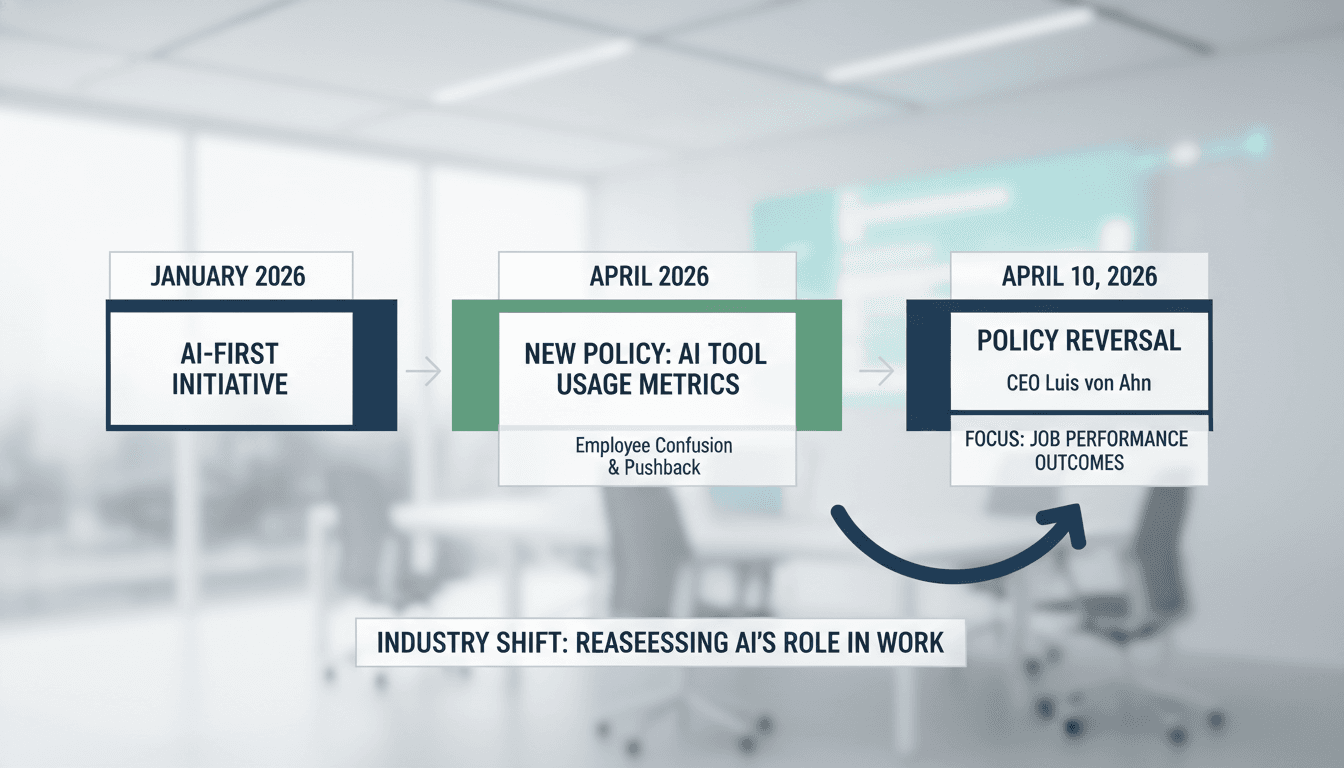
- April 10, 2026: Duolingo CEO Luis von Ahn announced the reversal of a policy that evaluated employees based on AI tool usage.
- April 2025: The company had implemented an 'AI-first' initiative that tied performance metrics to AI adoption, leading to employee confusion and backlash.
- January 2024: Duolingo laid off 10% of its contract workforce to facilitate AI integration, which sparked significant internal and public criticism.
The context you actually need
- Post-ChatGPT AI enthusiasm: The tech sector has seen a surge in AI adoption, prompting companies like Duolingo to experiment with AI in various operational aspects.
- Employee backlash: Following the initial rollout of AI performance metrics, Duolingo faced significant pushback from employees, leading to app deletions and social media criticism.
- Industry parallels: Other companies, such as Klarna and Take-Two Interactive, have also faced challenges with AI integration, leading to shifts in their workforce strategies.
What's really happening
Duolingo's recent policy reversal is a significant pivot from its earlier 'AI-first' initiative, which mandated the integration of AI into employee performance evaluations. This shift was largely driven by employee feedback that highlighted confusion and discomfort with the forced usage of AI tools. The initial policy aimed to align with industry trends where tech giants like Meta and Google were incorporating AI into their operational frameworks. However, the backlash from employees indicated a disconnect between management's vision and the workforce's readiness to adapt to such changes.
The decision to prioritize job outcomes over AI usage reflects a growing recognition that technology should serve as a tool to enhance productivity rather than a metric for evaluation. By shifting focus back to performance outcomes, Duolingo is acknowledging the importance of employee autonomy and the need for clarity in performance expectations. This move is not just about appeasing employees; it also signals a strategic recalibration in how companies can leverage AI without alienating their workforce.
Moreover, the reversal comes at a time when many tech companies are grappling with the implications of AI on job security and employee morale. The layoffs in January 2024, where 10% of contract workers were let go, were a direct consequence of the push for AI integration. This created an environment of uncertainty, prompting Duolingo to clarify that full-time roles would remain secure despite the changes. The company's ability to navigate this complex landscape will be crucial as it seeks to balance technological advancement with employee satisfaction.
In essence, Duolingo's backtrack on AI performance metrics is a case study in the challenges of integrating new technologies into established work cultures. It underscores the necessity for companies to engage with their employees and consider their feedback when implementing significant changes. As the tech industry continues to evolve, the lessons learned from Duolingo's experience may influence how other companies approach AI integration and employee evaluations in the future.
Who feels it first (and how)
- Duolingo employees: They will experience a shift in performance evaluation criteria, reducing pressure related to AI usage.
- Tech industry workers: Similar companies may follow suit, impacting job security and evaluation methods across the sector.
- Contract workers: Those previously affected by layoffs may see a more stable employment landscape as companies reassess their reliance on AI.
What to watch next
- Employee satisfaction surveys: Monitoring feedback from Duolingo employees will provide insights into the effectiveness of the new evaluation criteria.
- Industry response: Observing how other tech companies react to Duolingo's reversal could indicate a shift in AI integration strategies across the sector.
- Stock performance: Tracking Duolingo's stock performance post-reversal will reveal market confidence in the company's strategic direction.
Duolingo has reversed its policy on evaluating employee performance based on AI usage.
Other tech companies may reconsider their AI integration strategies in light of employee feedback.
The long-term impact of this policy reversal on Duolingo's productivity and employee morale remains to be seen.
Frequently Asked Questions
- Why it matters?
- This decision reflects a broader trend in the tech industry where companies are reassessing the role of AI in employee evaluations amid employee feedback.
- What happened (in 30 seconds)?
- April 10, 2026: Duolingo CEO Luis von Ahn announced the reversal of a policy that evaluated employees based on AI tool usage. April 2025: The company had implemented an 'AI-first' initiative that tied performance metrics to AI adoption, leading to employee confusion and backlash. January 2024: Duolingo laid off 10% of its contract workforce to facilitate AI integration, which sparked significant internal and public criticism.
- What's really happening?
- Duolingo's recent policy reversal is a significant pivot from its earlier 'AI-first' initiative, which mandated the integration of AI into employee performance evaluations. This shift was largely driven by employee feedback that highlighted confusion and discomfort with the forced usage of AI tools. The initial policy aimed to align with industry trends where tech giants like Meta and Google were incorporating AI into their operational frameworks. However, the backlash from employees indicated a
- Who feels it first (and how)?
- Duolingo employees: They will experience a shift in performance evaluation criteria, reducing pressure related to AI usage. Tech industry workers: Similar companies may follow suit, impacting job security and evaluation methods across the sector. Contract workers: Those previously affected by layoffs may see a more stable employment landscape as companies reassess their reliance on AI.
- What to watch next?
- Employee satisfaction surveys: Monitoring feedback from Duolingo employees will provide insights into the effectiveness of the new evaluation criteria. Industry response: Observing how other tech companies react to Duolingo's reversal could indicate a shift in AI integration strategies across the sector. Stock performance: Tracking Duolingo's stock performance post-reversal will reveal market confidence in the company's strategic direction.
Tech news, hardware, and AI tools coverage.
"PC/tech site increasingly covering AI hardware and apps."
— A47 Editor
Duolingo stops evaluating workers based on how much AI they use
Duolingo has announced that it will stop evaluating its workers based on their usage of artificial intelligence (AI), a shift that follows CEO Luis von Ahn's earlier plans to integrate more AI into the platform and reduce reliance on contract workers...
Consumer tech news, reviews, and buying guides for gadgets and electronics.
"TechRadar is known for comprehensive buying advice, hardware reviews, and consumer tech news targeted at mainstream audiences."
— A47 Editor
'We’re trying to push something that in some cases did not fit' — Duolingo’s CEO changes course on AI at work
Duolingo CEO Luis von Ahn has recently acknowledged that the practice of measuring AI usage for performance reviews may detract from employees' ability to focus on their actual work. This shift in perspective indicates a reevaluation of how AI is int...
Corporate leadership, finance, technology, and market trends.
"Fortune covers financial trends, leadership, and innovation with a pragmatic editorial approach."
— A47 Editor
‘I’m not going to force you’: Duolingo CEO backs off from evaluating employees on their AI usage
Duolingo CEO Luis von Ahn has announced a shift in the company's approach to employee evaluations, stating that the previously established AI-first policy will no longer be a criterion for assessing employee performance. This change comes less than a...