
U.S. and Iran Set for Peace Negotiations in Islamabad Amid Regional Tensions
Here's what it means for you.
The outcome of these negotiations could influence global oil prices and economic stability, impacting your cost of living.
Why it matters
The negotiations represent a critical juncture in U.S.-Iran relations, with potential implications for global energy markets and regional security.
What happened (in 30 seconds)
- Vice President JD Vance will lead the U.S. delegation in peace talks with Iran on April 11, 2026, in Islamabad, Pakistan.
- A temporary truce was announced by President Trump on April 7, 2026, following an ultimatum regarding Iran's blockade of the Strait of Hormuz.
- Iran's delegation, led by Parliament Speaker Qalibaf and Foreign Minister Araqchi, prepares for negotiations amid ongoing regional conflicts.
The context you actually need
- Escalating tensions: The U.S. and Iran have faced heightened hostilities, particularly due to military actions and Iran's blockade of vital shipping routes.
- Pakistan's role: Islamabad has positioned itself as a neutral mediator, facilitating dialogue amid regional instability.
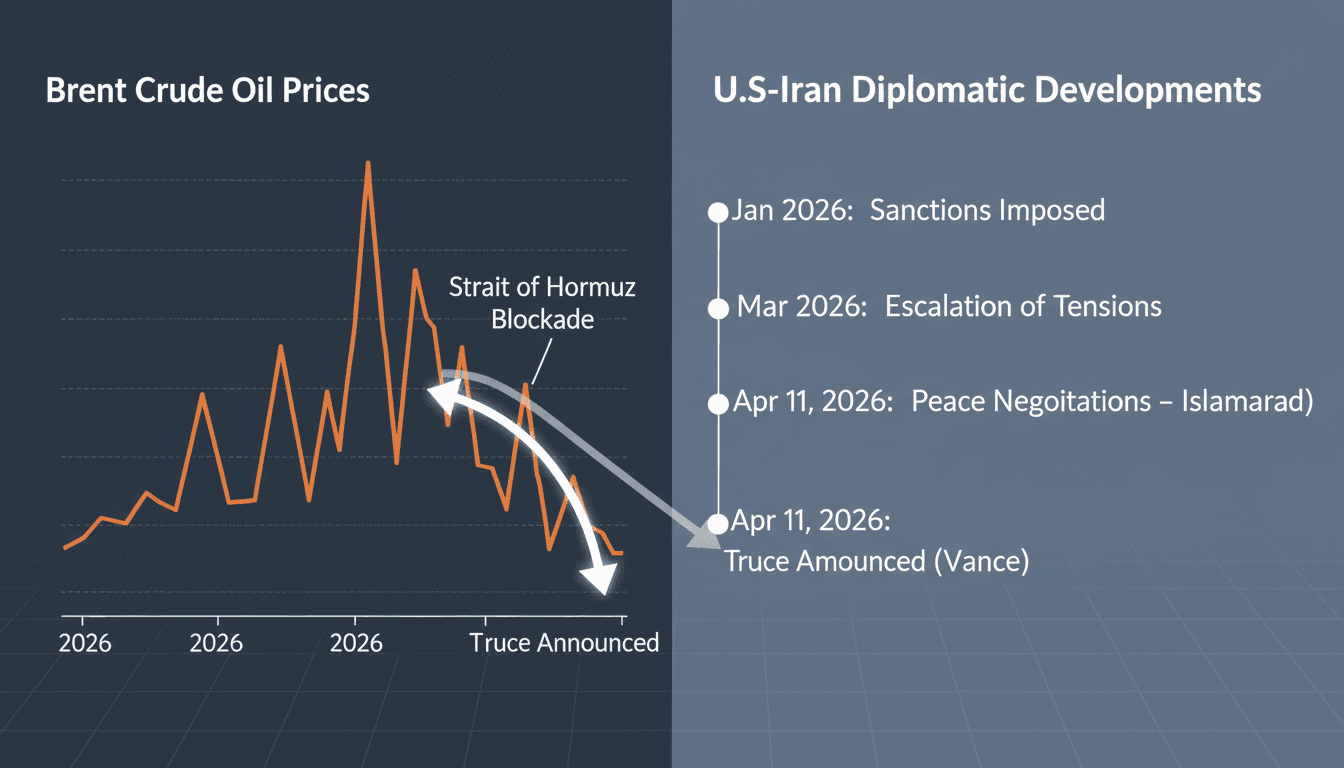
- Market reactions: The announcement of the truce led to a 14% decline in Brent crude oil prices, signaling immediate market impacts.
What's really happening
The upcoming U.S.-Iran peace negotiations in Islamabad are a response to escalating tensions that have characterized the relationship between these two nations. The backdrop includes Iran's blockade of the Strait of Hormuz, a critical maritime route for global oil shipments, which has raised alarms about potential disruptions in energy supplies. President Trump's ultimatum on April 7, 2026, demanding the reopening of the strait, was a pivotal moment that led to a temporary truce, allowing for these negotiations to take shape.
The U.S. delegation, led by Vice President JD Vance, includes key figures such as Special Envoy Steve Witkoff and Jared Kushner. Their presence underscores the seriousness with which the U.S. administration is approaching these talks. The Iranian delegation, featuring prominent leaders like Qalibaf and Araqchi, indicates that Iran is also willing to engage in dialogue, albeit under the shadow of ongoing military operations in the region, including Israeli strikes on Hezbollah in Lebanon.
The implications of these negotiations extend beyond immediate diplomatic relations. A successful outcome could stabilize the region, leading to a more predictable energy market. The 14% drop in Brent crude oil prices to $95.20 per barrel following the truce announcement reflects how sensitive global markets are to developments in U.S.-Iran relations. For Dubai residents, this decline offers short-term relief from rising fuel costs, which had surged due to previous Iranian actions against Gulf oil facilities.
However, the situation remains precarious. Israel's military actions against Hezbollah continue, with Prime Minister Netanyahu asserting that the truce does not apply to Hezbollah, indicating a potential for renewed conflict. Iran has also warned of withdrawing from negotiations if attacks persist. The delicate balance of power in the region means that any misstep could lead to a rapid escalation of hostilities, which would have direct consequences for global oil prices and economic stability.
In summary, while the peace talks represent a hopeful step toward de-escalation, the underlying tensions and regional dynamics remain complex and fraught with risk. The outcome of these negotiations will likely shape not only U.S.-Iran relations but also the broader geopolitical landscape, affecting energy markets and economic conditions worldwide.
Who feels it first (and how)
- Energy sector: Companies reliant on stable oil prices will experience immediate impacts on their operations and profitability.
- Consumers: Individuals may see fluctuations in fuel prices and overall cost of living based on the outcomes of the negotiations.
- Investors: Stock markets and financial institutions will react to developments, influencing investment strategies and market stability.
What to watch next
- Negotiation outcomes: The results of the talks on April 11 will be critical in determining the future of U.S.-Iran relations and regional stability.
- Market reactions: Monitor Brent crude oil prices for indications of market confidence or anxiety following the negotiations.
- Regional military actions: Keep an eye on Israeli and Iranian military activities, as escalations could derail diplomatic efforts and impact global markets.
The U.S. delegation is confirmed to participate in the peace talks in Islamabad.
A fragile truce may hold temporarily, but underlying tensions could resurface.
The long-term effectiveness of any agreements reached during the negotiations remains uncertain.
Frequently Asked Questions
- Why it matters?
- The negotiations represent a critical juncture in U.S.-Iran relations, with potential implications for global energy markets and regional security.
- What happened (in 30 seconds)?
- Vice President JD Vance will lead the U.S. delegation in peace talks with Iran on April 11, 2026, in Islamabad, Pakistan. A temporary truce was announced by President Trump on April 7, 2026, following an ultimatum regarding Iran's blockade of the Strait of Hormuz. Iran's delegation, led by Parliament Speaker Qalibaf and Foreign Minister Araqchi, prepares for negotiations amid ongoing regional conflicts.
- What's really happening?
- The upcoming U.S.-Iran peace negotiations in Islamabad are a response to escalating tensions that have characterized the relationship between these two nations. The backdrop includes Iran's blockade of the Strait of Hormuz, a critical maritime route for global oil shipments, which has raised alarms about potential disruptions in energy supplies. President Trump's ultimatum on April 7, 2026, demanding the reopening of the strait, was a pivotal moment that led to a temporary truce, allowing for th
- Who feels it first (and how)?
- Energy sector: Companies reliant on stable oil prices will experience immediate impacts on their operations and profitability. Consumers: Individuals may see fluctuations in fuel prices and overall cost of living based on the outcomes of the negotiations. Investors: Stock markets and financial institutions will react to developments, influencing investment strategies and market stability.
- What to watch next?
- Negotiation outcomes: The results of the talks on April 11 will be critical in determining the future of U.S.-Iran relations and regional stability. Market reactions: Monitor Brent crude oil prices for indications of market confidence or anxiety following the negotiations. Regional military actions: Keep an eye on Israeli and Iranian military activities, as escalations could derail diplomatic efforts and impact global markets.
Global news coverage with extensive reporting on Middle Eastern conflicts and geopolitics.
"Al Jazeera is a Qatar-based broadcaster known for wide regional coverage and alternative perspectives."
— A47 Editor
JD Vance says Iran would be ‘dumb’ to let talks collapse over Lebanon
U.S. Vice President JD Vance stated that Iran would be unwise to allow negotiations to falter over the issue of Lebanon's involvement in the recent ceasefire discussions. He noted that Iran had a 'legitimate misunderstanding' regarding Lebanon's stat...
Comprehensive coverage of Middle Eastern and global issues.
"Al Jazeera is a prominent voice from the Global South, especially the Middle East, with an emphasis on underreported stories."
— A47 Editor
JD Vance says Iran would be ‘dumb’ to let talks collapse over Lebanon
U.S. Vice President JD Vance stated that Iran would be unwise to allow negotiations to falter over the issue of Lebanon's involvement in the recent ceasefire discussions. He noted that Iran had a 'legitimate misunderstanding' regarding Lebanon's stat...
Global political, business, and cultural coverage from WSJ international desks.
"The Wall Street Journal offers extensive international reporting with a reputation for financial insight and a center-right editorial stance."
— A47 Editor
Vance to Take the Lead on Iran Talks
U.S. Vice President JD Vance is set to lead a delegation in peace talks with Iran, scheduled to take place in Islamabad, Pakistan, following a two-week ceasefire announced by President Trump. This ceasefire is contingent upon Iran's agreement to reop...
International coverage of politics, security, and social issues.
"Global News is a mainstream Canadian outlet with a centrist editorial stance, focusing on factual reporting."
— A47 Editor
JD Vance will lead U.S. delegation in Iran peace talks in Pakistan
U.S. Vice President JD Vance is set to lead a delegation in peace talks with Iran, scheduled to take place in Islamabad, Pakistan. This development follows a recent two-week ceasefire between the United States and Iran, which was facilitated by Pakis...
Editor-curated FT homepage stories spanning markets, business, world, and opinion.
"The Financial Times is a globally respected business publication with a centrist/center-left tone and strong markets focus."
— A47 Editor
JD Vance to lead US delegation in Islamabad talks
JD Vance is set to lead a U.S. delegation in talks in Islamabad, coinciding with rising tensions as Iran threatens to withdraw from a ceasefire agreement over recent attacks in Lebanon. This situation underscores the fragility of diplomatic efforts i...