
Pakistan Mediates US-Iran Relations Amid Ongoing Ceasefire Negotiations
Here's what it means for you.
Rising geopolitical tensions could impact global oil prices and supply chains, affecting your daily costs.
Why it matters
The mediation efforts by Pakistan could stabilize a volatile region, influencing global energy markets and international relations.
What happened (in 30 seconds)
- April 15–16, 2026: Pakistani Army Chief General Asim Munir met with Iranian officials in Tehran to mediate U.S.-Iran tensions.
- April 8, 2026: A two-week ceasefire was agreed upon following U.S. and Israeli strikes on Iranian nuclear sites.
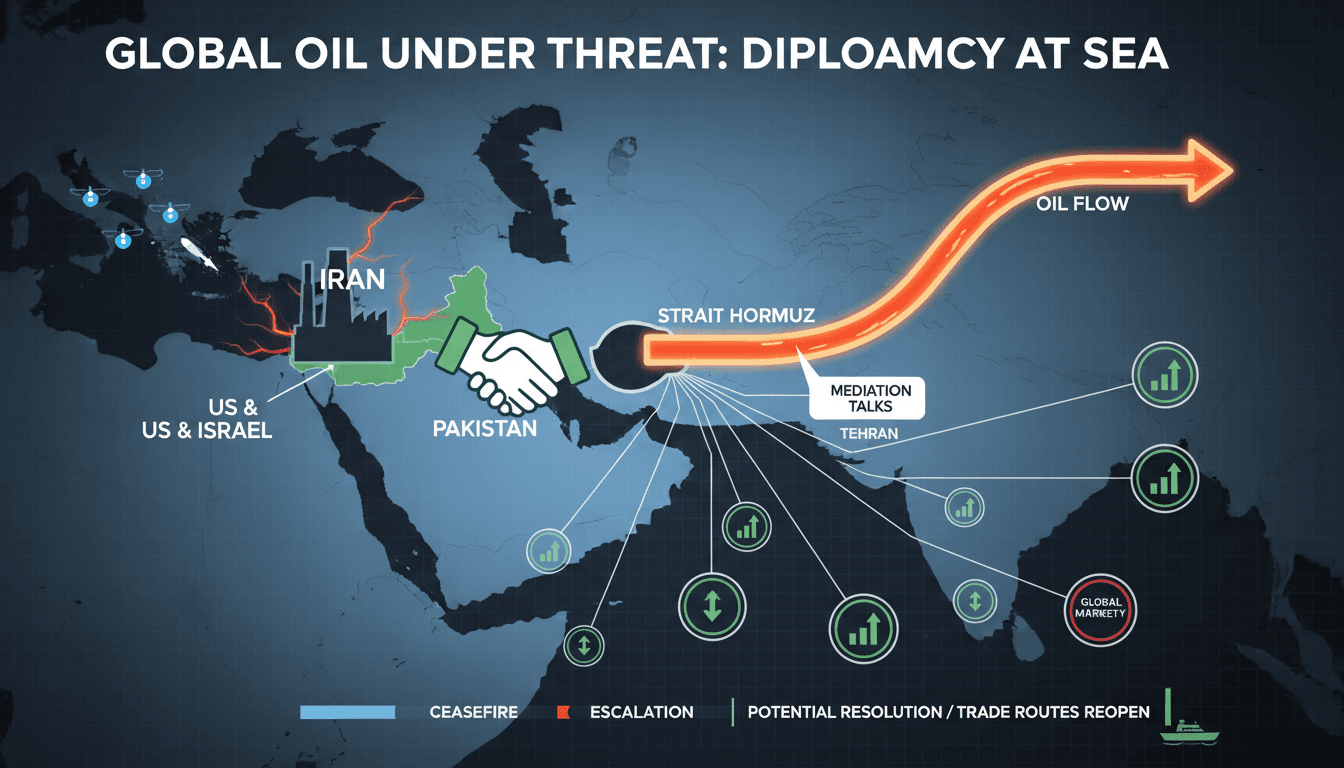
- Ongoing negotiations: Indirect talks aim to resolve uranium enrichment disputes and reopen the strategically vital Strait of Hormuz.
The context you actually need
- Escalating tensions: The conflict escalated after U.S. and Israeli attacks on February 28, 2026, leading to significant casualties and regional instability.
- Economic implications: The Strait of Hormuz is crucial for global oil transport, with 20% of oil and gas transiting through it, making any disruption impactful.
- Pakistan's role: Leveraging its relationships with both the U.S. and Iran, Pakistan is positioned as a mediator to prevent further conflict and stabilize the region.
What's really happening
The recent escalation in U.S.-Iran tensions stems from longstanding concerns over Iran's nuclear ambitions. The U.S. and Israel initiated military strikes on Iranian nuclear facilities on February 28, 2026, which prompted Iranian counterstrikes and the involvement of regional proxies like Hezbollah. This conflict has resulted in thousands of casualties and heightened instability in the Middle East.
In response to the escalating violence, a two-week ceasefire was agreed upon on April 8, 2026, amid backchannel communications. However, initial indirect talks hosted by Pakistan in Islamabad failed to yield a resolution, prompting a more intensive diplomatic effort. General Asim Munir's meetings in Tehran aimed to bridge gaps on critical issues such as uranium enrichment and access to the Strait of Hormuz, which is currently under a U.S. naval blockade.
The stakes are high: the Strait of Hormuz is a vital artery for global oil transport, with 20% of the world's oil and gas passing through it. The ongoing blockade has already begun to disrupt shipping traffic, leading to rising fuel prices and supply chain delays, particularly affecting regions like Dubai, which relies heavily on stable energy prices and trade routes.
During the Tehran meetings, U.S. President Donald Trump announced progress on uranium handover negotiations, while Iranian leaders proposed partial transfers under International Atomic Energy Agency (IAEA) supervision. The discussions have shifted towards establishing a temporary memorandum with a 60-day window for finalization, indicating a potential path forward but also highlighting the fragility of the situation.
As the negotiations unfold, the implications extend beyond the immediate parties involved. The outcome will influence global oil markets, regional security dynamics, and the broader geopolitical landscape, as countries like China express interest in the reopening of the Strait of Hormuz.
Who feels it first (and how)
- Energy consumers: Rising fuel prices will directly impact households and businesses reliant on oil and gas.
- Shipping and logistics sectors: Disruptions in the Strait of Hormuz will affect shipping routes and costs, impacting global supply chains.
- Regional governments: Countries in the Gulf region will monitor the situation closely, as instability could lead to economic repercussions and security concerns.
What to watch next
- Ceasefire extension: Monitoring the potential extension of the ceasefire will indicate whether diplomatic efforts are gaining traction.
- Oil price fluctuations: Watch for volatility in oil markets, as any escalation or resolution will directly affect prices.
- International responses: Pay attention to how other global powers, particularly China and Russia, react to the mediation efforts and the evolving situation.
The U.S. maintains a naval blockade in the Strait of Hormuz, impacting global oil transport.
Continued indirect negotiations will occur, with potential for further mediation from Pakistan.
The long-term effectiveness of the ceasefire and whether it will lead to a sustainable resolution of U.S.-Iran tensions.
Frequently Asked Questions
- Why it matters?
- The mediation efforts by Pakistan could stabilize a volatile region, influencing global energy markets and international relations.
- What happened (in 30 seconds)?
- April 15–16, 2026: Pakistani Army Chief General Asim Munir met with Iranian officials in Tehran to mediate U.S.-Iran tensions. April 8, 2026: A two-week ceasefire was agreed upon following U.S. and Israeli strikes on Iranian nuclear sites. Ongoing negotiations: Indirect talks aim to resolve uranium enrichment disputes and reopen the strategically vital Strait of Hormuz.
- What's really happening?
- The recent escalation in U.S.-Iran tensions stems from longstanding concerns over Iran's nuclear ambitions. The U.S. and Israel initiated military strikes on Iranian nuclear facilities on February 28, 2026, which prompted Iranian counterstrikes and the involvement of regional proxies like Hezbollah. This conflict has resulted in thousands of casualties and heightened instability in the Middle East. In response to the escalating violence, a two-week ceasefire was agreed upon on April 8, 2026, am
- Who feels it first (and how)?
- Energy consumers: Rising fuel prices will directly impact households and businesses reliant on oil and gas. Shipping and logistics sectors: Disruptions in the Strait of Hormuz will affect shipping routes and costs, impacting global supply chains. Regional governments: Countries in the Gulf region will monitor the situation closely, as instability could lead to economic repercussions and security concerns.
- What to watch next?
- Ceasefire extension: Monitoring the potential extension of the ceasefire will indicate whether diplomatic efforts are gaining traction. Oil price fluctuations: Watch for volatility in oil markets, as any escalation or resolution will directly affect prices. International responses: Pay attention to how other global powers, particularly China and Russia, react to the mediation efforts and the evolving situation.
Pan-Arab news coverage spanning politics, business, sports, and regional affairs.
"Asharq Al-Awsat reflects a broad Arab editorial perspective with strong attention to regional geopolitics."
— A47 Editor
باكستان تسابق الزمن لردم الهوة بين واشنطن وطهران
Intensive consultations are ongoing to bridge the gap between Washington and Tehran, with Pakistani Army Chief Asim Munir continuing his meetings with senior officials. This diplomatic effort highlights Pakistan's role as a mediator in a complex geop...
Arabic-language coverage of Saudi, regional, and international affairs.
"Al Bilad offers mainstream Saudi newspaper coverage across domestic and broader Arab topics."
— A47 Editor
قائد الجيش يصل إلى طهران.. باكستان تبعث رسالة «تضييق الفجوة»
The Chief of Army Staff of Pakistan, General Asim Munir, arrived in Tehran leading a high-level delegation, carrying a U.S. message aimed at bridging the gap between Washington and Tehran ahead of anticipated negotiations. This visit is part of an ac...
Arabic-language coverage of political affairs and current events.
"Okaz political coverage typically follows mainstream Saudi framing on national and regional affairs."
— A47 Editor
المشير منير في طهران.. هل ينجح في تمديد وقف إطلاق النار؟
Pakistan has resumed efforts to revive US-Iran negotiations in Islamabad through the visit of Army Chief General Asim Munir to Tehran, amid a countdown to a deadline set by President Donald Trump for the destruction of Iranian civilization. Munir, al...
Arabic-language coverage of political affairs and current events.
"Okaz political coverage typically follows mainstream Saudi framing on national and regional affairs."
— A47 Editor
وفد باكستاني في طهران لترتيب جولة مفاوضات جديدة بين إيران وأمريكا
A Pakistani delegation led by Army Chief Asim Munir arrived in Tehran to facilitate a new round of negotiations between Iran and the United States, with Iranian Foreign Minister Abbas Araghchi welcoming them. The delegation includes Interior Minister...
Arabic-language political and world news coverage for UAE readers.
"Emarat Al Youm world coverage usually presents international developments through a UAE and Arab audience lens."
— A47 Editor
قائد الجيش الباكستاني يصل إلى إيران برسالة جديدة من واشنطن قائد الجيش الباكستاني يصل إلى إيران برسالة جديدة من واشنطن
A Pakistani delegation, led by Army Chief Asim Munir, arrived in Tehran today as part of ongoing mediation efforts, where they were received by the Iranian Foreign Minister. This visit underscores the diplomatic engagement between Pakistan and Iran a...
Arabic-language coverage of international news and geopolitics.
"RT Arabic is a Russian state-funded outlet often criticized for promoting Kremlin-aligned narratives."
— A47 Editor
مفاوضات طهران وواشنطن.. فجوة الثقة
Recent negotiations between Tehran and Washington took place in Pakistan's capital over the weekend, highlighting trust issues as a significant challenge in this new round of discussions.
Arabic-language UAE newspaper coverage focused on domestic affairs, public institutions, business, society, and regional developments.
"Al Khaleej coverage generally reflects a mainstream UAE editorial lens with strong attention to public affairs, institutions, and regional developments."
— A47 Editor
واشنطن تتحدث عن إشارات إيجابية ورغبة إيرانية في الاتفاق
Negotiations between Washington and Tehran are ongoing, despite a tense meeting earlier this week in Islamabad, as reported by Reuters. Pakistani Prime Minister Shahbaz Sharif has also indicated that efforts to end the conflict are continuing.