
Strait of Hormuz Closure Disrupts Fertilizer Supplies Amid US-Israel Conflict with Iran
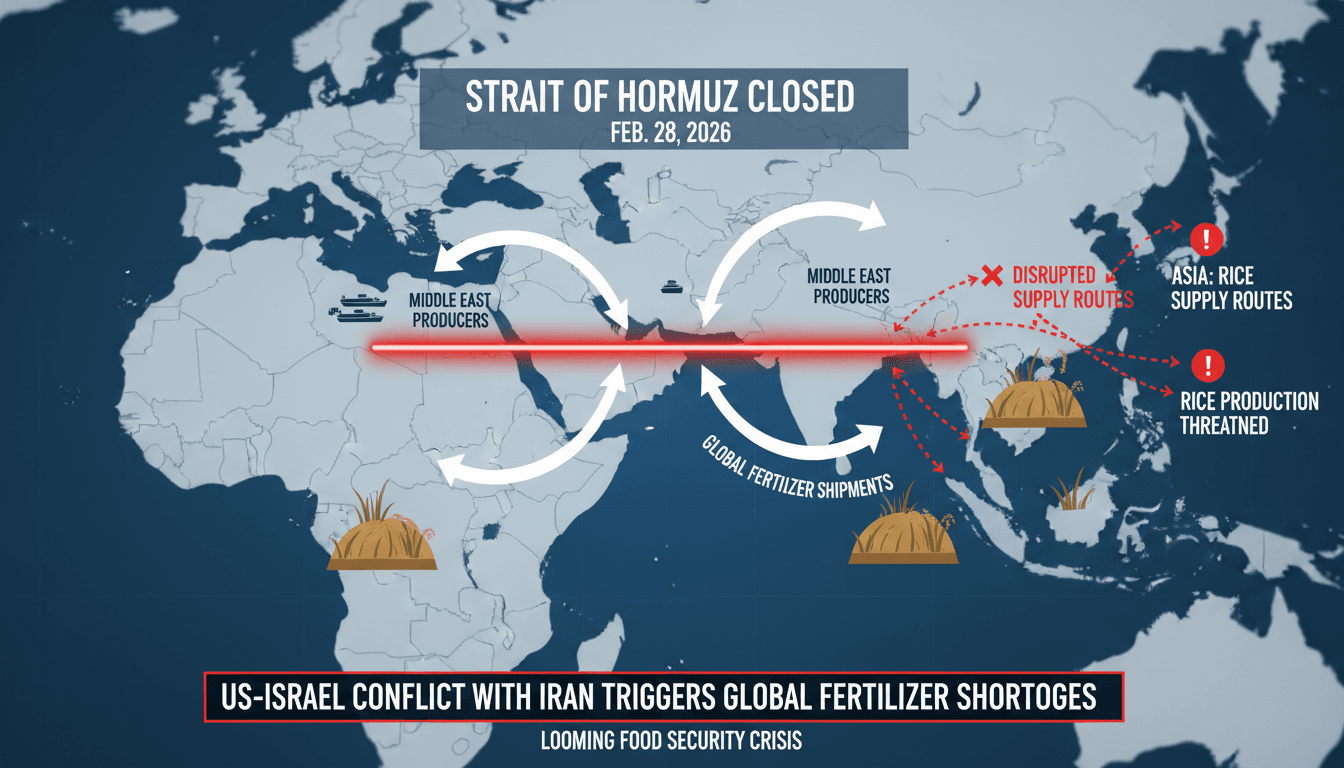
Here's what it means for you.
If you're involved in agriculture or food supply chains, expect significant disruptions and rising costs due to fertilizer shortages.
Why it matters
The closure of the Strait of Hormuz threatens the stability of global food supplies, particularly in Asia, where rice production is heavily reliant on imported fertilizers.
What happened (in 30 seconds)
- On February 28, 2026, US and Israeli forces launched airstrikes on Iran, escalating tensions and disrupting shipping in the Strait of Hormuz.
- By March 4, 2026, Iran declared the strait closed, deploying mines and attacking vessels, halting one-third of global fertilizer trade.
- As of April 14, 2026, Asian rice farmers are facing acute shortages of fuel and fertilizers, leading to soaring prices and potential food security crises.
The context you actually need
- The Strait of Hormuz is a critical chokepoint for global trade, with 20-30% of the world's seaborne fertilizer exports passing through it.
- Fertilizer prices surged by 30-60% globally within weeks of the conflict, impacting agricultural production costs and food prices.
- Asian countries like India, Vietnam, and Thailand are particularly vulnerable, as they rely heavily on imports for urea and other fertilizers essential for rice cultivation.
What's really happening
The closure of the Strait of Hormuz is a direct consequence of escalating geopolitical tensions between the US, Israel, and Iran. Following coordinated airstrikes targeting Iranian military capabilities, Iran retaliated by closing the strait, a vital maritime route for global trade. This closure has immediate and far-reaching implications for the agricultural sector, particularly in Asia, where rice is a staple food.
The Strait of Hormuz is crucial for the transit of fertilizers, with approximately one-third of global seaborne fertilizer trade passing through this narrow waterway. Fertilizers, especially urea, are essential for rice production, and the disruption in supply chains has led to significant price increases. By mid-March 2026, fertilizer prices had surged by 30-60%, creating a ripple effect throughout the agricultural sector.
Asian rice producers are now facing acute shortages during critical planting seasons. Countries like India, Vietnam, and Thailand, which are major rice exporters, are experiencing delays in planting due to a lack of necessary fertilizers. The Food and Agriculture Organization (FAO) has warned of a "food security timebomb," indicating that the situation could lead to widespread hunger and instability in the region.
The geopolitical landscape is further complicated by the involvement of multiple stakeholders, including Qatar, which is a significant producer of urea. The US has begun preparations for a blockade, intensifying the conflict and making it difficult for alternative supply routes to be established. As discussions for a ceasefire continue, the fragility of the situation remains evident, with potential for further escalation.
The economic implications are profound. Rising fertilizer costs will likely lead to increased food prices, affecting consumers globally. The World Food Program has projected that an additional 45 million people could face hunger as a result of these disruptions. The interconnectedness of global supply chains means that the effects of this conflict will not be contained to the immediate region but will resonate worldwide.
Who feels it first (and how)
- Farmers in Asia: Facing immediate shortages of fertilizers, leading to delayed planting and reduced yields.
- Agricultural supply chains: Companies reliant on timely fertilizer deliveries are experiencing disruptions and increased costs.
- Consumers: Rising food prices will impact households, particularly in regions heavily dependent on rice as a staple.
- Exporters: Countries like India and Vietnam may see reduced export capabilities, affecting their economies.
What to watch next
- Ceasefire negotiations: Progress or setbacks in talks could significantly impact the duration of the strait's closure and subsequent supply chain recovery.
- Fertilizer price trends: Continued monitoring of global fertilizer prices will indicate the broader economic impact on food security.
- Alternative supply routes: Developments in securing alternative fertilizer supplies could mitigate some of the immediate impacts on rice production.
The Strait of Hormuz is currently closed, disrupting a significant portion of global fertilizer trade.
Fertilizer prices will continue to rise, impacting food prices and agricultural production in Asia.
The duration of the conflict and its long-term implications for global food security remain uncertain.
Frequently Asked Questions
- Why it matters?
- The closure of the Strait of Hormuz threatens the stability of global food supplies, particularly in Asia, where rice production is heavily reliant on imported fertilizers.
- What happened (in 30 seconds)?
- On February 28, 2026, US and Israeli forces launched airstrikes on Iran, escalating tensions and disrupting shipping in the Strait of Hormuz. By March 4, 2026, Iran declared the strait closed, deploying mines and attacking vessels, halting one-third of global fertilizer trade. As of April 14, 2026, Asian rice farmers are facing acute shortages of fuel and fertilizers, leading to soaring prices and potential food security crises.
- What's really happening?
- The closure of the Strait of Hormuz is a direct consequence of escalating geopolitical tensions between the US, Israel, and Iran. Following coordinated airstrikes targeting Iranian military capabilities, Iran retaliated by closing the strait, a vital maritime route for global trade. This closure has immediate and far-reaching implications for the agricultural sector, particularly in Asia, where rice is a staple food. The Strait of Hormuz is crucial for the transit of fertilizers, with approxima
- Who feels it first (and how)?
- Farmers in Asia: Facing immediate shortages of fertilizers, leading to delayed planting and reduced yields. Agricultural supply chains: Companies reliant on timely fertilizer deliveries are experiencing disruptions and increased costs. Consumers: Rising food prices will impact households, particularly in regions heavily dependent on rice as a staple. Exporters: Countries like India and Vietnam may see reduced export capabilities, affecting their economies.
- What to watch next?
- Ceasefire negotiations: Progress or setbacks in talks could significantly impact the duration of the strait's closure and subsequent supply chain recovery. Fertilizer price trends: Continued monitoring of global fertilizer prices will indicate the broader economic impact on food security. Alternative supply routes: Developments in securing alternative fertilizer supplies could mitigate some of the immediate impacts on rice production.
Global markets, investing, and macroeconomics from a premier financial newsroom.
"Bloomberg is respected for in-depth financial reporting and data-driven analysis."
— A47 Editor
Hormuz Closure Sets Clock Ticking for Asia’s Rice Farmers
The ongoing conflict in Iran has raised significant concerns for Asia's rice farmers, as the closure of the Strait of Hormuz threatens to disrupt supply chains and impact harvests. This situation is exacerbated by rising inflation and economic instab...
UAE-based English-language newspaper covering regional politics, economics, and global affairs.
"The National reflects Emirati policy perspectives while maintaining international editorial standards."
— A47 Editor
Food insecurity rises in global South as Strait of Hormuz remains closed
Food insecurity is escalating in the global South as the Strait of Hormuz remains closed due to ongoing geopolitical tensions, particularly involving Iran's threats against maritime traffic. This blockade has significant implications for internationa...
Global news coverage with extensive reporting on Middle Eastern conflicts and geopolitics.
"Al Jazeera is a Qatar-based broadcaster known for wide regional coverage and alternative perspectives."
— A47 Editor
World faces food ‘catastrophe’ if Strait of Hormuz disruption persists: FAO
The Food and Agriculture Organization (FAO) has warned of a potential global food catastrophe if disruptions in the Strait of Hormuz continue, highlighting the vulnerability of global agriculture to maritime blockages.
Comprehensive coverage of Middle Eastern and global issues.
"Al Jazeera is a prominent voice from the Global South, especially the Middle East, with an emphasis on underreported stories."
— A47 Editor
World faces food ‘catastrophe’ if Strait of Hormuz disruption persists: FAO
The Food and Agriculture Organization (FAO) has warned of a potential global food catastrophe if disruptions in the Strait of Hormuz continue, highlighting the vulnerability of global agriculture to maritime blockages.
Sports reporting with a focus on Saudi and regional competitions.
"Okaz sports coverage is broad and audience-friendly, with strong attention to Saudi teams and leagues."
— A47 Editor
«الفاو»: أزمة «هرمز» تؤدي لكارثة عالمية في الغذاء والزراعة
The United Nations Food and Agriculture Organization (FAO) has warned that the ongoing crisis in the Strait of Hormuz could lead to a global disaster in food and agriculture by disrupting fertilizer and energy exports, raising food prices, and reduci...