
Israeli Airstrike in Ain Saadeh Targets Hezbollah Official, Civilian Casualties Reported
Here's what it means for you.
The ongoing conflict between Israel and Hezbollah could impact global oil markets, affecting energy prices and economic stability.
Why it matters
The escalation of violence in Lebanon has the potential to disrupt regional stability, influencing global economic conditions.
What happened (in 30 seconds)
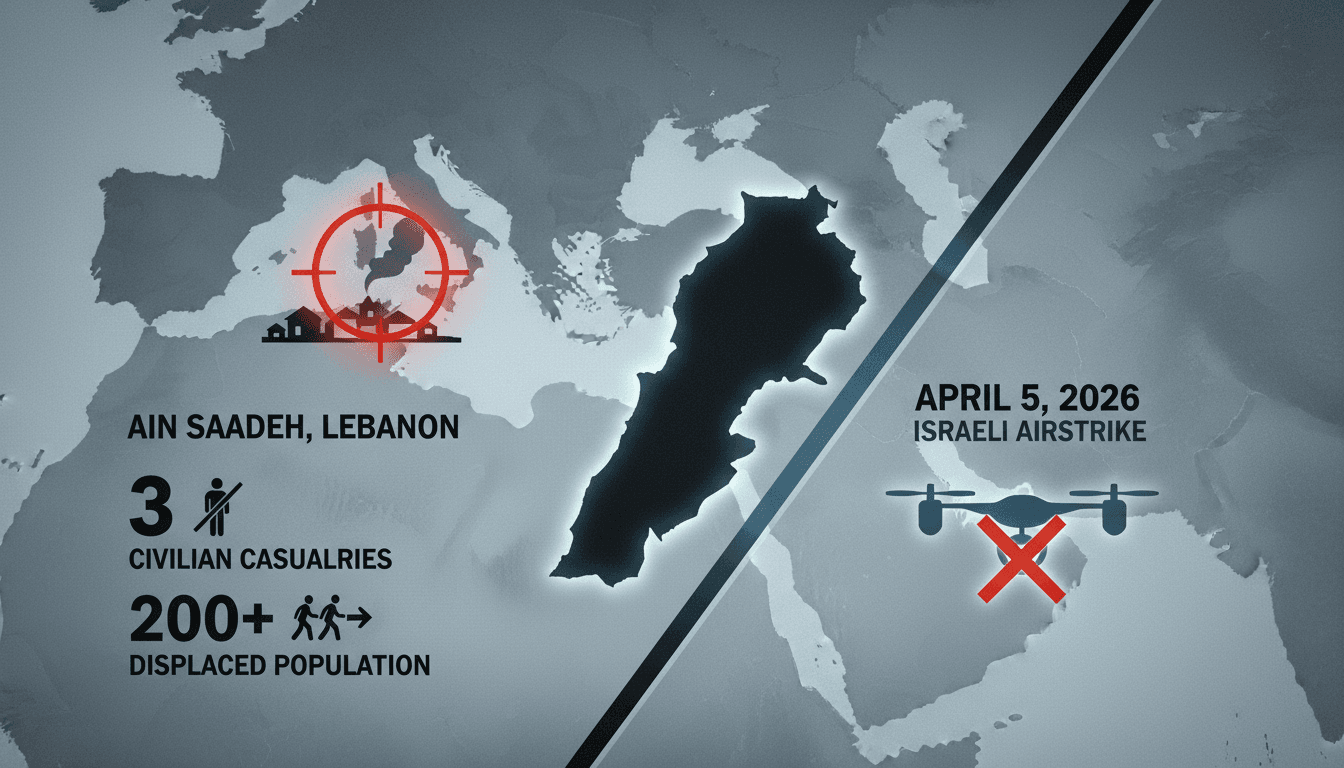
- Israeli airstrike on April 5, 2026, targeted a Hezbollah official in Ain Saadeh, resulting in civilian casualties.
- Three civilians were killed, including a local Lebanese Forces member, while the intended target survived.
- Ongoing conflict has already led to over 1,460 deaths in Lebanon since March 2026, with significant displacement of populations.
The context you actually need
- Escalation of conflict: The airstrike occurred amid heightened tensions following Hezbollah's rocket attacks into Israel in early March 2026, which were in solidarity with Iran.
- Civilian impact: The strike not only targeted a military figure but also resulted in the deaths of innocent civilians, raising concerns about the use of urban areas for military objectives.
- Sectarian tensions: The conflict has exacerbated sectarian divisions in Lebanon, particularly as displaced populations from southern Lebanon and Beirut's suburbs move into predominantly Christian areas.
What's really happening
The Israeli airstrike on Ain Saadeh highlights a significant shift in military strategy and the complexities of urban warfare in Lebanon. The target, a Hezbollah official, was reportedly visiting a residential apartment due to a romantic relationship, illustrating how personal connections can intertwine with military operations. This precision strike, executed without prior warning, underscores Israel's ongoing campaign against Hezbollah, which it labels a terrorist organization.
The Israeli military's justification for the strike rests on the premise that Hezbollah's use of civilian infrastructure for military purposes increases the risk of collateral damage. However, this incident raises ethical questions about the legitimacy of such strikes when they lead to civilian casualties. The deaths of Pierre Mouawad, a Lebanese Forces official, and his family members have ignited outrage among local communities, further complicating the already fraught sectarian landscape.
As the conflict escalates, the humanitarian impact is profound. Over 1,460 fatalities have been reported since March 2026, with more than one million people displaced, primarily from Shiite-majority areas. This displacement is not just a demographic shift; it also raises fears of Hezbollah infiltration into predominantly Christian regions, potentially igniting further sectarian violence. Local officials are increasingly concerned about the implications of these movements, as they could lead to heightened tensions and conflicts over resources and security.
The broader implications of this airstrike extend beyond Lebanon. The ongoing conflict contributes to volatility in global oil markets, which could affect energy prices worldwide. For countries like the UAE, where oil exports are crucial to the economy, any instability in the region could have ripple effects on trade, investments, and travel. As the situation develops, the international community will be watching closely, as the consequences of this airstrike and the ensuing conflict could reshape geopolitical dynamics in the Middle East.
Who feels it first (and how)
- Local civilians: Families and communities directly impacted by airstrikes and the resulting casualties.
- Lebanese Forces: Political and military groups in Lebanon that may face increased scrutiny and pressure due to the conflict.
- Global energy markets: Investors and businesses that rely on stable oil prices, which may fluctuate due to regional instability.
What to watch next
- Civilian casualty reports: Monitoring the ongoing investigations into civilian deaths will provide insight into the conflict's humanitarian impact.
- Regional military movements: Changes in troop deployments or military strategies by either Israel or Hezbollah could signal further escalations.
- Economic indicators: Fluctuations in oil prices and energy exports from the UAE will reflect the broader economic implications of the conflict.
The airstrike resulted in civilian casualties and heightened sectarian tensions in Lebanon.
Continued military operations by Israel against Hezbollah, with potential for further civilian impact.
The long-term geopolitical implications of the conflict on regional stability and global oil markets.
Frequently Asked Questions
- Why it matters?
- The escalation of violence in Lebanon has the potential to disrupt regional stability, influencing global economic conditions.
- What happened (in 30 seconds)?
- Israeli airstrike on April 5, 2026, targeted a Hezbollah official in Ain Saadeh, resulting in civilian casualties. Three civilians were killed, including a local Lebanese Forces member, while the intended target survived. Ongoing conflict has already led to over 1,460 deaths in Lebanon since March 2026, with significant displacement of populations.
- What's really happening?
- The Israeli airstrike on Ain Saadeh highlights a significant shift in military strategy and the complexities of urban warfare in Lebanon. The target, a Hezbollah official, was reportedly visiting a residential apartment due to a romantic relationship, illustrating how personal connections can intertwine with military operations. This precision strike, executed without prior warning, underscores Israel's ongoing campaign against Hezbollah, which it labels a terrorist organization. The Israeli m
- Who feels it first (and how)?
- Local civilians: Families and communities directly impacted by airstrikes and the resulting casualties. Lebanese Forces: Political and military groups in Lebanon that may face increased scrutiny and pressure due to the conflict. Global energy markets: Investors and businesses that rely on stable oil prices, which may fluctuate due to regional instability.
- What to watch next?
- Civilian casualty reports: Monitoring the ongoing investigations into civilian deaths will provide insight into the conflict's humanitarian impact. Regional military movements: Changes in troop deployments or military strategies by either Israel or Hezbollah could signal further escalations. Economic indicators: Fluctuations in oil prices and energy exports from the UAE will reflect the broader economic implications of the conflict.
Pan-Arab news coverage spanning politics, business, sports, and regional affairs.
"Asharq Al-Awsat reflects a broad Arab editorial perspective with strong attention to regional geopolitics."
— A47 Editor
غارة الأحد على مبنى شرق بيروت كانت تستهدف مسؤولاً من «حزب الله»
A judicial source revealed to Agence France-Presse that the Israeli airstrike on a building in eastern Beirut over the past weekend targeted a Hezbollah official.
Arabic-language UAE newspaper coverage focused on domestic affairs, public institutions, business, society, and regional developments.
"Al Khaleej coverage generally reflects a mainstream UAE editorial lens with strong attention to public affairs, institutions, and regional developments."
— A47 Editor
بعد قصف بيروت المرعب.. إسرائيل تعلن استهداف قيادي في حزب الله
The Israeli military announced on Wednesday that it targeted a Hezbollah leader in Beirut, following reports from Lebanese state media about the incident. This development comes amid heightened tensions in the region, particularly concerning the ongo...
Arabic-language UAE newspaper coverage focused on domestic affairs, public institutions, business, society, and regional developments.
"Al Khaleej coverage generally reflects a mainstream UAE editorial lens with strong attention to public affairs, institutions, and regional developments."
— A47 Editor
إسرائيل تجدّد غاراتها على ضاحية بيروت الجنوبية
An Israeli airstrike targeted the southern suburbs of Beirut on Monday, following warnings for residents to evacuate certain neighborhoods. The Israeli military announced that it struck 'targets' linked to Hezbollah during the operation.