
US Naval Blockade on Iranian Ports Enforces Oil Export Restrictions Amid Ongoing Crisis
Here's what it means for you.
If you rely on oil markets or trade routes in the Gulf region, the U.S. blockade could significantly impact prices and supply chains.
Why it matters
The blockade aims to disrupt Iranian oil exports, which could lead to increased global oil prices and supply shortages.
What happened (in 30 seconds)
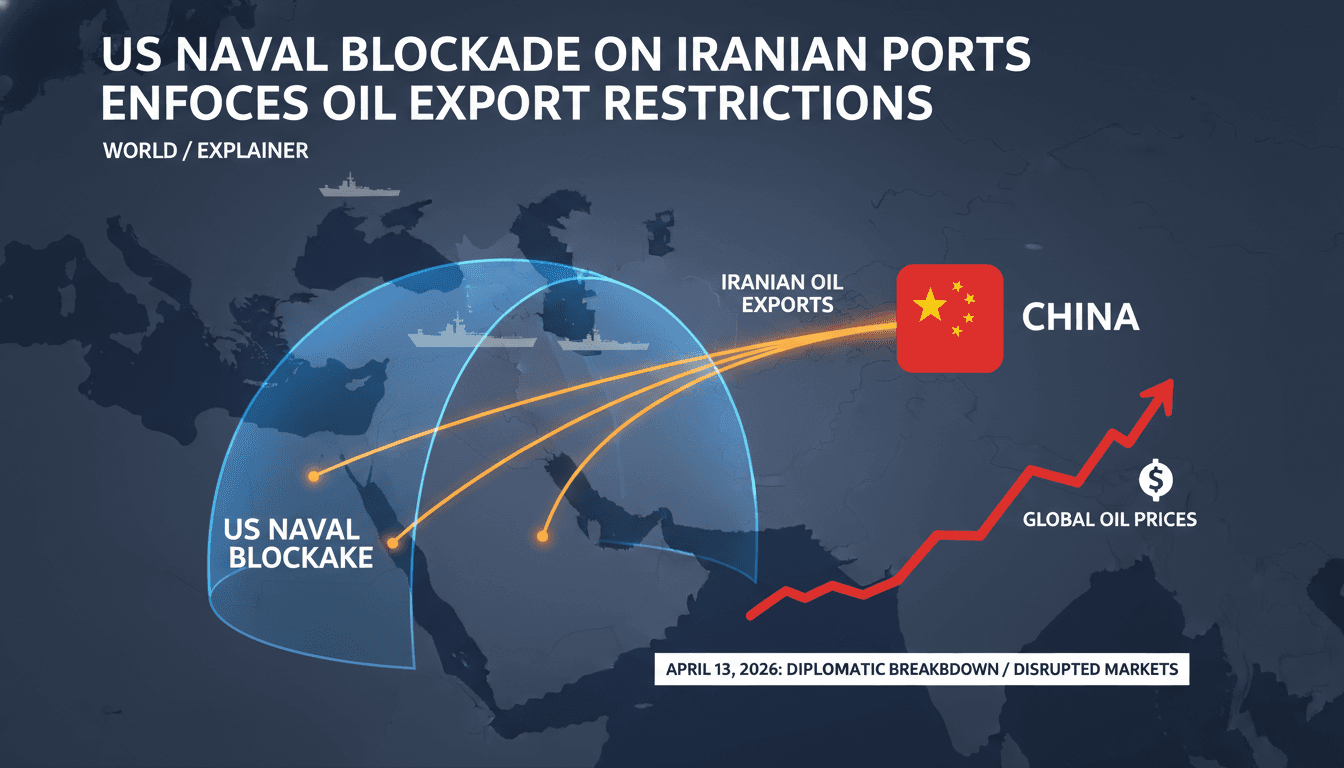
- On April 13, 2026, the U.S. initiated a naval blockade of Iranian ports to curb oil exports amid rising tensions in the Strait of Hormuz.
- Iran has employed deceptive shipping practices, including AIS spoofing and ship-to-ship transfers, to maintain oil exports primarily to China.
- Oil prices surged, with Brent crude exceeding $100 per barrel following the blockade announcement, reflecting market volatility.
The context you actually need
- The blockade follows a series of escalations in the Strait of Hormuz crisis, including U.S.-Israeli airstrikes and Iranian retaliatory actions.
- Iran's oil exports averaged 2.17 million barrels per day in February 2026, with approximately 90% directed to China, complicating enforcement efforts.
- Legal constraints under international maritime law and potential escalation risks with major oil buyers like China pose significant challenges to the blockade's effectiveness.
What's really happening
The U.S. blockade of Iranian ports is a strategic maneuver aimed at pressuring Iran to reopen the Strait of Hormuz, a critical maritime route for global oil shipments. The blockade was announced by President Trump following the collapse of diplomatic talks in Islamabad, which had aimed to de-escalate tensions. The U.S. Central Command (CENTCOM) implemented the blockade on April 13, 2026, restricting traffic to and from Iranian ports while allowing non-Iranian vessels to transit the strait, albeit with heightened risks.
The blockade's effectiveness is hampered by Iran's sophisticated shipping practices. The country has developed a shadow fleet that utilizes tactics such as AIS spoofing—manipulating Automatic Identification System signals to disguise vessel locations—and ship-to-ship transfers to obscure the origins of its oil exports. This fleet primarily serves China, which absorbs about 90% of Iran's oil exports, making enforcement of the blockade particularly challenging.
Moreover, the blockade has escalated tensions in the region, with Iran's Islamic Revolutionary Guard Corps (IRGC) warning of retaliation against U.S. allies and potential closures of the Red Sea via Houthi forces. The situation is further complicated by legal constraints under the United Nations Convention on the Law of the Sea (UNCLOS), which governs maritime operations and could limit the U.S.'s ability to enforce the blockade without risking international backlash.
The immediate aftermath of the blockade announcement saw a surge in oil prices, with Brent crude exceeding $100 per barrel and WTI futures rising by 8.4%. This price volatility reflects market anxiety over potential supply disruptions and the geopolitical risks associated with the blockade. As a result, oil traders and consumers worldwide are likely to feel the impact of these developments, with increased costs and potential shortages looming on the horizon.
Who feels it first (and how)
- Oil traders: Facing increased volatility and potential supply shortages, impacting pricing strategies.
- Shipping companies: Encountering heightened risks and insurance premiums due to proximity to conflict zones.
- Consumers: Likely to see rising fuel prices as oil costs increase.
- Businesses reliant on oil: Facing higher operational costs, which could affect pricing and profitability.
- Residents of Dubai and the UAE: Experiencing elevated risks and disruptions due to their geographic proximity to the conflict.
What to watch next
- Oil price trends: Monitor Brent and WTI prices for indications of market stability or further volatility.
- Iran's shipping tactics: Watch for developments in Iran's shadow fleet operations and any changes in export volumes.
- Geopolitical responses: Observe reactions from China and other major oil consumers regarding the blockade and potential retaliatory measures.
The U.S. blockade is currently active, and oil prices have surged as a result.
Iran will continue to employ deceptive shipping practices to maintain oil exports despite the blockade.
The long-term effectiveness of the blockade and its potential to escalate military tensions in the region.
Frequently Asked Questions
- Why it matters?
- The blockade aims to disrupt Iranian oil exports, which could lead to increased global oil prices and supply shortages.
- What happened (in 30 seconds)?
- On April 13, 2026, the U.S. initiated a naval blockade of Iranian ports to curb oil exports amid rising tensions in the Strait of Hormuz. Iran has employed deceptive shipping practices, including AIS spoofing and ship-to-ship transfers, to maintain oil exports primarily to China. Oil prices surged, with Brent crude exceeding $100 per barrel following the blockade announcement, reflecting market volatility.
- What's really happening?
- The U.S. blockade of Iranian ports is a strategic maneuver aimed at pressuring Iran to reopen the Strait of Hormuz, a critical maritime route for global oil shipments. The blockade was announced by President Trump following the collapse of diplomatic talks in Islamabad, which had aimed to de-escalate tensions. The U.S. Central Command (CENTCOM) implemented the blockade on April 13, 2026, restricting traffic to and from Iranian ports while allowing non-Iranian vessels to transit the strait, albei
- Who feels it first (and how)?
- Oil traders: Facing increased volatility and potential supply shortages, impacting pricing strategies. Shipping companies: Encountering heightened risks and insurance premiums due to proximity to conflict zones. Consumers: Likely to see rising fuel prices as oil costs increase. Businesses reliant on oil: Facing higher operational costs, which could affect pricing and profitability. Residents of Dubai and the UAE: Experiencing elevated risks and disruptions due to their geographic proximi
- What to watch next?
- Oil price trends: Monitor Brent and WTI prices for indications of market stability or further volatility. Iran's shipping tactics: Watch for developments in Iran's shadow fleet operations and any changes in export volumes. Geopolitical responses: Observe reactions from China and other major oil consumers regarding the blockade and potential retaliatory measures.
Global markets, investing, and macroeconomics from a premier financial newsroom.
"Bloomberg is respected for in-depth financial reporting and data-driven analysis."
— A47 Editor
US Threat to Block Iranian Oil Faces Practical Obstacles
The United States has announced plans to impose a blockade on the Strait of Hormuz, a vital maritime route for oil shipments, following the collapse of peace negotiations with Iran. President Donald Trump characterized the negotiations as 'extortiona...
UAE-based English-language newspaper covering regional politics, economics, and global affairs.
"The National reflects Emirati policy perspectives while maintaining international editorial standards."
— A47 Editor
Manus on Markets: US's Hormuz blockade will wreck world energy supply
The United States has announced a blockade of the Strait of Hormuz, a critical maritime route for global oil shipments, following the failure of U.S.-Iran ceasefire talks. This blockade, declared by President Donald Trump, aims to interdict vessels i...
Corporate leadership, finance, technology, and market trends.
"Fortune covers financial trends, leadership, and innovation with a pragmatic editorial approach."
— A47 Editor
Here’s how a U.S. naval blockade of the Strait of Hormuz could work. ‘This is a big task, and it’s a big gamble’
The United States has initiated a naval blockade of the Strait of Hormuz, a strategic maritime route, following the collapse of peace negotiations with Iran. This blockade aims to exert economic pressure on Tehran while preserving its oil facilities ...