
Bitcoin Improvement Proposal 110 fails amid governance challenges
Here's what it means for you.
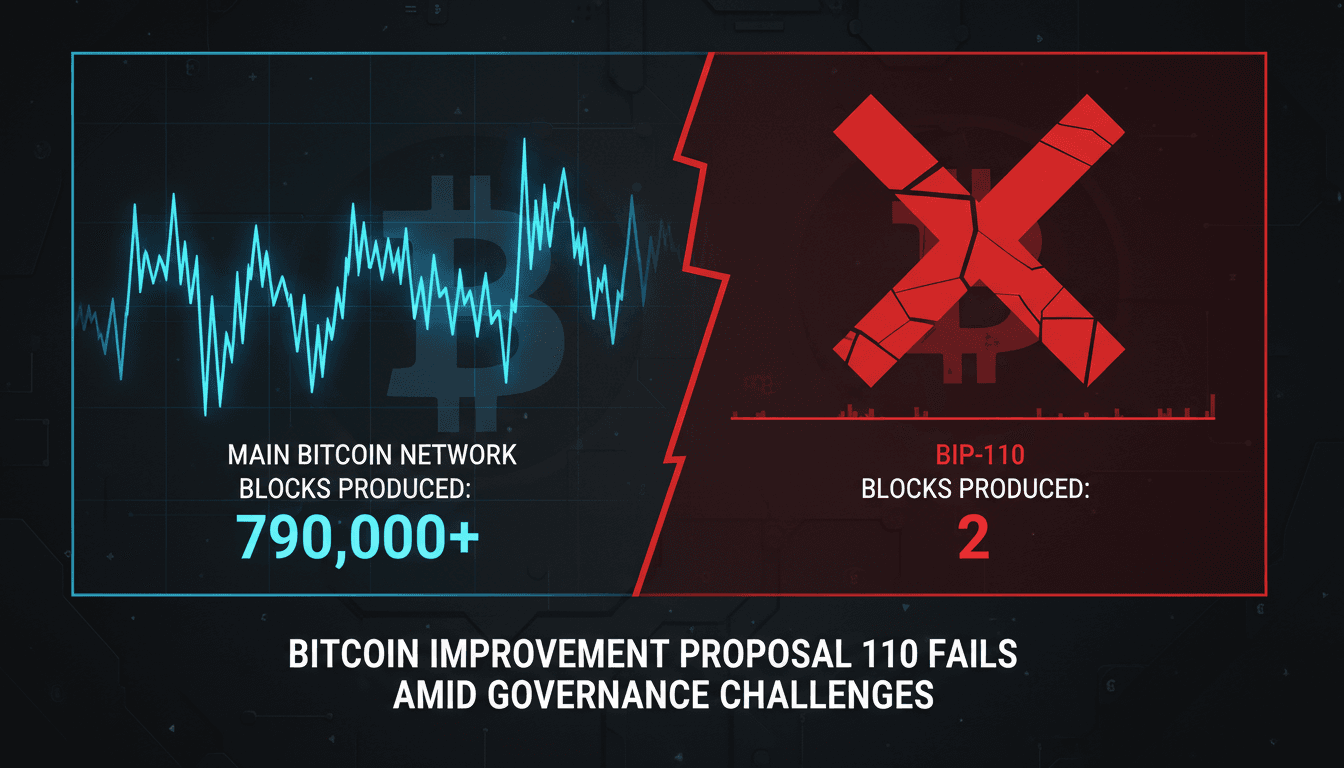
The failure of Bitcoin Improvement Proposal 110 (BIP-110) highlights significant governance challenges within the Bitcoin community. With 99.85% of miners rejecting the proposal, the incident underscores the difficulties in achieving consensus on network upgrades. As developers pivot to BIP-54, which aims to enhance security, stakeholders must remain vigilant about future governance strategies and their implications for Bitcoin's evolution.
What happened
The proposed Bitcoin Improvement Proposal 110 (BIP-110) aimed to address spam on the Bitcoin network but failed to gain sufficient miner support. After producing only two blocks, the proposal stalled, revealing a lack of consensus among miners. In stark contrast, the main Bitcoin network produced over 300 blocks during the same timeframe, illustrating the overwhelming rejection of BIP-110.
This failure has prompted developers to shift their focus towards BIP-54, a new proposal that seeks to enhance Bitcoin's security. The swift transition indicates a need for more robust governance strategies within the community to ensure future proposals can gain the necessary support.
The Context
BIP-110 was introduced as a soft fork intended to mitigate spam issues on the Bitcoin network. However, the overwhelming rejection from miners, with nearly all hashpower remaining on the original chain, highlights the challenges of consensus-building in the decentralized ecosystem. The timing of this failure is critical, as it comes amid ongoing discussions about the future direction of Bitcoin and its governance.
The Bitcoin community is now faced with the task of reevaluating its approach to governance, especially as new proposals like BIP-54 emerge. This situation reflects the ongoing tensions within the community and the importance of effective communication and collaboration among stakeholders.
Takeaway
The failure of BIP-110 may lead to a reevaluation of governance strategies within the Bitcoin community. As developers focus on BIP-54, which aims to close security vulnerabilities, the success of this proposal will depend on achieving broader consensus among miners and stakeholders. Observers should monitor the activation process and support for BIP-54, as well as any potential new proposals aimed at improving Bitcoin's governance.
The outcome of these developments will be crucial for the future of Bitcoin, as the community navigates the complexities of governance and consensus-building.
Covers Bitcoin plus altcoin news, market updates, and educational resources.
"Bitcoin.com provides news, market data, and guides focused on Bitcoin and the wider crypto industry."
— A47 Editor
After BIP-110 Flops, Bitcoin’s Next Soft Fork Faces a Showdown
Bitcoin's latest soft fork attempt, BIP-110, has faced significant challenges, with miner support dwindling to just 2.53%, far below the 55% needed for consensus. This has led to a contentious environment as the proposal moves towards its activation ...
Real-time updates, analysis, and reports on the blockchain and cryptocurrency sectors.
"Crypto News delivers real-time updates, analysis, and reports on the blockchain and cryptocurrency sectors."
— A47 Editor
BIP-110 is dead: what Bitcoin’s failed anti-spam fork reveals about governance in 2026
The Bitcoin Improvement Proposal 110 (BIP-110) has effectively failed, having only managed to mine two blocks before freezing, with a staggering 99.85% of hashpower remaining on the original Bitcoin chain. This marks a significant governance rejectio...
Covers blockchain, cryptocurrency news, project analysis, and market insights.
"CoinDesk is a well-established cryptocurrency and blockchain news provider, offering comprehensive insights, market data, and industry research."
— A47 Editor
Bitcoin’s BIP-110 fork is 300 blocks behind BTC and six years from fixing itself
Bitcoin's BIP-110 fork has fallen significantly behind the main Bitcoin chain, currently lagging by over 300 blocks after producing only two blocks since its split on Saturday. This lack of progress highlights the ongoing challenges faced by the fork...
News, analysis, and thought leadership focusing exclusively on Bitcoin.
"Bitcoin Magazine is one of the original publications devoted to Bitcoin, offering in-depth news, analysis, and commentary."
— A47 Editor
BIP-110 Fork Stalls at Two Blocks as Bitcoin Miners Refuse to Follow
The BIP-110 soft fork attempt on the Bitcoin network stalled after successfully mining only two blocks, garnering a mere 2.53% support from miners, significantly below the 55% required for consensus. This failure highlights the contentious nature of ...