
Crypto Trade Groups Sue Illinois Over Digital Asset Tax Act
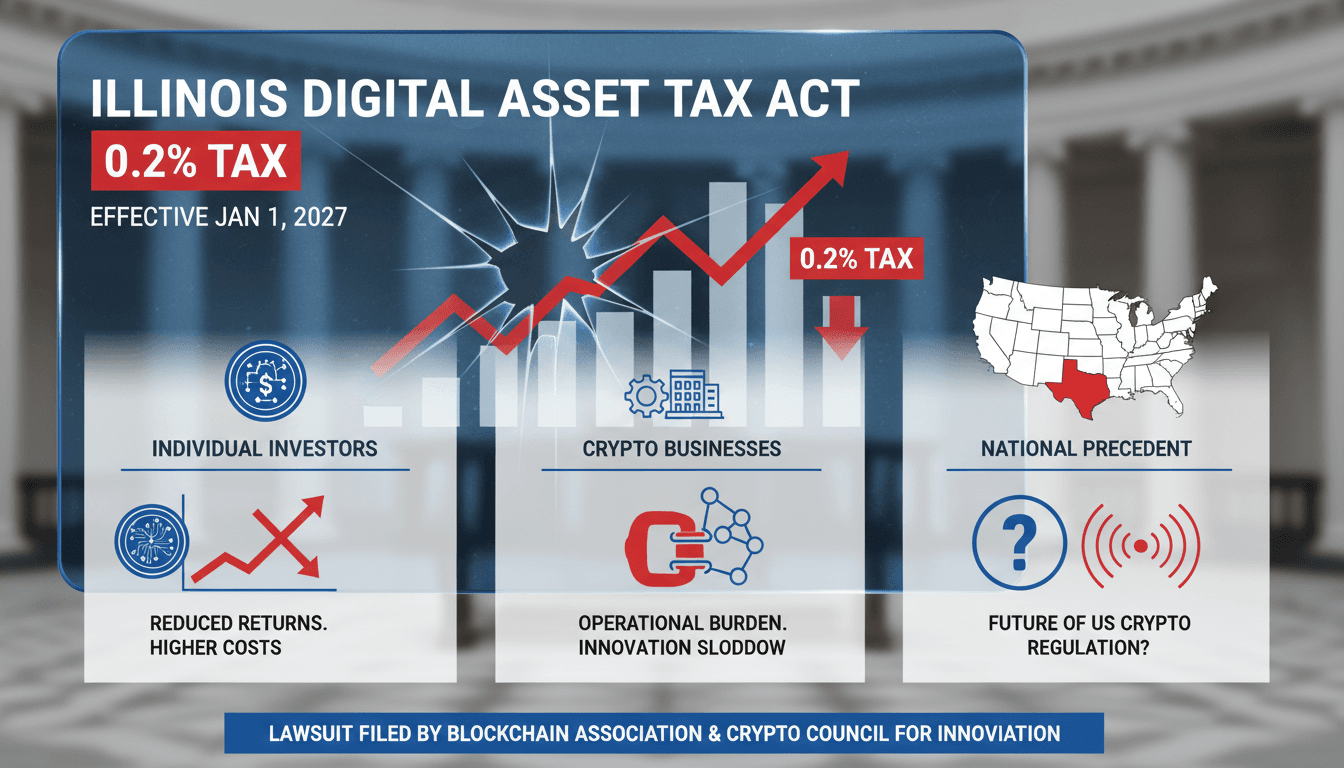
Here's what it means for you.
If you engage in digital asset transactions, the outcome of this lawsuit could influence tax policies that affect your investments.
Why it matters
This lawsuit could set a precedent for how states regulate and tax digital assets, impacting the broader cryptocurrency market.
What happened (in 30 seconds)
- On August 21, 2026, the Blockchain Association and Crypto Council for Innovation filed a lawsuit against Illinois’ Digital Asset Tax Act.
- The law imposes a 0.2% tax on digital asset transactions, set to take effect on January 1, 2027.
- Plaintiffs argue that the tax violates multiple constitutional provisions, including the dormant Commerce Clause.
The context you actually need
- Illinois enacted the Digital Asset Tax Act during the final hours of the 2026 legislative session, without extensive debate or public input.
- The law targets brokers with over $100,000 in receipts serving Illinois customers, marking a shift from previous tax treatments that aligned digital assets with other financial properties.
- A similar tax was struck down in Maryland, which may influence the court's decision in Illinois.
What's really happening
The lawsuit filed by the Blockchain Association and Crypto Council for Innovation is a response to Illinois' Digital Asset Tax Act, which imposes a 0.2% tax on digital asset transactions, transfers, and custody services. This tax is projected to generate approximately $60 million annually for the state, a significant incentive for Illinois lawmakers. However, the plaintiffs argue that the law violates the U.S. Constitution's dormant Commerce Clause, which prohibits states from discriminating against or unduly burdening interstate commerce. They also cite the federal Internet Tax Freedom Act, which aims to prevent states from taxing internet-based transactions.
The plaintiffs' legal strategy hinges on multiple counts alleging constitutional violations and vagueness in the law's language. This lawsuit follows a similar action taken by the Digital Chamber in July 2026, indicating a growing resistance within the cryptocurrency industry against state-level taxation of digital assets. The Illinois Department of Revenue, led by Director David Harris, and Attorney General Kwame Raoul are named as defendants, highlighting the state's commitment to enforcing the tax despite the legal challenges.
The broader implications of this lawsuit extend beyond Illinois. If the court rules in favor of the plaintiffs, it could set a precedent that discourages other states from implementing similar taxes, thereby shaping the regulatory landscape for digital assets across the U.S. Conversely, if the court upholds the tax, it may embolden other states to pursue their own digital asset taxes, potentially leading to a patchwork of regulations that complicate compliance for businesses operating in multiple jurisdictions.
As the court has yet to issue a ruling, the tax remains scheduled for implementation on January 1, 2027. The lack of immediate market reactions or operational shifts by exchanges suggests that stakeholders are awaiting the court's decision before making significant changes. However, the ongoing legal battle underscores the tension between state revenue needs and the burgeoning digital asset economy, raising questions about the future of cryptocurrency regulation in the U.S.
Who feels it first (and how)
- Cryptocurrency brokers: They will face immediate financial implications from the tax if it is enforced.
- Investors in digital assets: They may see changes in transaction costs and market dynamics.
- Illinois residents: They could experience shifts in local economic activity related to digital assets.
What to watch next
- Court ruling timeline: The speed and outcome of the court's decision will be crucial for stakeholders.
- Legislative responses: Watch for any new bills or amendments proposed in Illinois or other states regarding digital asset taxation.
- Market reactions: Monitor how cryptocurrency exchanges and brokers adjust their operations in response to the lawsuit and potential tax implications.
The lawsuit has been filed and is pending in court.
The outcome will influence future state-level digital asset tax policies.
How quickly the court will rule and what the broader market implications will be.
Frequently Asked Questions
- Why it matters?
- This lawsuit could set a precedent for how states regulate and tax digital assets, impacting the broader cryptocurrency market.
- What happened (in 30 seconds)?
- On August 21, 2026, the Blockchain Association and Crypto Council for Innovation filed a lawsuit against Illinois’ Digital Asset Tax Act. The law imposes a 0.2% tax on digital asset transactions, set to take effect on January 1, 2027. Plaintiffs argue that the tax violates multiple constitutional provisions, including the dormant Commerce Clause.
- What's really happening?
- The lawsuit filed by the Blockchain Association and Crypto Council for Innovation is a response to Illinois' Digital Asset Tax Act, which imposes a 0.2% tax on digital asset transactions, transfers, and custody services. This tax is projected to generate approximately $60 million annually for the state, a significant incentive for Illinois lawmakers. However, the plaintiffs argue that the law violates the U.S. Constitution's dormant Commerce Clause, which prohibits states from discriminating aga
- Who feels it first (and how)?
- Cryptocurrency brokers: They will face immediate financial implications from the tax if it is enforced. Investors in digital assets: They may see changes in transaction costs and market dynamics. Illinois residents: They could experience shifts in local economic activity related to digital assets.
- What to watch next?
- Court ruling timeline: The speed and outcome of the court's decision will be crucial for stakeholders. Legislative responses: Watch for any new bills or amendments proposed in Illinois or other states regarding digital asset taxation. Market reactions: Monitor how cryptocurrency exchanges and brokers adjust their operations in response to the lawsuit and potential tax implications.
Bitcoin news, technical analysis, and forecasts across crypto markets.
"NewsBTC covers Bitcoin news, technical analysis, and forecasts across crypto markets and major blockchain projects."
— A47 Editor
Crypto Groups Sue To Block Illinois Digital Asset Tax Act
Cryptocurrency advocacy groups, including the Digital Chamber, have filed a lawsuit against the state of Illinois to block the newly enacted 0.2% tax on digital asset transactions, which is scheduled to take effect in 2027. This tax was introduced as...
Covers blockchain, cryptocurrency news, project analysis, and market insights.
"Cointelegraph is a leading crypto-focused media outlet known for timely news, analysis, and educational content related to blockchain and digital assets."
— A47 Editor
Crypto advocacy groups oppose Illinois digital asset tax in court
Two digital asset advocacy groups have filed a lawsuit against the state of Illinois, challenging the newly enacted 0.2% tax on cryptocurrency transactions, which is set to take effect in 2027. This legal action follows a similar lawsuit by the Digit...
Real-time updates, analysis, and reports on the blockchain and cryptocurrency sectors.
"Crypto News delivers real-time updates, analysis, and reports on the blockchain and cryptocurrency sectors."
— A47 Editor
Illinois crypto groups seek injunction against new tax
Two cryptocurrency trade groups have filed a lawsuit against the state of Illinois to block a newly enacted 0.2% tax on digital asset transactions, which is set to take effect in 2027. This tax, part of a budget package signed by Governor JB Pritzker...
Covers Bitcoin plus altcoin news, market updates, and educational resources.
"Bitcoin.com provides news, market data, and guides focused on Bitcoin and the wider crypto industry."
— A47 Editor
Illinois’ 0.2% Crypto Tax Sparks a Full-Blown Courtroom War
Illinois has enacted a 0.2% tax on cryptocurrency transactions, set to take effect in 2027, making it the first state in the U.S. to impose such a tax. This decision, approved by Governor JB Pritzker, is part of a broader budget package aimed at gene...