
Pakistan Implements Virtual Asset Licensing Regime with September 5 Deadline for Crypto Firms
Here's what it means for you.
If you’re involved in crypto in Pakistan, you must act quickly to comply with new regulations or risk losing access to the market.
Why it matters
This regulatory shift aims to formalize a previously unregulated market, impacting millions of users and billions in transactions.
What happened (in 30 seconds)
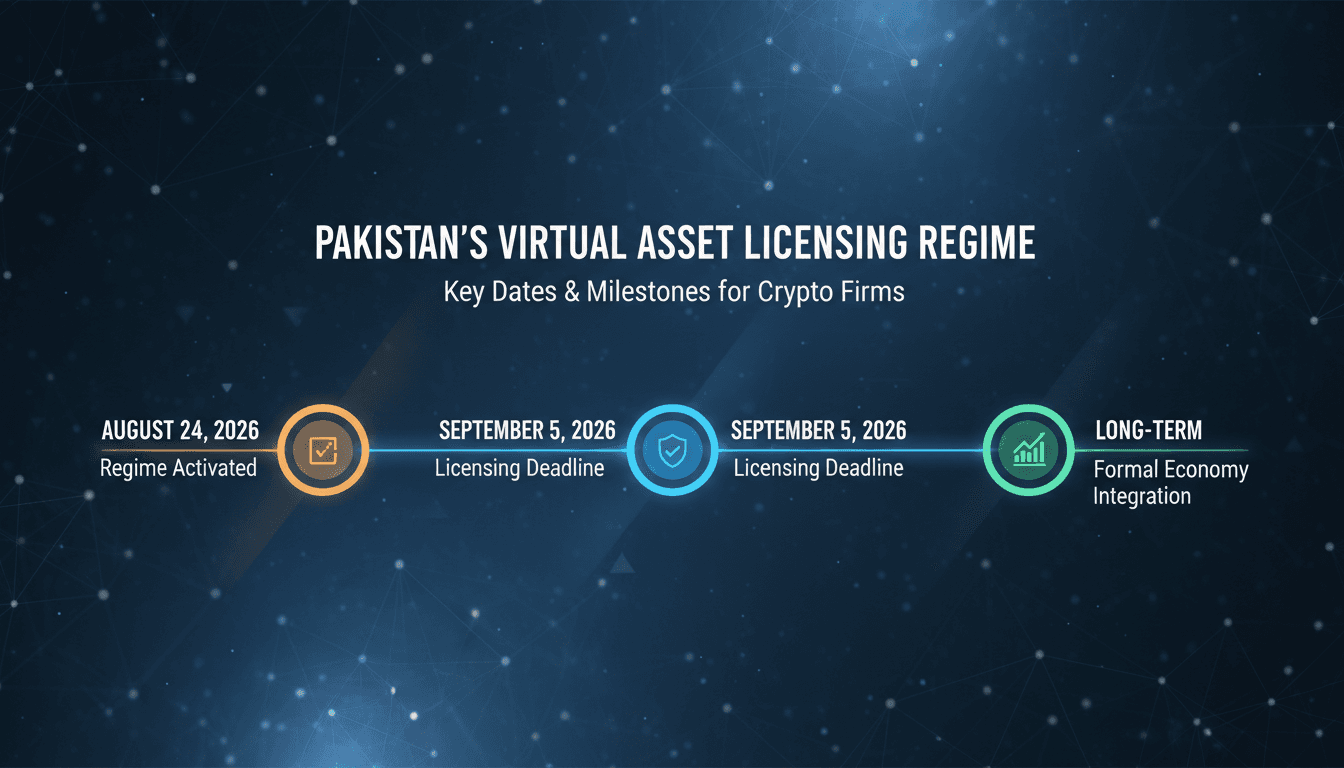
- Pakistan activated its virtual asset licensing regime on August 24, 2026, requiring existing crypto firms to apply for no-objection certificates (NOCs) by September 5, 2026.
- The Pakistan Virtual Assets Regulatory Authority (PVARA) opened its licensing portal following the final regulations under the Virtual Assets Act, which took effect on March 5, 2026.
- This initiative targets an estimated 30-40 million crypto users in Pakistan, aiming to integrate virtual assets into the formal economy with consumer protections and compliance standards.
The context you actually need
- Prior to this, Pakistan maintained a de facto ban on crypto since 2018, limiting the market's growth and user access.
- The Virtual Assets Act, 2026, established PVARA as the permanent federal regulator, signaling a shift towards formal regulation and oversight.
- Public consultations in mid-2026 led to the final regulations, indicating a responsive approach to stakeholder feedback and market needs.
What's really happening
On August 24, 2026, Pakistan officially launched its virtual asset licensing regime, marking a significant regulatory shift for the crypto landscape in the country. The Pakistan Virtual Assets Regulatory Authority (PVARA) is now the central body overseeing this transition, which requires existing crypto firms to apply for no-objection certificates (NOCs) by September 5, 2026. This deadline is critical; firms that fail to comply will be forced to cease operations, impacting an estimated 30-40 million crypto users in Pakistan.
The Virtual Assets Act, which took effect on March 5, 2026, classifies existing providers as transitional, allowing them to apply for licenses under the new framework. This act aims to integrate virtual assets into the formal economy, providing banking access, consumer protections, and compliance standards. The regulatory framework covers various categories, including exchanges, custody, lending, derivatives, and mining, with stringent requirements for asset segregation, Know Your Customer (KYC) and Anti-Money Laundering (AML) protocols, cybersecurity measures, and local incorporation.
PVARA's Chairman, Bilal bin Saqib, has emphasized the importance of consumer protection and the need for formal economic integration. Licensed firms will gain access to banking services, including segregated accounts, which could enhance operational capabilities and user trust. However, the transition comes with compliance costs and potential service disruptions for firms that miss the deadline. International platforms like Binance and HTX, which received preliminary NOCs in December 2025, are positioned to benefit from early compliance, potentially gaining a competitive edge in the market.
The activation of this licensing regime is a response to years of informal operations and prior restrictions, aiming to address a large informal market with significant user adoption and cross-border flows. The regulatory environment is expected to evolve as PVARA continues to refine its approach based on market feedback and developments.
Who feels it first (and how)
- Crypto firms: Must navigate the licensing process or cease operations.
- Investors and users: Need to ensure their platforms are compliant to avoid service interruptions.
- Banks and financial institutions: Will have new opportunities to engage with licensed crypto entities.
- Regulatory bodies: Will monitor compliance and enforcement, impacting future regulatory frameworks.
What to watch next
- Compliance rates: Monitor how many firms successfully apply for NOCs by the September 5 deadline, as this will indicate market stability.
- User adoption: Watch for shifts in user behavior as firms adapt to the new regulations and banking access becomes available.
- International partnerships: Look for potential collaborations between licensed firms and global crypto platforms, which could reshape the market landscape.
The licensing portal is open, and the September 5 deadline is imminent.
Increased compliance costs for firms and potential service disruptions for non-compliant providers.
The long-term impact on user adoption and market dynamics as firms adjust to the new regulatory environment.
Frequently Asked Questions
- Why it matters?
- This regulatory shift aims to formalize a previously unregulated market, impacting millions of users and billions in transactions.
- What happened (in 30 seconds)?
- Pakistan activated its virtual asset licensing regime on August 24, 2026, requiring existing crypto firms to apply for no-objection certificates (NOCs) by September 5, 2026. The Pakistan Virtual Assets Regulatory Authority (PVARA) opened its licensing portal following the final regulations under the Virtual Assets Act, which took effect on March 5, 2026. This initiative targets an estimated 30-40 million crypto users in Pakistan, aiming to integrate virtual assets into the formal economy with co
- What's really happening?
- On August 24, 2026, Pakistan officially launched its virtual asset licensing regime, marking a significant regulatory shift for the crypto landscape in the country. The Pakistan Virtual Assets Regulatory Authority (PVARA) is now the central body overseeing this transition, which requires existing crypto firms to apply for no-objection certificates (NOCs) by September 5, 2026. This deadline is critical; firms that fail to comply will be forced to cease operations, impacting an estimated 30-40 mil
- Who feels it first (and how)?
- Crypto firms: Must navigate the licensing process or cease operations. Investors and users: Need to ensure their platforms are compliant to avoid service interruptions. Banks and financial institutions: Will have new opportunities to engage with licensed crypto entities. Regulatory bodies: Will monitor compliance and enforcement, impacting future regulatory frameworks.
- What to watch next?
- Compliance rates: Monitor how many firms successfully apply for NOCs by the September 5 deadline, as this will indicate market stability. User adoption: Watch for shifts in user behavior as firms adapt to the new regulations and banking access becomes available. International partnerships: Look for potential collaborations between licensed firms and global crypto platforms, which could reshape the market landscape.
Covers Bitcoin plus altcoin news, market updates, and educational resources.
"Bitcoin.com provides news, market data, and guides focused on Bitcoin and the wider crypto industry."
— A47 Editor
Pakistan Puts Crypto Firms on Notice as Sept. 5 Deadline Looms
Pakistan's Virtual Assets Regulatory Authority (PVARA) has issued a notice to cryptocurrency firms, mandating that they apply for a No Objection Certificate (NOC) by September 5, 2026, to continue operations under the new regulatory framework. This i...
Covers blockchain, cryptocurrency news, project analysis, and market insights.
"CoinDesk is a well-established cryptocurrency and blockchain news provider, offering comprehensive insights, market data, and industry research."
— A47 Editor
Pakistan kicks off crypto licensing regime with Sept. 5 registration deadline
Pakistan has initiated a new licensing regime for cryptocurrency service providers, requiring companies to submit applications for a no-objection certificate by September 5, 2026, or cease operations. This move is part of the country's efforts to reg...
Real-time updates, analysis, and reports on the blockchain and cryptocurrency sectors.
"Crypto News delivers real-time updates, analysis, and reports on the blockchain and cryptocurrency sectors."
— A47 Editor
Pakistan opens VASP licensing as new crypto rules take effect
Pakistan's Virtual Assets Regulatory Authority has officially opened its licensing system for cryptocurrency service providers, requiring them to apply for preliminary approval by September 5 or cease operations. This move marks a significant step in...
Covers blockchain, cryptocurrency news, project analysis, and market insights.
"Cointelegraph is a leading crypto-focused media outlet known for timely news, analysis, and educational content related to blockchain and digital assets."
— A47 Editor
Pakistan opens crypto licensing portal, sets Sept. 5 deadline for existing firms
Pakistan has opened a licensing portal for cryptocurrency service providers, requiring existing firms to apply for a No Objection Certificate (NOC) by September 5, 2026, or cease operations under the new regulatory framework. This initiative is part ...