
Iran's Central Bank Directs Businesses to Use Bitcoin and Tether for Sanctions Evasion
Why it matters
This move signals a significant adaptation in global trade practices, potentially reshaping how countries under sanctions engage in commerce.
What happened (in 30 seconds)
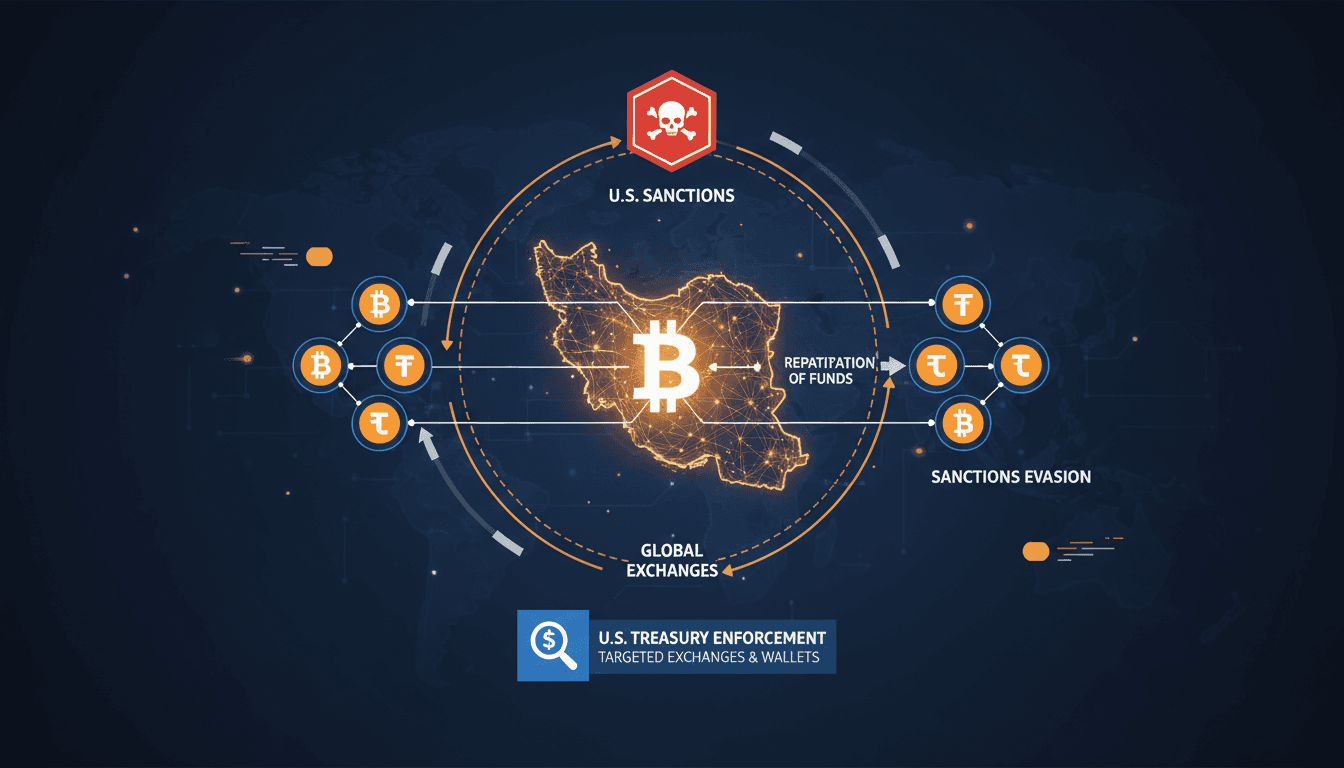
- On September 9, 2026, Iran's central bank directed businesses to use Bitcoin and Tether for repatriating funds amid intensified U.S. sanctions.
- This shift reflects Iran's exclusion from global banking networks and aims to sustain its economy under ongoing sanctions.
- U.S. Treasury responses include sanctions on Iranian exchanges and freezing of Tether assets linked to Iran.
The context you actually need
- Iran has faced extensive sanctions for decades, limiting its access to international financial systems and prompting a search for alternatives.
- The Central Bank of Iran has accumulated hundreds of millions in USDT to bypass traditional finance, indicating a long-standing interest in cryptocurrency.
- Recent military escalations and disputes over transit fees have further pressured Iran to adopt cryptocurrencies for cross-border trade.
What's really happening
Iran's directive to utilize Bitcoin and Tether for fund repatriation is a calculated response to the tightening grip of U.S. sanctions. The Central Bank of Iran (CBI) is leveraging cryptocurrency as a parallel settlement system, enabling businesses to conduct international trade without relying on traditional banking channels. This shift is not merely a reaction to current pressures but part of a broader strategy that has been evolving over the past few years.
Since the onset of the "Economic Fury" campaign in February 2025, which intensified sanctions against Iran, the country has been increasingly cut off from the SWIFT network and correspondent banking. This isolation has forced Iranian businesses to innovate, leading to a surge in cryptocurrency transactions. In 2025 alone, an estimated $10 billion in crypto volume was linked to Iran, according to TRM Labs and Chainalysis. The CBI's recent directive is a formal acknowledgment of this trend, encouraging exporters and importers to utilize domestic exchanges for Bitcoin (BTC) and Tether (USDT) transactions.
The implications of this shift extend beyond Iran's borders. The U.S. Treasury has responded by targeting Iranian exchanges and wallets, including sanctions on platforms like Nobitex and Wallex. Tether, a major stablecoin issuer, has also taken action by freezing hundreds of millions in USDT tied to Iranian entities. This creates a complex web of enforcement actions that could impact not only Iran but also regional financial hubs, particularly in the UAE, where entities like Shelbit Exchange have been implicated in processing Iran-linked crypto flows.
As Iran relaxes enforcement on domestic crypto trading platforms, the market is likely to see persistent crypto flows despite U.S. enforcement efforts. The Islamic Revolutionary Guard Corps (IRGC) is reportedly involved in a significant portion of this on-chain activity, indicating that state actors are deeply embedded in the crypto economy. This intertwining of state and market dynamics raises questions about the future of cryptocurrency as a tool for sanctions evasion and the potential for a shadow economy to flourish.
Who feels it first (and how)
- Businesses in Iran: Exporters and importers will need to adapt to using cryptocurrencies for international transactions.
- U.S. Treasury and regulators: Increased scrutiny on crypto exchanges and wallets linked to Iran will affect compliance requirements.
- Regional financial hubs: Entities in Dubai and other areas may face heightened compliance scrutiny due to their connections with Iranian crypto flows.
What to watch next
- Increased U.S. enforcement actions: Watch for further sanctions targeting Iranian exchanges and associated entities, which could disrupt crypto flows.
- Market response to compliance scrutiny: Monitor how businesses adapt to new compliance requirements and the potential impact on cross-border transactions.
- Iran's economic resilience: Observe how effectively Iran can sustain its economy through cryptocurrency amid ongoing sanctions and military pressures.
Iran is officially directing businesses to use Bitcoin and Tether for fund repatriation.
U.S. enforcement actions will continue to target Iranian crypto activities, impacting regional financial networks.
The long-term viability of Iran's cryptocurrency strategy in the face of international scrutiny and sanctions.
Frequently Asked Questions
- Why it matters?
- This move signals a significant adaptation in global trade practices, potentially reshaping how countries under sanctions engage in commerce.
- What happened (in 30 seconds)?
- On September 9, 2026, Iran's central bank directed businesses to use Bitcoin and Tether for repatriating funds amid intensified U.S. sanctions. This shift reflects Iran's exclusion from global banking networks and aims to sustain its economy under ongoing sanctions. U.S. Treasury responses include sanctions on Iranian exchanges and freezing of Tether assets linked to Iran.
- What's really happening?
- Iran's directive to utilize Bitcoin and Tether for fund repatriation is a calculated response to the tightening grip of U.S. sanctions. The Central Bank of Iran (CBI) is leveraging cryptocurrency as a parallel settlement system, enabling businesses to conduct international trade without relying on traditional banking channels. This shift is not merely a reaction to current pressures but part of a broader strategy that has been evolving over the past few years. Since the onset of the "Economic F
- Who feels it first (and how)?
- Businesses in Iran: Exporters and importers will need to adapt to using cryptocurrencies for international transactions. U.S. Treasury and regulators: Increased scrutiny on crypto exchanges and wallets linked to Iran will affect compliance requirements. Regional financial hubs: Entities in Dubai and other areas may face heightened compliance scrutiny due to their connections with Iranian crypto flows.
- What to watch next?
- Increased U.S. enforcement actions: Watch for further sanctions targeting Iranian exchanges and associated entities, which could disrupt crypto flows. Market response to compliance scrutiny: Monitor how businesses adapt to new compliance requirements and the potential impact on cross-border transactions. Iran's economic resilience: Observe how effectively Iran can sustain its economy through cryptocurrency amid ongoing sanctions and military pressures.
Covers Bitcoin plus altcoin news, market updates, and educational resources.
"Bitcoin.com provides news, market data, and guides focused on Bitcoin and the wider crypto industry."
— A47 Editor
Cut off From Global Finance, Iran Turns to Bitcoin and Tether
Iran has increasingly turned to cryptocurrencies like Bitcoin and Tether to facilitate its export transactions, as the nation faces significant financial isolation due to U.S. sanctions. This shift allows Iranian exporters to bring overseas earnings ...
Covers blockchain, cryptocurrency news, project analysis, and market insights.
"CoinDesk is a well-established cryptocurrency and blockchain news provider, offering comprehensive insights, market data, and industry research."
— A47 Editor
Iran eases currency controls to let traders bring earnings home in crypto: FT
Iran has eased its currency controls, allowing exporters to utilize overseas earnings for direct import funding without needing to convert foreign currency at official rates, as reported by the Financial Times. This shift is seen as a strategic move ...
Arabic-language coverage of political affairs and current events.
"Okaz political coverage typically follows mainstream Saudi framing on national and regional affairs."
— A47 Editor
إيران تراهن على العملات الرقمية لتجاوز قيود النظام المصرفي العالمي
Iranian companies are increasingly turning to cryptocurrencies like Bitcoin and Tether (USDT) for cross-border payments, providing exporters with an alternative to the official foreign currency system, according to a report by the Financial Times. Th...
Covers blockchain, cryptocurrency news, project analysis, and market insights.
"Cointelegraph is a leading crypto-focused media outlet known for timely news, analysis, and educational content related to blockchain and digital assets."
— A47 Editor
Iran eases currency rules to bypass US sanctions with crypto: Report
Iran has relaxed its currency regulations, allowing exporters to fund imports using overseas earnings without converting foreign currency at official rates, as reported by the Financial Times. This move is seen as a strategy to circumvent U.S. sancti...
Real-time updates, analysis, and reports on the blockchain and cryptocurrency sectors.
"Crypto News delivers real-time updates, analysis, and reports on the blockchain and cryptocurrency sectors."
— A47 Editor
Iran turns to crypto for export payments amid sanctions: FT
Iran has relaxed its foreign-exchange controls, allowing exporters to utilize cryptocurrency for export payments as a response to U.S. sanctions that limit access to traditional banking systems. This shift enables exporters to fund imports using over...