
Robinhood to Enhance Stock Tokens with Share Redemptions and Voting Rights Following AMC Criticism
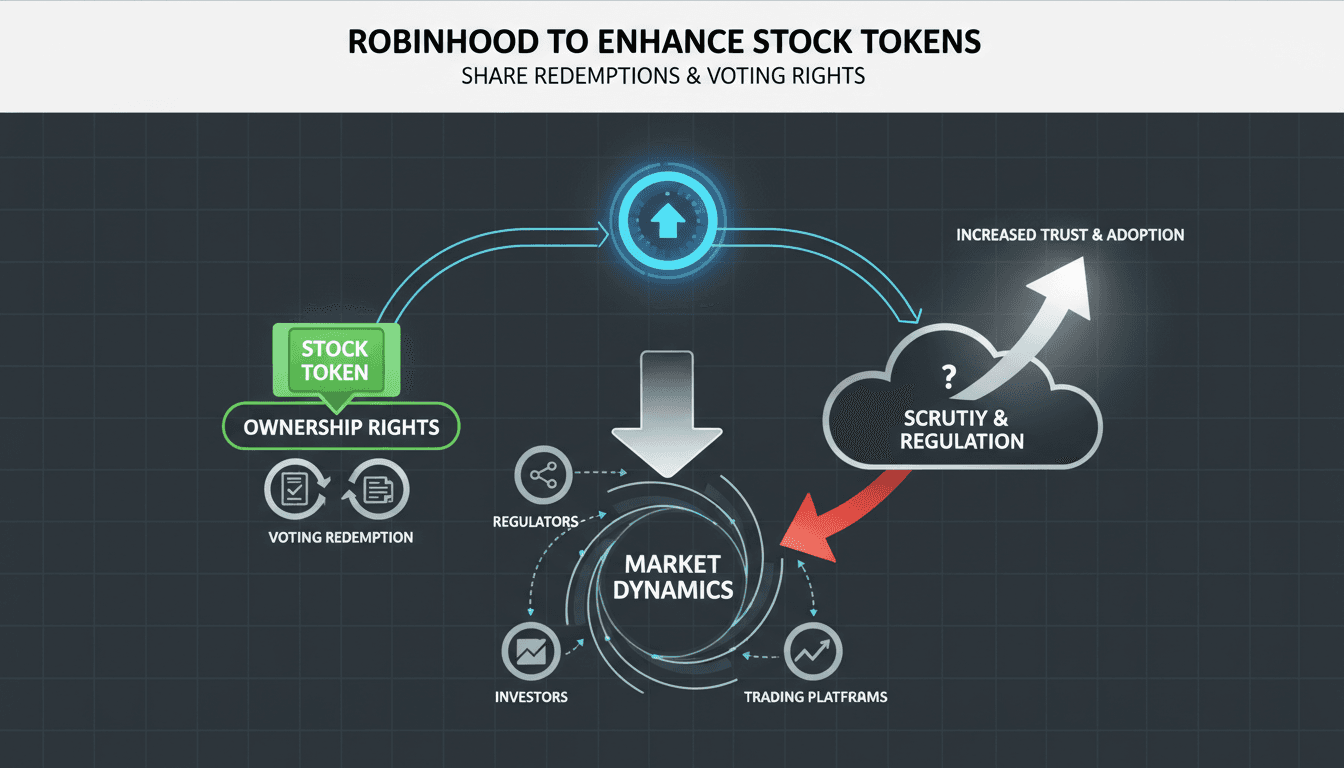
Why it matters
The move signals a shift in the tokenized securities market, potentially redefining investor rights and ownership in digital assets.
What happened (in 30 seconds)
- Robinhood announced plans to implement one-for-one share redemptions and voting rights for its stock tokens on September 14, 2026.
- CEO Vlad Tenev responded to criticism from AMC's Adam Aron regarding the lack of ownership rights associated with these tokens.
- Coinbase's Brian Armstrong indicated similar enhancements for its tokenized stocks, highlighting a broader industry trend.
The context you actually need
- Robinhood launched its stock tokens in 2026 as synthetic debt securities, providing only economic exposure without legal ownership.
- AMC's CEO Adam Aron criticized these tokens, arguing they misrepresent shareholder rights and lack proper issuer approval.
- The SEC's guidance on tokenized securities is under scrutiny, raising questions about the legitimacy and structure of such financial products.
What's really happening
On September 14, 2026, Robinhood's CEO Vlad Tenev announced significant enhancements to the brokerage's stock tokens, which have faced criticism for their synthetic nature. Currently, these tokens, launched earlier in the year, are structured as tokenized debt securities issued by Robinhood Assets (Jersey) Limited. They are backed 1:1 by underlying U.S. shares held in custody but do not confer legal ownership or voting rights to token holders. This structure has raised concerns among investors and industry leaders about the true nature of ownership in the digital asset space.
The criticism peaked when AMC Entertainment's CEO Adam Aron publicly opposed the tokens linked to AMC shares, arguing they lacked proper shareholder rights and issuer approval. This sparked a broader debate about the legitimacy of tokenized securities and their compliance with existing regulations. In response, Tenev defended the structure, stating that third-party products do not require issuer consent, a position that has drawn mixed reactions from the market.
In a bid to address these ownership concerns, Tenev confirmed that Robinhood is actively developing features for in-kind redemptions and voting rights for eligible token holders. This move aligns with a growing trend in the industry, as Coinbase's CEO Brian Armstrong also announced plans to enhance its tokenized stocks with similar rights. The push for these enhancements reflects a broader recognition of the need for transparency and accountability in the rapidly evolving tokenized securities market.
Despite these advancements, critics, including Securitize's CEO Carlos Domingo, argue that the term "stock tokens" is misleading due to their synthetic debt structure. The ongoing discussions highlight the need for clearer definitions and regulatory frameworks surrounding tokenized assets, especially as they gain traction among investors seeking alternative ways to engage with traditional equity markets.
As Robinhood and other platforms navigate these complexities, the implications for investors are significant. The introduction of redemption and voting rights could reshape how you interact with tokenized equities, potentially offering a more robust investment experience. However, the evolving regulatory landscape and market dynamics will play a crucial role in determining the long-term viability and acceptance of these products.
Who feels it first (and how)
- Retail investors: Those using Robinhood and similar platforms will experience enhanced rights and potential ownership benefits.
- Crypto enthusiasts: Individuals interested in tokenized assets will see more options for equity exposure.
- Regulatory bodies: Agencies will need to adapt to the evolving landscape of tokenized securities and their implications for investor rights.
What to watch next
- Implementation timeline: Keep an eye on when Robinhood rolls out these new features, as it will set a precedent for other platforms.
- Regulatory responses: Watch for any updates from the SEC regarding tokenized securities, which could impact market practices.
- Market adoption: Monitor how investors react to these changes and whether other brokerages follow suit in enhancing their token offerings.
Robinhood is developing redemption and voting rights for its stock tokens.
Other platforms will adopt similar enhancements in response to market demand and regulatory scrutiny.
The long-term regulatory framework for tokenized securities remains uncertain.
Frequently Asked Questions
- Why it matters?
- The move signals a shift in the tokenized securities market, potentially redefining investor rights and ownership in digital assets.
- What happened (in 30 seconds)?
- Robinhood announced plans to implement one-for-one share redemptions and voting rights for its stock tokens on September 14, 2026. CEO Vlad Tenev responded to criticism from AMC's Adam Aron regarding the lack of ownership rights associated with these tokens. Coinbase's Brian Armstrong indicated similar enhancements for its tokenized stocks, highlighting a broader industry trend.
- What's really happening?
- On September 14, 2026, Robinhood's CEO Vlad Tenev announced significant enhancements to the brokerage's stock tokens, which have faced criticism for their synthetic nature. Currently, these tokens, launched earlier in the year, are structured as tokenized debt securities issued by Robinhood Assets (Jersey) Limited. They are backed 1:1 by underlying U.S. shares held in custody but do not confer legal ownership or voting rights to token holders. This structure has raised concerns among investors a
- Who feels it first (and how)?
- Retail investors: Those using Robinhood and similar platforms will experience enhanced rights and potential ownership benefits. Crypto enthusiasts: Individuals interested in tokenized assets will see more options for equity exposure. Regulatory bodies: Agencies will need to adapt to the evolving landscape of tokenized securities and their implications for investor rights.
- What to watch next?
- Implementation timeline: Keep an eye on when Robinhood rolls out these new features, as it will set a precedent for other platforms. Regulatory responses: Watch for any updates from the SEC regarding tokenized securities, which could impact market practices. Market adoption: Monitor how investors react to these changes and whether other brokerages follow suit in enhancing their token offerings.
Covers blockchain, cryptocurrency news, project analysis, and market insights.
"CoinDesk is a well-established cryptocurrency and blockchain news provider, offering comprehensive insights, market data, and industry research."
— A47 Editor
Robinhood plans share redemptions, voting rights for stock tokens, after criticism
Robinhood's CEO Vlad Tenev announced plans to introduce share redemptions and voting rights for its stock tokens, responding to criticism regarding ownership rights associated with these tokens. This move aims to enhance shareholder features and addr...
Real-time updates, analysis, and reports on the blockchain and cryptocurrency sectors.
"Crypto News delivers real-time updates, analysis, and reports on the blockchain and cryptocurrency sectors."
— A47 Editor
Robinhood CEO rejects issuer veto over stock tokens
Robinhood CEO Vlad Tenev has publicly rejected the notion that issuers should have the authority to veto stock tokens that are tied to their shares, asserting that such tokens should not alter shareholder rights or official records. This stance comes...
Covers blockchain, cryptocurrency news, project analysis, and market insights.
"Cointelegraph is a leading crypto-focused media outlet known for timely news, analysis, and educational content related to blockchain and digital assets."
— A47 Editor
Robinhood CEO says issuers should not have veto over tokenized stocks
Robinhood CEO Vlad Tenev stated that issuers should not have the authority to veto tokenized stocks that are backed by their shares, emphasizing that their involvement should only be necessary if shareholder rights or company obligations are altered....