
Circle Launches Arc Public Mainnet for Institutional Finance
Why it matters
This launch signifies a pivotal shift towards compliant, efficient blockchain infrastructure for institutional finance.
What happened (in 30 seconds)
- Circle launched the public mainnet of its Arc Layer 1 blockchain on September 16, 2026.
- Over 100 applications and institutional participants, including major players like BlackRock and Visa, activated on day one.
- USDC circulation at launch was $74 billion, supporting the network's fee model and ecosystem.
The context you actually need
- Arc's development followed a public testnet that processed over 700 million transactions, indicating strong institutional interest.
- The network aims to provide deterministic sub-second settlement and USDC-denominated fees, addressing the demand for compliant blockchain solutions.
- Major financial entities serve as founding validators, enhancing security and compliance for the network.
What's really happening
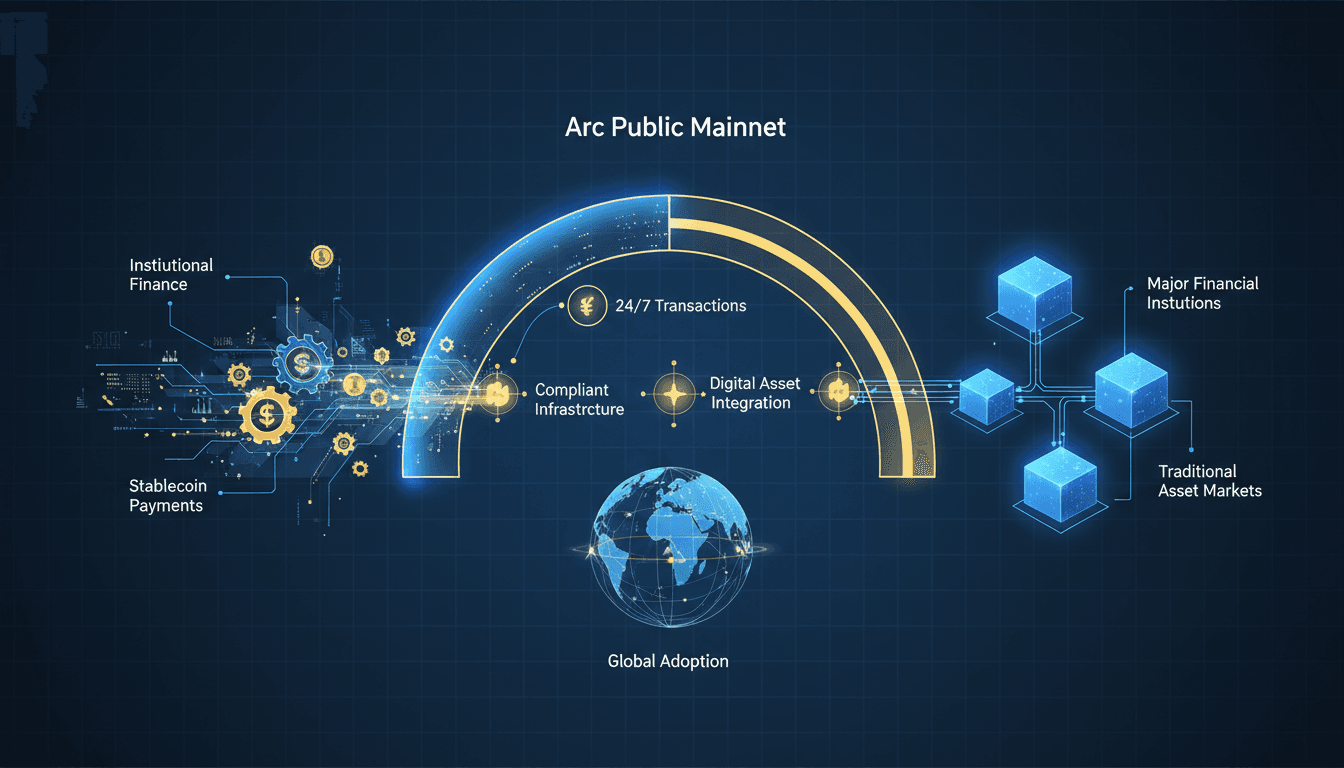
Circle's Arc blockchain launch represents a strategic response to the growing demand for reliable and compliant blockchain infrastructure in the financial sector. The network is designed specifically for institutional use, integrating stablecoin payments and tokenized assets, which are increasingly becoming essential in modern finance.
The launch on September 16, 2026, was not just a technical milestone; it was a calculated move to position Circle at the forefront of the evolving digital asset landscape. With over 100 applications and institutional participants at launch, including heavyweights like BlackRock, Visa, and the Depository Trust & Clearing Corporation (DTCC), Arc is set to facilitate a new era of financial transactions that are faster and more secure.
The integration of USDC as the native currency for transaction fees is particularly significant. With $74 billion in circulation at launch, USDC is positioned to support a robust ecosystem that can handle high transaction volumes. This is crucial for institutions that require seamless operations across traditional and digital markets. The sub-second finality of transactions on the Arc network is a game-changer, allowing for real-time settlement that can enhance liquidity and operational efficiency.
Moreover, the participation of major financial institutions as validators not only adds a layer of security but also ensures compliance with regulatory standards. This is vital in an environment where regulatory scrutiny is intensifying. The founding validator cohort, which includes entities like Standard Chartered and Intercontinental Exchange (ICE), underscores the commitment to creating a secure and compliant blockchain environment.
As the market evolves, the Arc network is likely to attract more participants, further expanding its ecosystem. The focus on privacy features, which are still in development, indicates that Circle is aware of the growing concerns around data security and user privacy in blockchain transactions. This could enhance user trust and adoption in the long run.
In summary, Circle's Arc blockchain is not just another technological advancement; it is a strategic initiative that aligns with the needs of modern finance, addressing both operational efficiency and regulatory compliance.
Who feels it first (and how)
- Financial institutions: Banks and asset managers will benefit from faster transaction times and reduced operational costs.
- Payment networks: Companies like Visa and Mastercard will see enhanced capabilities in processing stablecoin transactions.
- Investors: Those involved in tokenized assets and DeFi protocols will gain access to a more robust trading environment.
- Regulators: Increased compliance and security measures may ease regulatory concerns surrounding digital assets.
What to watch next
- Adoption rates: Monitor how quickly institutions integrate Arc into their operations, as this will indicate the network's acceptance.
- Transaction volume: Keep an eye on USDC transaction metrics, which will reflect the network's operational health and user engagement.
- Regulatory developments: Watch for any governmental responses or new regulations that may arise as the Arc network gains traction.
Circle's Arc blockchain is operational with major institutional participants.
Increased adoption of USDC and stablecoin transactions in institutional finance.
The long-term regulatory landscape and its impact on blockchain infrastructure.
Frequently Asked Questions
- Why it matters?
- This launch signifies a pivotal shift towards compliant, efficient blockchain infrastructure for institutional finance.
- What happened (in 30 seconds)?
- Circle launched the public mainnet of its Arc Layer 1 blockchain on September 16, 2026. Over 100 applications and institutional participants, including major players like BlackRock and Visa, activated on day one. USDC circulation at launch was $74 billion, supporting the network's fee model and ecosystem.
- What's really happening?
- Circle's Arc blockchain launch represents a strategic response to the growing demand for reliable and compliant blockchain infrastructure in the financial sector. The network is designed specifically for institutional use, integrating stablecoin payments and tokenized assets, which are increasingly becoming essential in modern finance. The launch on September 16, 2026, was not just a technical milestone; it was a calculated move to position Circle at the forefront of the evolving digital asset
- Who feels it first (and how)?
- Financial institutions: Banks and asset managers will benefit from faster transaction times and reduced operational costs. Payment networks: Companies like Visa and Mastercard will see enhanced capabilities in processing stablecoin transactions. Investors: Those involved in tokenized assets and DeFi protocols will gain access to a more robust trading environment. Regulators: Increased compliance and security measures may ease regulatory concerns surrounding digital assets.
- What to watch next?
- Adoption rates: Monitor how quickly institutions integrate Arc into their operations, as this will indicate the network's acceptance. Transaction volume: Keep an eye on USDC transaction metrics, which will reflect the network's operational health and user engagement. Regulatory developments: Watch for any governmental responses or new regulations that may arise as the Arc network gains traction.
English-language digital publication covering business, politics, technology, and current affairs.
"The Arabian Post mixes original and syndicated-style coverage with a broad regional and global business-news orientation."
— A47 Editor
Circle opens Arc network to institutional finance
Circle has launched its Arc blockchain, designed specifically for institutional finance, stablecoin payments, and tokenized assets, with its public mainnet going live and hosting over 100 applications and institutional partners.
Real-time updates, analysis, and reports on the blockchain and cryptocurrency sectors.
"Crypto News delivers real-time updates, analysis, and reports on the blockchain and cryptocurrency sectors."
— A47 Editor
Circle Arc mainnet launches with USDC gas
Circle has officially launched the public mainnet of its Arc blockchain on September 16, 2026, integrating USDC as the native gas token for transaction fees. The launch features institutional validators and supports over 20 fiat stablecoins, marking ...
Covers blockchain, cryptocurrency news, project analysis, and market insights.
"Cointelegraph is a leading crypto-focused media outlet known for timely news, analysis, and educational content related to blockchain and digital assets."
— A47 Editor
Circle launches Arc mainnet with USDC as native gas token
Circle has officially launched its Arc mainnet, designating USDC as the native gas token for transaction fees. This new blockchain supports over 20 fiat stablecoins and connects to more than 20 different blockchains, marking a significant step in Cir...
Covers blockchain, cryptocurrency news, project analysis, and market insights.
"CoinDesk is a well-established cryptocurrency and blockchain news provider, offering comprehensive insights, market data, and industry research."
— A47 Editor
Circle debuts Arc blockchain which Jeremy Allaire calls ‘more consequential’ than USDC
Circle has launched its Arc blockchain, which CEO Jeremy Allaire describes as ‘more consequential’ than the company's existing USDC stablecoin. This new blockchain is designed to facilitate payments, tokenized assets, and institutional finance, refle...