
Revolut Faces 6,000 XMR Ransom Demand After Data Breach Involving 680 Customers
Why it matters
This breach underscores the risks associated with compliance to government requests for customer data in the fintech sector.
What happened (in 30 seconds)
- On September 12, 2026, Revolut disclosed a data breach involving 680 customer files after identifying fraudulent requests.
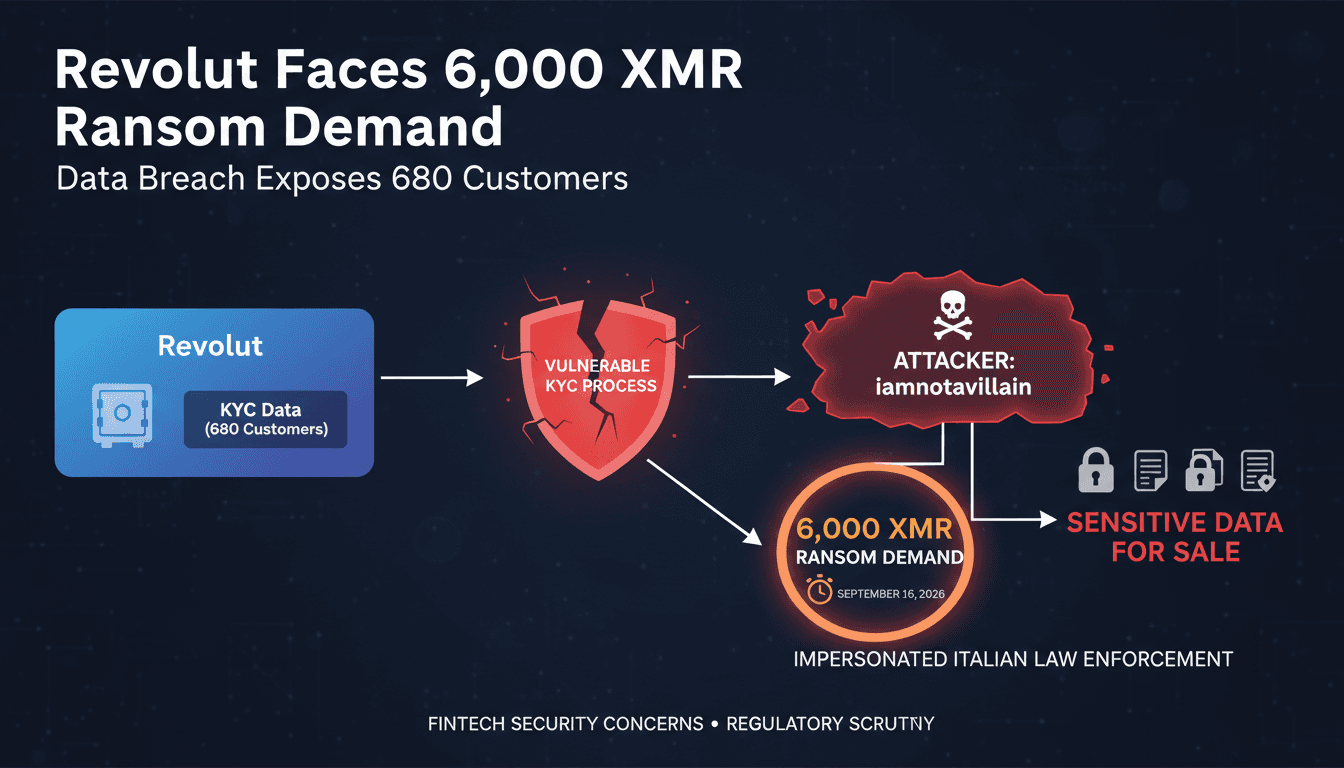
- On September 16, 2026, the group iamnotavillain demanded 6,000 XMR (approximately $3 million) to withhold the stolen data.
- Italian authorities are investigating the compromised email system used for the impersonation, while Revolut confirmed no core systems or customer funds were compromised.
The context you actually need
- Impersonation tactics: Attackers exploited Italy's certified PEC email system, which is designed for secure communications, by impersonating government officials.
- Data exposure: The stolen files included sensitive information such as passports, selfies, addresses, and transaction histories of cryptocurrency users across 31 countries.
- Regulatory implications: Revolut's compliance with what appeared to be legitimate requests raises questions about the security of KYC (Know Your Customer) processes in the fintech industry.
What's really happening
The Revolut incident reveals a troubling intersection of cybersecurity vulnerabilities and regulatory compliance. The attackers, operating under the name iamnotavillain, successfully impersonated Italian law enforcement officials through the Posta Elettronica Certificata (PEC) system, a certified email network used for official communications. By compromising or mimicking a government domain, they bypassed standard email authentication checks, allowing them to send fraudulent requests that Revolut initially believed to be legitimate.
This breach is particularly concerning because it highlights the risks associated with KYC processes that rely on authenticated government channels. Revolut had previously fulfilled multiple requests for customer information targeting high-value cryptocurrency users, identified through blockchain analysis. This compliance, while necessary for regulatory adherence, inadvertently exposed sensitive customer data to malicious actors.
The ransom demand of 6,000 XMR, approximately $3 million, is a calculated move by the attackers, who threatened to sell the data to other criminals if their demands were not met within 24 hours. This tactic not only puts pressure on Revolut but also raises alarms for other fintech companies that may be vulnerable to similar attacks. The attackers provided evidence of the stolen data, including screen recordings of sensitive documents, further escalating the situation.
Revolut's response has been proactive; they notified affected customers, blocked the fraudulent email address, and informed relevant authorities in both Italy and the UK. However, the incident has not led to any immediate market-wide shifts in cryptocurrency prices or Revolut's operations, indicating that while the breach is serious, it has not yet caused widespread panic in the market.
As investigations continue, the implications for KYC data-sharing processes are significant. Companies must reassess their compliance strategies and the security measures in place to protect customer data from similar impersonation tactics. The incident serves as a wake-up call for the fintech industry, emphasizing the need for robust cybersecurity protocols and a reevaluation of how customer data is shared and protected.
Who feels it first (and how)
- Cryptocurrency users: Individuals whose data was exposed face potential identity theft and privacy violations.
- Fintech companies: Other firms in the sector may need to enhance their security measures and reassess compliance protocols.
- Regulatory bodies: Authorities may tighten regulations around data sharing and KYC processes in response to this incident.
What to watch next
- Regulatory changes: Watch for potential new regulations aimed at enhancing data protection in the fintech sector, which could impact compliance costs.
- Market reactions: Monitor cryptocurrency market trends for any shifts in user confidence or investment patterns following the breach.
- Cybersecurity measures: Look for increased investment in cybersecurity solutions among fintech companies as they respond to the vulnerabilities exposed by this incident.
680 customer files were compromised, and the attackers demanded a ransom.
Other fintech companies will reassess their KYC processes and security measures in light of this incident.
The long-term impact on Revolut's customer trust and market position remains to be seen.
Frequently Asked Questions
- Why it matters?
- This breach underscores the risks associated with compliance to government requests for customer data in the fintech sector.
- What happened (in 30 seconds)?
- On September 12, 2026, Revolut disclosed a data breach involving 680 customer files after identifying fraudulent requests. On September 16, 2026, the group iamnotavillain demanded 6,000 XMR (approximately $3 million) to withhold the stolen data. Italian authorities are investigating the compromised email system used for the impersonation, while Revolut confirmed no core systems or customer funds were compromised.
- What's really happening?
- The Revolut incident reveals a troubling intersection of cybersecurity vulnerabilities and regulatory compliance. The attackers, operating under the name iamnotavillain, successfully impersonated Italian law enforcement officials through the Posta Elettronica Certificata (PEC) system, a certified email network used for official communications. By compromising or mimicking a government domain, they bypassed standard email authentication checks, allowing them to send fraudulent requests that Revol
- Who feels it first (and how)?
- Cryptocurrency users: Individuals whose data was exposed face potential identity theft and privacy violations. Fintech companies: Other firms in the sector may need to enhance their security measures and reassess compliance protocols. Regulatory bodies: Authorities may tighten regulations around data sharing and KYC processes in response to this incident.
- What to watch next?
- Regulatory changes: Watch for potential new regulations aimed at enhancing data protection in the fintech sector, which could impact compliance costs. Market reactions: Monitor cryptocurrency market trends for any shifts in user confidence or investment patterns following the breach. Cybersecurity measures: Look for increased investment in cybersecurity solutions among fintech companies as they respond to the vulnerabilities exposed by this incident.
Covers Bitcoin plus altcoin news, market updates, and educational resources.
"Bitcoin.com provides news, market data, and guides focused on Bitcoin and the wider crypto industry."
— A47 Editor
The Attackers Who Deceived Revolut Now Demand 6,000 XMR
A hacking group has deceived Revolut, demanding 6,000 XMR (approximately $3 million) after exploiting vulnerabilities in the digital banking platform. This follows a series of incidents where sensitive customer data was exposed due to fraudulent requ...
Real-time updates, analysis, and reports on the blockchain and cryptocurrency sectors.
"Crypto News delivers real-time updates, analysis, and reports on the blockchain and cryptocurrency sectors."
— A47 Editor
Revolut hackers demand $3M in Monero after data breach
Hackers have demanded 6,000 Monero, valued at approximately $3 million, from Revolut following a significant data breach that exposed sensitive customer information. The attackers threatened to sell the stolen data if the payment is not made within 2...
Covers blockchain, cryptocurrency news, project analysis, and market insights.
"CoinDesk is a well-established cryptocurrency and blockchain news provider, offering comprehensive insights, market data, and industry research."
— A47 Editor
Revolut hackers demand $3 million in Monero, threaten to sell customer data
A hacking group has demanded $3 million in Monero from Revolut, threatening to sell customer data if the payment is not made within 24 hours. This incident follows a series of data breaches at the digital banking platform, where sensitive customer in...