
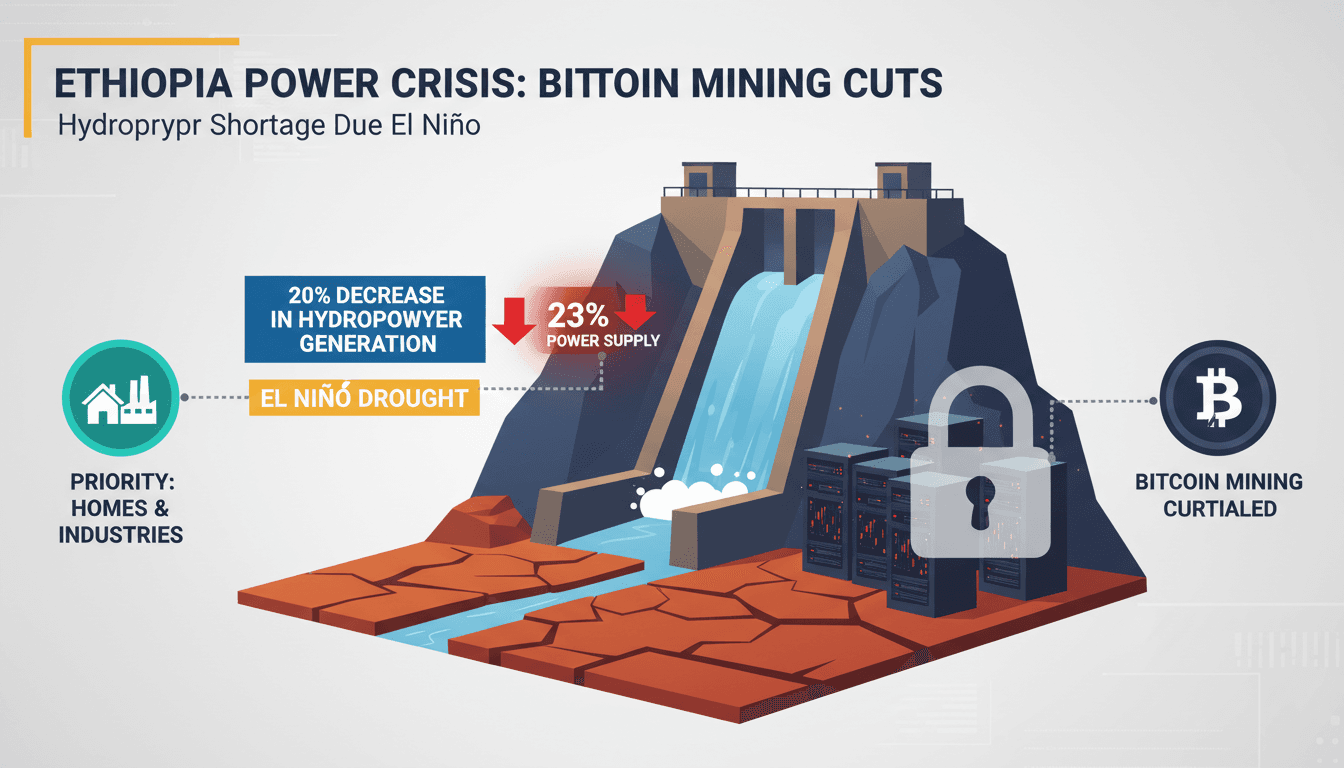
Ethiopia Cuts Bitcoin Mining Power Supply to 23% Due to Hydropower Shortage
Why it matters
Ethiopia's decision to cut power to Bitcoin miners highlights the fragility of energy-dependent industries amid climate-related disruptions.
What happened (in 30 seconds)
- Ethiopia reduced electricity supply to Bitcoin miners to 23% of contracted levels on September 15, 2026, due to a hydropower shortage.
- El Niño conditions caused a 20% drop in reservoir inflows, straining the country's hydropower-dominated grid.
- Ethiopian Electric Power (EEP) prioritized residential and industrial users over mining operations, which previously consumed nearly one-third of national electricity output.
The context you actually need
- Ethiopia's hydropower capacity has attracted international Bitcoin miners, with electricity costs averaging around 3.2 cents per kWh.
- Mining operations surged to approximately 600 MW consumption by late 2024, becoming a significant revenue source for EEP despite cryptocurrency trading being illegal domestically.
- El Niño exacerbated seasonal dry conditions across East Africa, leading to reduced inflows to key reservoirs and impacting overall energy availability.
What's really happening
On September 15, 2026, Ethiopian Electric Power (EEP) announced a drastic reduction in electricity allocations to Bitcoin miners, cutting supply to just 23% of contracted levels. This decision followed earlier reductions to 75% and then 50%, which failed to stabilize reservoir levels amid worsening conditions caused by the El Niño weather phenomenon. CEO Ashebir Balcha emphasized the need to safeguard electricity supply for residential and industrial users, as mining operations had become a significant drain on the national grid.
Bitcoin mining in Ethiopia had previously flourished, with miners consuming nearly one-third of the country's electricity output and generating 35% of EEP's revenue in the last fiscal year. However, the current hydropower crisis, driven by a 20% drop in reservoir inflows, has forced EEP to prioritize essential services over mining operations. The utility's power-purchase agreements typically commit to delivering at least 98% of contracted power under normal conditions, but the ongoing El Niño conditions have created a scenario where such commitments are no longer feasible.
The implications of this power cut extend beyond Ethiopia's borders. The global Bitcoin mining landscape is already under pressure following the April 2024 halving, which reduced block rewards and subsequently lowered hash prices. Additionally, competition for power infrastructure from AI data centers is intensifying, further squeezing the already tight energy market for cryptocurrency mining. As miners face increased operational costs and reduced profitability, the economic viability of mining in Ethiopia may come into question.
Looking ahead, EEP plans to reassess reservoir conditions in October 2026, which could lead to further cuts or restrictions on electricity exports to neighboring countries. This situation not only affects local miners but also international entities, particularly those linked to UAE-based firms like Abu Dhabi-listed Phoenix Group, which expanded its Ethiopian mining capacity to 132 MW by April 2025. Reduced allocations could significantly impact revenue and operations for these companies reliant on Ethiopian hydropower contracts.
Who feels it first (and how)
- Bitcoin miners: Facing immediate operational challenges and increased costs due to reduced power supply.
- Local households and industries: Benefiting from prioritized electricity access but may experience higher energy prices.
- International investors: Particularly those linked to Ethiopian mining operations, who may see diminished returns.
What to watch next
- EEP's October reassessment: This will determine if further cuts are necessary, impacting both local and international mining operations.
- Global Bitcoin mining economics: Watch for shifts in profitability and operational viability as miners adapt to changing energy costs.
- AI data center competition: Increased demand for energy from AI infrastructure could further strain resources available for cryptocurrency mining.
EEP has reduced power allocations to Bitcoin miners to 23% of contracted levels.
Further cuts or restrictions on electricity exports may occur based on reservoir conditions.
The long-term impact on Bitcoin mining operations in Ethiopia and the broader market dynamics.
Frequently Asked Questions
- Why it matters?
- Ethiopia's decision to cut power to Bitcoin miners highlights the fragility of energy-dependent industries amid climate-related disruptions.
- What happened (in 30 seconds)?
- Ethiopia reduced electricity supply to Bitcoin miners to 23% of contracted levels on September 15, 2026, due to a hydropower shortage. El Niño conditions caused a 20% drop in reservoir inflows, straining the country's hydropower-dominated grid. Ethiopian Electric Power (EEP) prioritized residential and industrial users over mining operations, which previously consumed nearly one-third of national electricity output.
- What's really happening?
- On September 15, 2026, Ethiopian Electric Power (EEP) announced a drastic reduction in electricity allocations to Bitcoin miners, cutting supply to just 23% of contracted levels. This decision followed earlier reductions to 75% and then 50%, which failed to stabilize reservoir levels amid worsening conditions caused by the El Niño weather phenomenon. CEO Ashebir Balcha emphasized the need to safeguard electricity supply for residential and industrial users, as mining operations had become a sign
- Who feels it first (and how)?
- Bitcoin miners: Facing immediate operational challenges and increased costs due to reduced power supply. Local households and industries: Benefiting from prioritized electricity access but may experience higher energy prices. International investors: Particularly those linked to Ethiopian mining operations, who may see diminished returns.
- What to watch next?
- EEP's October reassessment: This will determine if further cuts are necessary, impacting both local and international mining operations. Global Bitcoin mining economics: Watch for shifts in profitability and operational viability as miners adapt to changing energy costs. AI data center competition: Increased demand for energy from AI infrastructure could further strain resources available for cryptocurrency mining.
Real-time updates, analysis, and reports on the blockchain and cryptocurrency sectors.
"Crypto News delivers real-time updates, analysis, and reports on the blockchain and cryptocurrency sectors."
— A47 Editor
Ethiopia cuts power to Bitcoin miners as El Niño strains hydropower
Ethiopia has reduced electricity supply to Bitcoin miners to 23% of contracted levels due to a significant drop in reservoir inflows, which has strained the country's hydropower system amid intensified dry conditions linked to El Niño.
Covers blockchain, cryptocurrency news, project analysis, and market insights.
"Cointelegraph is a leading crypto-focused media outlet known for timely news, analysis, and educational content related to blockchain and digital assets."
— A47 Editor
Ethiopia cuts Bitcoin miners’ power by 77% amid hydropower shortage: Report
Ethiopia has reduced the power supply to Bitcoin miners by 77% due to a significant hydropower shortage, which has led the state-owned power producer to prioritize electricity for households and manufacturers. This decision comes as the country grapp...
Covers Bitcoin plus altcoin news, market updates, and educational resources.
"Bitcoin.com provides news, market data, and guides focused on Bitcoin and the wider crypto industry."
— A47 Editor
Ethiopia’s Bitcoin Mining Boom Just Ran Into a Water Problem
Ethiopia's burgeoning Bitcoin mining industry is facing significant challenges due to water shortages, which are critical for cooling mining equipment and sustaining operations. The Ethiopian Electric Power has been unable to meet the increasing dema...