
SEC Grants Five-Year Exemption for Blockchain Trading of Tokenized U.S. Stocks
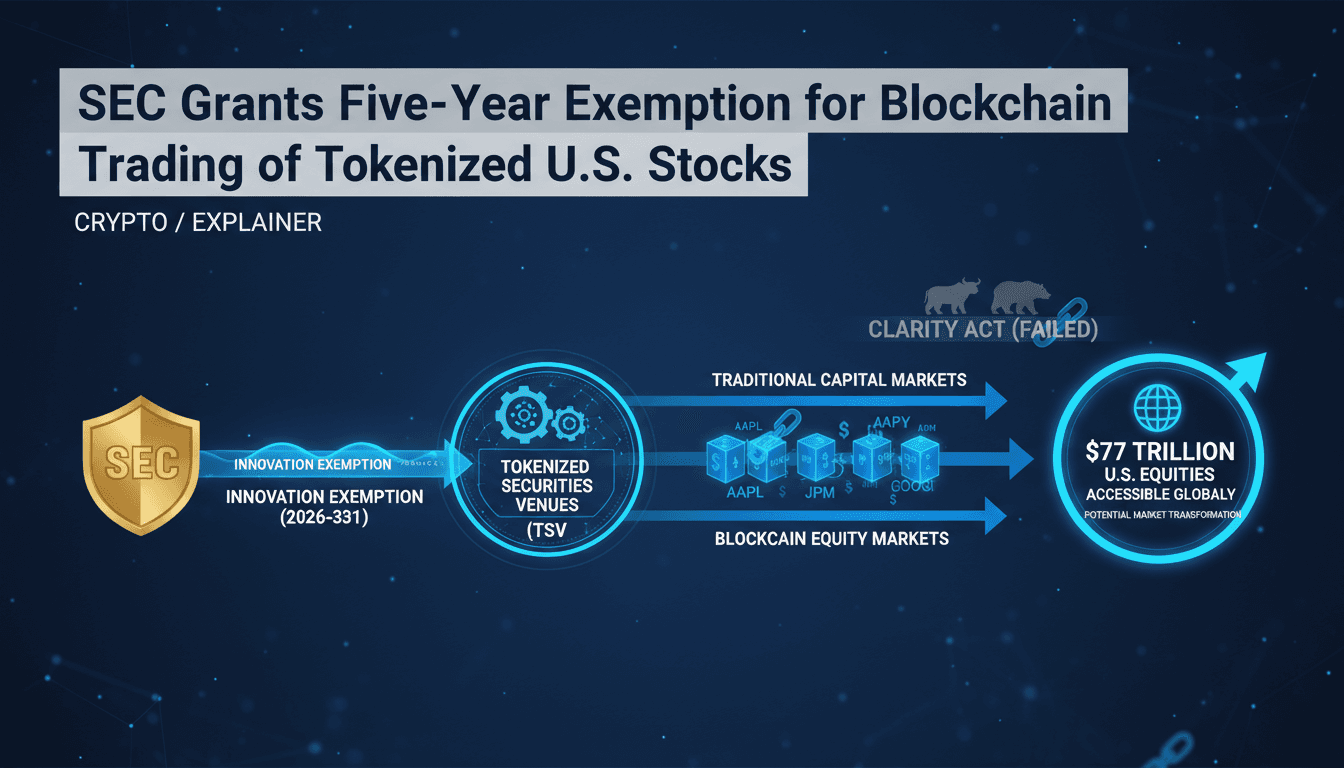
If you’re involved in finance or tech, this regulatory shift could reshape how you trade and invest in equities.
Why it matters
This exemption opens the door for blockchain technology to integrate with traditional equity markets, potentially unlocking a $77 trillion market.
What happened (in 30 seconds)
- On September 17, 2026, the SEC issued an “Innovation Exemption” for Tokenized Securities Venues (TSVs) to trade tokenized U.S. stocks.
- The exemption allows trading via permissioned automated market maker liquidity pools while preserving shareholder rights.
- This action follows stalled congressional efforts to regulate the crypto market, aiming to provide a controlled environment for blockchain innovation.
The context you actually need
- The SEC's decision comes after the failure of the CLARITY Act, which sought to establish a comprehensive framework for crypto markets.
- Tokenized stocks are digital representations of traditional equities, allowing for more efficient trading and ownership transfer.
- The exemption is temporary, lasting five years, and aims to gather data for potential future regulations while ensuring compliance and transparency.
What's really happening
The SEC's Innovation Exemption represents a significant regulatory shift aimed at integrating blockchain technology into the U.S. capital markets. By allowing Tokenized Securities Venues (TSVs) to trade tokenized National Market System (NMS) stocks, the SEC is acknowledging the potential of blockchain to enhance market efficiency and accessibility. This move is particularly relevant given the ongoing discussions around the future of digital assets and their regulation.
The exemption permits TSVs to operate permissioned automated market maker (AMM) liquidity pools, which are essential for facilitating trades in a decentralized manner. These pools will enable liquidity providers to offer their services without the need for traditional dealer registration, thus lowering barriers to entry for new market participants. However, the SEC has imposed strict conditions to ensure that these tokenized stocks confer the same rights as traditional shares, including dividends and voting rights.
One of the key aspects of this exemption is its focus on compliance. TSVs must adhere to U.S. person status and sanctions compliance, ensuring that only eligible participants can engage in trading. Additionally, issuers must notify the SEC and allow a 30-day opt-out window for third-party tokenizations, which adds a layer of transparency and accountability to the process. The requirement for public auditable software and transaction transparency reporting further emphasizes the SEC's commitment to maintaining market integrity.
The exemption also aims to distinguish real tokenized shares from synthetic products, which have been a point of contention in the crypto space. By clarifying this distinction, the SEC hopes to mitigate risks associated with synthetic assets while fostering innovation in the tokenization of real equities.
Overall, this regulatory framework is designed to be experimental, allowing the SEC to gather data and insights that could inform future rulemaking. The controlled nature of this exemption reflects a cautious approach to integrating blockchain technology into traditional finance, balancing innovation with the need for regulatory oversight.
Who feels it first (and how)
- Investors: Those looking to trade tokenized stocks will gain access to a new, potentially more efficient trading environment.
- Tokenization firms: Companies like Securitize will benefit from increased legitimacy and opportunities in the tokenized equity space.
- Traditional exchanges: They may face competition from TSVs, prompting them to innovate or adapt their offerings.
- Liquidity providers: New opportunities for earning fees in AMM pools will attract participants from both crypto and traditional finance sectors.
What to watch next
- Market response: Monitor how traditional equity markets react to the introduction of tokenized stocks and whether trading volumes increase.
- Legislative developments: Keep an eye on any new congressional efforts to regulate the crypto market, which could impact the longevity of the exemption.
- Technological advancements: Watch for innovations in blockchain technology that could enhance the trading experience or introduce new functionalities.
The SEC has issued a five-year temporary exemption for trading tokenized stocks.
Increased interest and investment in tokenized equities from both retail and institutional investors.
The long-term regulatory landscape for tokenized securities beyond the five-year exemption period.
Frequently Asked Questions
- Why it matters?
- This exemption opens the door for blockchain technology to integrate with traditional equity markets, potentially unlocking a $77 trillion market.
- What happened (in 30 seconds)?
- On September 17, 2026, the SEC issued an “Innovation Exemption” for Tokenized Securities Venues (TSVs) to trade tokenized U.S. stocks. The exemption allows trading via permissioned automated market maker liquidity pools while preserving shareholder rights. This action follows stalled congressional efforts to regulate the crypto market, aiming to provide a controlled environment for blockchain innovation.
- What's really happening?
- The SEC's Innovation Exemption represents a significant regulatory shift aimed at integrating blockchain technology into the U.S. capital markets. By allowing Tokenized Securities Venues (TSVs) to trade tokenized National Market System (NMS) stocks, the SEC is acknowledging the potential of blockchain to enhance market efficiency and accessibility. This move is particularly relevant given the ongoing discussions around the future of digital assets and their regulation. The exemption permits TSV
- Who feels it first (and how)?
- Investors: Those looking to trade tokenized stocks will gain access to a new, potentially more efficient trading environment. Tokenization firms: Companies like Securitize will benefit from increased legitimacy and opportunities in the tokenized equity space. Traditional exchanges: They may face competition from TSVs, prompting them to innovate or adapt their offerings. Liquidity providers: New opportunities for earning fees in AMM pools will attract participants from both crypto and traditional
- What to watch next?
- Market response: Monitor how traditional equity markets react to the introduction of tokenized stocks and whether trading volumes increase. Legislative developments: Keep an eye on any new congressional efforts to regulate the crypto market, which could impact the longevity of the exemption. Technological advancements: Watch for innovations in blockchain technology that could enhance the trading experience or introduce new functionalities.
Covers blockchain, cryptocurrency news, project analysis, and market insights.
"CoinDesk is a well-established cryptocurrency and blockchain news provider, offering comprehensive insights, market data, and industry research."
— A47 Editor
Real stocks are finally coming on blockchain. Here’s how the SEC wants it to work
The U.S. Securities and Exchange Commission (SEC) is advancing a regulated pathway for tokenized stocks, aiming to modernize the trading landscape while maintaining strict controls over trading volumes, access, and issuer rights. This initiative is p...
Corporate finance news, M&A, deals, and executive interviews.
"Finance Monthly serves a professional readership with corporate finance coverage."
— A47 Editor
SEC Opens Five-Year Path for Tokenized Stock Trading
The U.S. Securities and Exchange Commission has announced a five-year regulatory exemption that permits eligible Tokenized Securities Venues to facilitate trading in tokenized versions of U.S.-listed stocks using blockchain technology. This initiativ...
Covers blockchain, cryptocurrency news, project analysis, and market insights.
"CoinDesk is a well-established cryptocurrency and blockchain news provider, offering comprehensive insights, market data, and industry research."
— A47 Editor
SEC opens door to tokenized U.S. stock trading. Here’s who could benefit
The U.S. Securities and Exchange Commission (SEC) has initiated a five-year experiment allowing tokenized U.S. stock trading, providing a regulatory pathway for decentralized finance (DeFi) platforms, tokenization firms, and liquidity providers, whil...
Real-time updates, analysis, and reports on the blockchain and cryptocurrency sectors.
"Crypto News delivers real-time updates, analysis, and reports on the blockchain and cryptocurrency sectors."
— A47 Editor
SEC grants 5-year exemption for tokenized stock trading
The U.S. Securities and Exchange Commission (SEC) has granted a five-year exemption for tokenized securities venues, allowing them to trade tokenized U.S. stocks through permissioned automated market makers and liquidity pools. This decision marks a ...
Beginner-friendly crypto tutorials, guides, and news.
"99Bitcoins is a crypto education and news site known for easy-to-understand content and comprehensive guides."
— A47 Editor
SEC Sets Guardrails for Tokenized Stock Trading Venues
The U.S. Securities and Exchange Commission (SEC) has established conditional relief allowing permissioned venues to trade tokenized stocks through automated market makers (AMMs) and liquidity pools, implementing specific caps and safeguards. This in...
Covers blockchain, cryptocurrency news, project analysis, and market insights.
"Cointelegraph is a leading crypto-focused media outlet known for timely news, analysis, and educational content related to blockchain and digital assets."
— A47 Editor
SEC grants temporary exemption for tokenized US stock trading
The U.S. Securities and Exchange Commission (SEC) has granted a temporary exemption for tokenized U.S. stock trading, allowing limited trading on on-chain venues with specific trading caps and transparency requirements. This innovation exemption aims...
Markets desk coverage, trading insights, and investor updates.
"WSJ’s markets reporting provides in-depth analysis and context for investors."
— A47 Editor
Tokenized Stocks Get U.S. Regulator’s Green Light to Come Ashore
The U.S. Securities and Exchange Commission (SEC) has granted exemptions that allow venues to trade digital tokens, specifically tokenized stocks, while also giving corporate issuers the authority to block these offerings. This decision marks a signi...
Covers blockchain, cryptocurrency news, project analysis, and market insights.
"CoinDesk is a well-established cryptocurrency and blockchain news provider, offering comprehensive insights, market data, and industry research."
— A47 Editor
SEC rolls out long-awaited 'innovation exemption' for tokenized securities venues
The U.S. Securities and Exchange Commission (SEC) has introduced a five-year blanket exemption allowing tokenized securities to be listed and traded without the need for exchange registration. This move is seen as a significant step towards modernizi...