
CFTC Expands No-Action Relief for Passive Trading Software Providers
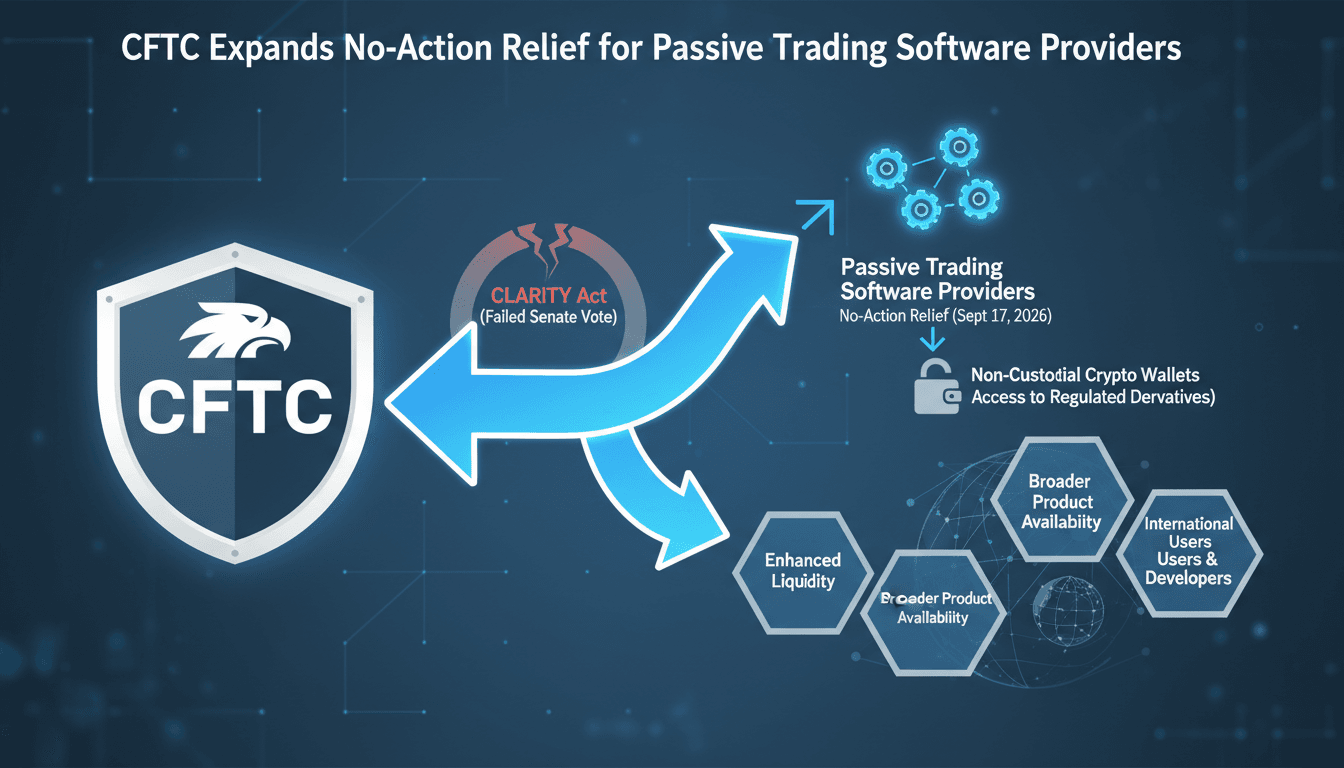
Why it matters
This move by the CFTC signals a significant easing of regulatory barriers for passive trading technologies, potentially reshaping the landscape of crypto trading.
What happened (in 30 seconds)
- On September 17, 2026, the CFTC issued Staff Letter 26-25, providing no-action relief for passive trading software providers.
- This relief allows qualifying providers to facilitate access to CFTC-registered entities without needing to register as brokers.
- The decision follows the failure of the CLARITY Act, which aimed to provide broader regulatory clarity for crypto markets.
The context you actually need
- The CFTC previously granted targeted relief to Phantom Technologies in March 2026, which prompted further industry requests for broader protections.
- The recent no-action position applies to software that enables direct order submission for derivatives, including perpetual and event contracts.
- The SEC also issued a temporary exemption for tokenized U.S. stock trading, indicating a trend towards regulatory flexibility in digital assets.
What's really happening
The CFTC's issuance of Staff Letter 26-25 on September 17, 2026, represents a pivotal moment for passive trading software providers. By expanding no-action relief, the CFTC aims to foster innovation in the crypto space while maintaining regulatory oversight. This decision allows qualifying software providers to facilitate user access to CFTC-registered futures commission merchants and designated contract markets without the burden of registering as introducing brokers or associated persons.
The criteria for qualifying providers are stringent, ensuring that these entities do not engage in asset custody or exercise order discretion. This regulatory framework is designed to encourage the development of non-custodial crypto wallets and similar applications, which can offer users access to regulated derivatives and prediction markets without active intermediation. The CFTC's proactive stance follows a series of industry inquiries and petitions, notably from Phantom Technologies and the Hyperliquid Policy Center, which highlighted the need for clearer regulatory guidance in the rapidly evolving crypto landscape.
The backdrop to this decision includes the recent failure of the CLARITY Act in the U.S. Senate, which sought to provide comprehensive regulatory clarity for digital assets. The Act fell short of the required votes, receiving only 49 votes in a cloture motion, underscoring the challenges of advancing crypto legislation in a divided political environment. In response, CFTC Chair Michael Selig and SEC Chair Paul Atkins have indicated a commitment to regulating crypto markets under existing authority, suggesting that regulatory bodies are willing to adapt to the needs of the market even in the absence of new legislation.
This no-action relief is expected to reduce compliance uncertainty for wallet and front-end developers, potentially leading to increased innovation and competition in the crypto trading space. As trading volumes in related assets showed minor positive movement following the announcement, it appears that market participants are responding favorably to the reduced regulatory burden. However, the long-term implications of this regulatory shift will depend on how effectively these new frameworks are implemented and whether they can keep pace with the rapid evolution of the crypto market.
Who feels it first (and how)
- Crypto software developers: They can now build compliant applications without the overhead of broker registration.
- Traders using non-custodial wallets: They gain easier access to regulated derivatives markets.
- Institutional investors: They may see increased liquidity and product availability in the derivatives market.
What to watch next
- Compliance developments: Monitor how the CFTC enforces the conditions of the no-action relief and any subsequent regulatory updates.
- Market response: Watch for changes in trading volumes and liquidity in derivatives markets as new software solutions emerge.
- Legislative efforts: Keep an eye on future attempts to pass comprehensive crypto legislation, as this could impact the regulatory landscape.
The CFTC has issued no-action relief for passive trading software providers.
Increased innovation in crypto trading software and potential growth in market participation.
The long-term impact of this regulatory shift on overall market stability and investor protection.
Frequently Asked Questions
- Why it matters?
- This move by the CFTC signals a significant easing of regulatory barriers for passive trading technologies, potentially reshaping the landscape of crypto trading.
- What happened (in 30 seconds)?
- On September 17, 2026, the CFTC issued Staff Letter 26-25, providing no-action relief for passive trading software providers. This relief allows qualifying providers to facilitate access to CFTC-registered entities without needing to register as brokers. The decision follows the failure of the CLARITY Act, which aimed to provide broader regulatory clarity for crypto markets.
- What's really happening?
- The CFTC's issuance of Staff Letter 26-25 on September 17, 2026, represents a pivotal moment for passive trading software providers. By expanding no-action relief, the CFTC aims to foster innovation in the crypto space while maintaining regulatory oversight. This decision allows qualifying software providers to facilitate user access to CFTC-registered futures commission merchants and designated contract markets without the burden of registering as introducing brokers or associated persons. The
- Who feels it first (and how)?
- Crypto software developers: They can now build compliant applications without the overhead of broker registration. Traders using non-custodial wallets: They gain easier access to regulated derivatives markets. Institutional investors: They may see increased liquidity and product availability in the derivatives market.
- What to watch next?
- Compliance developments: Monitor how the CFTC enforces the conditions of the no-action relief and any subsequent regulatory updates. Market response: Watch for changes in trading volumes and liquidity in derivatives markets as new software solutions emerge. Legislative efforts: Keep an eye on future attempts to pass comprehensive crypto legislation, as this could impact the regulatory landscape.
Covers blockchain, cryptocurrency news, project analysis, and market insights.
"Cointelegraph is a leading crypto-focused media outlet known for timely news, analysis, and educational content related to blockchain and digital assets."
— A47 Editor
CFTC expands regulatory relief for passive trading software providers
The Commodity Futures Trading Commission (CFTC) has expanded regulatory relief for passive trading software providers, facilitating easier access for crypto wallets and applications to offer regulated derivatives and prediction markets without the ne...
Covers Bitcoin plus altcoin news, market updates, and educational resources.
"Bitcoin.com provides news, market data, and guides focused on Bitcoin and the wider crypto industry."
— A47 Editor
CFTC Gives Crypto Wallet Developers a New Regulatory Escape Hatch
The U.S. Commodity Futures Trading Commission (CFTC) has introduced new regulatory provisions that provide crypto wallet developers, such as Phantom Technologies, with an escape hatch from stringent regulations. This move aims to facilitate the growt...
Real-time updates, analysis, and reports on the blockchain and cryptocurrency sectors.
"Crypto News delivers real-time updates, analysis, and reports on the blockchain and cryptocurrency sectors."
— A47 Editor
CFTC grants broker registration relief to crypto developers
The Commodity Futures Trading Commission (CFTC) has granted conditional broker-registration relief to passive software providers, allowing crypto developers to offer tools related to regulated derivatives trading under a no-action position with ten s...