
Polymarket US platform targeted in $10 million fraud scheme due to relaxed AML controls
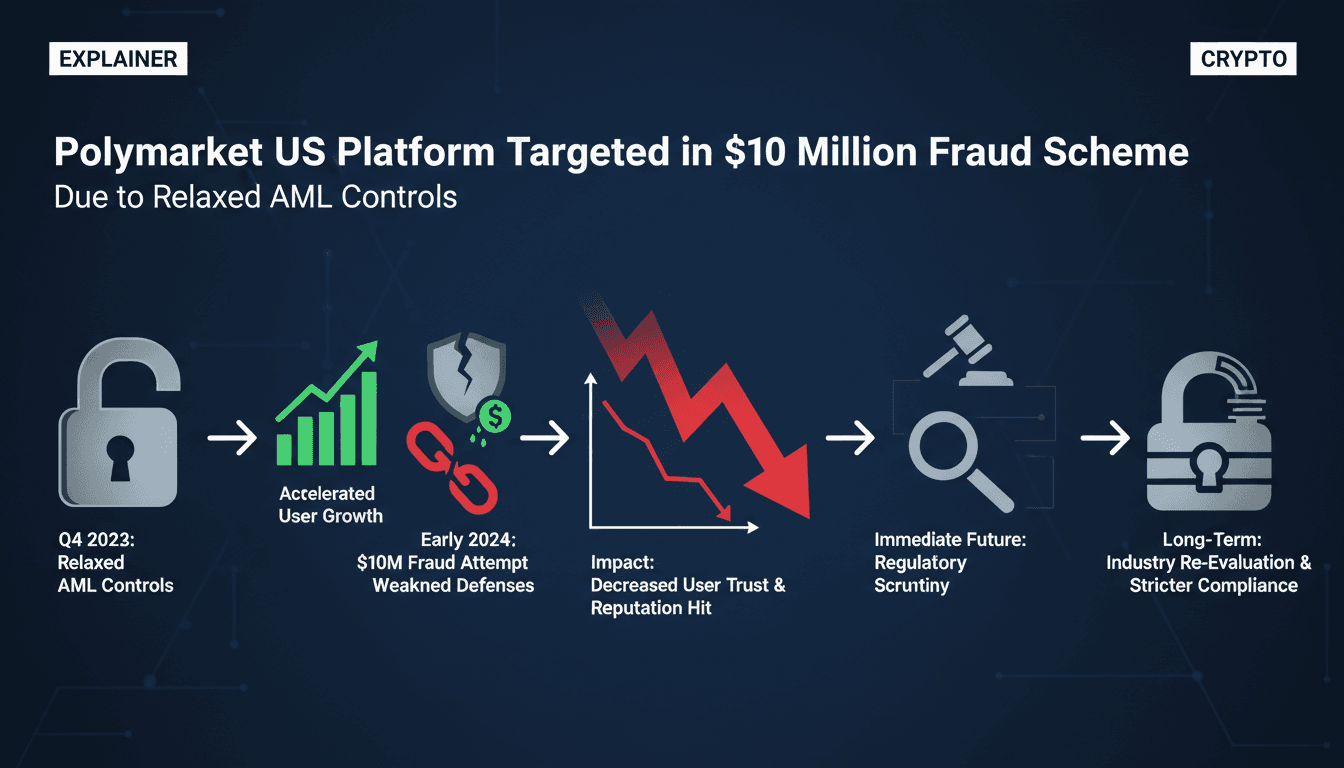
Why it matters
This incident highlights vulnerabilities in financial platforms that can affect user trust and regulatory scrutiny.
What happened (in 30 seconds)
- Fraudsters exploited weaknesses: In February 2026, fraudsters linked stolen debit cards to thousands of accounts on Polymarket, attempting to withdraw $10 million in fraudulent funds.
- Compliance measures relaxed: The platform's leadership loosened anti-money laundering controls to prioritize rapid growth, removing same-source withdrawal requirements.
- High fraud detection rates: Payment processor Checkout.com flagged over 80% of deposits as fraudulent, significantly higher than the industry average of about 1%.
The context you actually need
- Rapid expansion: Polymarket expanded its U.S. platform post-2024 elections, onboarding users from a waitlist under CFTC oversight, raising compliance concerns.
- Leadership decisions: Executives prioritized growth over compliance, leading to the removal of critical safeguards despite internal warnings about potential fraud risks.
- Ongoing investigations: The CFTC is investigating the incident, and Polymarket has since tightened its controls to mitigate future risks.
What's really happening
In February 2026, Polymarket, a prediction market platform regulated by the CFTC, faced a significant fraud attempt amounting to $10 million. This incident unfolded against a backdrop of rapid user onboarding and relaxed compliance measures. Following the 2024 U.S. election cycle, Polymarket sought to expand its user base by allowing access to a waitlist, which inadvertently opened the door for fraudsters.
Fraudsters took advantage of the platform's loosened anti-money laundering (AML) controls by creating thousands of accounts using stolen debit cards. They deposited funds, placed wagers, and attempted to withdraw the proceeds to accounts they controlled. The decision to remove the same-source withdrawal requirement, a critical safeguard against fraud, was made despite warnings from compliance staff about the elevated risks. This decision was driven by a leadership directive to prioritize growth over immediate remediation of compliance issues.
As a result, Checkout.com, the payment processor for Polymarket, flagged over 80% of deposits as suspicious, a stark contrast to the industry norm of approximately 1%. This high rate of flagged transactions indicated a systemic issue within the platform's operational framework. The elevated fraud rates persisted for months, prompting the eventual implementation of stricter controls, including card limits and the engagement of external antifraud services.
The fallout from this incident led to significant leadership changes, with key executives, including CCO Andrew Clifford and U.S. CEO Justin Hertzberg, departing the company. The CFTC's investigation into the matter has also resulted in orders for document preservation, indicating the seriousness of the regulatory scrutiny Polymarket now faces.
By May 2026, Polymarket managed to normalize its fraud rates back to approximately 1%, but the damage to its reputation and user trust had already been done. The incident serves as a cautionary tale for other platforms in the financial sector, illustrating the delicate balance between growth ambitions and the necessity of robust compliance measures.
Who feels it first (and how)
- Investors: Users of Polymarket may experience reduced trust in the platform and potential financial losses.
- Regulators: Increased scrutiny from the CFTC and other regulatory bodies could lead to stricter compliance requirements across the industry.
- Competitors: Other prediction market platforms may face heightened expectations for compliance, impacting their operational strategies.
What to watch next
- Regulatory changes: Watch for new compliance regulations from the CFTC that may arise from this incident, impacting how prediction markets operate.
- User trust metrics: Monitor user engagement and trust levels on Polymarket and similar platforms to gauge the long-term effects of this fraud incident.
- Leadership stability: Keep an eye on executive changes within Polymarket and how these shifts affect company strategy and compliance practices.
The fraud attempt involved $10 million in attempted deposits and withdrawals linked to stolen debit cards.
Stricter compliance measures will be implemented across the prediction market sector as a result of increased regulatory scrutiny.
The long-term impact on user trust and engagement with Polymarket and similar platforms remains uncertain.
Frequently Asked Questions
- Why it matters?
- This incident highlights vulnerabilities in financial platforms that can affect user trust and regulatory scrutiny.
- What happened (in 30 seconds)?
- Fraudsters exploited weaknesses: In February 2026, fraudsters linked stolen debit cards to thousands of accounts on Polymarket, attempting to withdraw $10 million in fraudulent funds. Compliance measures relaxed: The platform's leadership loosened anti-money laundering controls to prioritize rapid growth, removing same-source withdrawal requirements. High fraud detection rates: Payment processor Checkout.com flagged over 80% of deposits as fraudulent, significantly higher than the industry a
- What's really happening?
- In February 2026, Polymarket, a prediction market platform regulated by the CFTC, faced a significant fraud attempt amounting to $10 million. This incident unfolded against a backdrop of rapid user onboarding and relaxed compliance measures. Following the 2024 U.S. election cycle, Polymarket sought to expand its user base by allowing access to a waitlist, which inadvertently opened the door for fraudsters. Fraudsters took advantage of the platform's loosened anti-money laundering (AML) controls
- Who feels it first (and how)?
- Investors: Users of Polymarket may experience reduced trust in the platform and potential financial losses. Regulators: Increased scrutiny from the CFTC and other regulatory bodies could lead to stricter compliance requirements across the industry. Competitors: Other prediction market platforms may face heightened expectations for compliance, impacting their operational strategies.
- What to watch next?
- Regulatory changes: Watch for new compliance regulations from the CFTC that may arise from this incident, impacting how prediction markets operate. User trust metrics: Monitor user engagement and trust levels on Polymarket and similar platforms to gauge the long-term effects of this fraud incident. Leadership stability: Keep an eye on executive changes within Polymarket and how these shifts affect company strategy and compliance practices.
Stock market news, investing ideas, and trading analysis.
"TheStreet provides market news and retail-investor-focused analysis."
— A47 Editor
Loose Polymarket controls lead to $10 million fraud scheme
Polymarket, a prediction market platform, has been implicated in a $10 million fraud scheme due to lax security controls that prioritized rapid growth over robust safeguards. Reports indicate that a cluster of accounts profited significantly from com...
U.S. business news, corporate developments, and economy.
"The Wall Street Journal is respected for deep financial and economic reporting with a center-right editorial perspective."
— A47 Editor
The Morning Risk Report: Polymarket’s Rush to Grow Left a Door Wide Open for Fraudsters
Polymarket, a prediction market platform, is facing increasing scrutiny as concerns about potential fraud have emerged, particularly involving stolen debit cards. The company's rapid growth strategy has reportedly left security gaps, leading to signi...
Markets desk coverage, trading insights, and investor updates.
"WSJ’s markets reporting provides in-depth analysis and context for investors."
— A47 Editor
The Morning Risk Report: Polymarket’s Rush to Grow Left a Door Wide Open for Fraudsters
Polymarket, a prediction market platform, is facing increasing scrutiny as concerns about potential fraud have emerged, particularly involving stolen debit cards. The company's rapid growth strategy has reportedly left security gaps, leading to signi...
Real-time updates, analysis, and reports on the blockchain and cryptocurrency sectors.
"Crypto News delivers real-time updates, analysis, and reports on the blockchain and cryptocurrency sectors."
— A47 Editor
Polymarket hit by alleged $10M stolen-card fraud
Polymarket is under scrutiny following a report by the Wall Street Journal detailing a $10 million stolen-card fraud attempt, alongside unusually high rates of rejected deposits on its U.S. platform. This incident raises concerns about the platform's...
U.S. company headlines: M&A, product launches, legal/regulatory actions, and leadership moves.
"U.S.-centric corporate tape; good for tracking single-name catalysts."
— A47 Editor
Polymarket fraud concerns mount as company prepares for potential IPO - WSJ
Concerns regarding potential fraud at Polymarket are escalating as the company prepares for a possible initial public offering (IPO). Reports indicate that a cluster of accounts on the platform has profited significantly from companies currently unde...
U.S. business news, corporate developments, and economy.
"The Wall Street Journal is respected for deep financial and economic reporting with a center-right editorial perspective."
— A47 Editor
Polymarket’s Rush to Grow Left a Door Wide Open For Fraudsters
Polymarket, a prediction market platform, is facing increasing scrutiny as concerns about potential fraud involving stolen debit cards have emerged. CEO Shayne Coplan has downplayed these issues, even as the company prepares for a potential initial p...
Tech business coverage, major deals, product launches, and Silicon Valley trends.
"WSJ’s tech section offers authoritative reporting on the intersection of technology and business, including exclusive industry analysis."
— A47 Editor
Polymarket’s Rush to Grow Left a Door Wide Open For Fraudsters
Polymarket, a prediction market platform led by CEO Shayne Coplan, has faced scrutiny following reports of fraudulent activities involving stolen debit cards, which the CEO initially dismissed. As the company prepares for an initial public offering (...
Markets desk coverage, trading insights, and investor updates.
"WSJ’s markets reporting provides in-depth analysis and context for investors."
— A47 Editor
Polymarket’s Rush to Grow Left a Door Wide Open For Fraudsters
Polymarket, a prediction market platform, is facing heightened scrutiny as concerns about potential fraud involving stolen debit cards have emerged. CEO Shayne Coplan has downplayed these issues while the company prepares for a potential initial publ...