
ZetaChain Governance Approves Migration of ZETA Token to Solana and Layer-1 Wind-Down
Why it matters
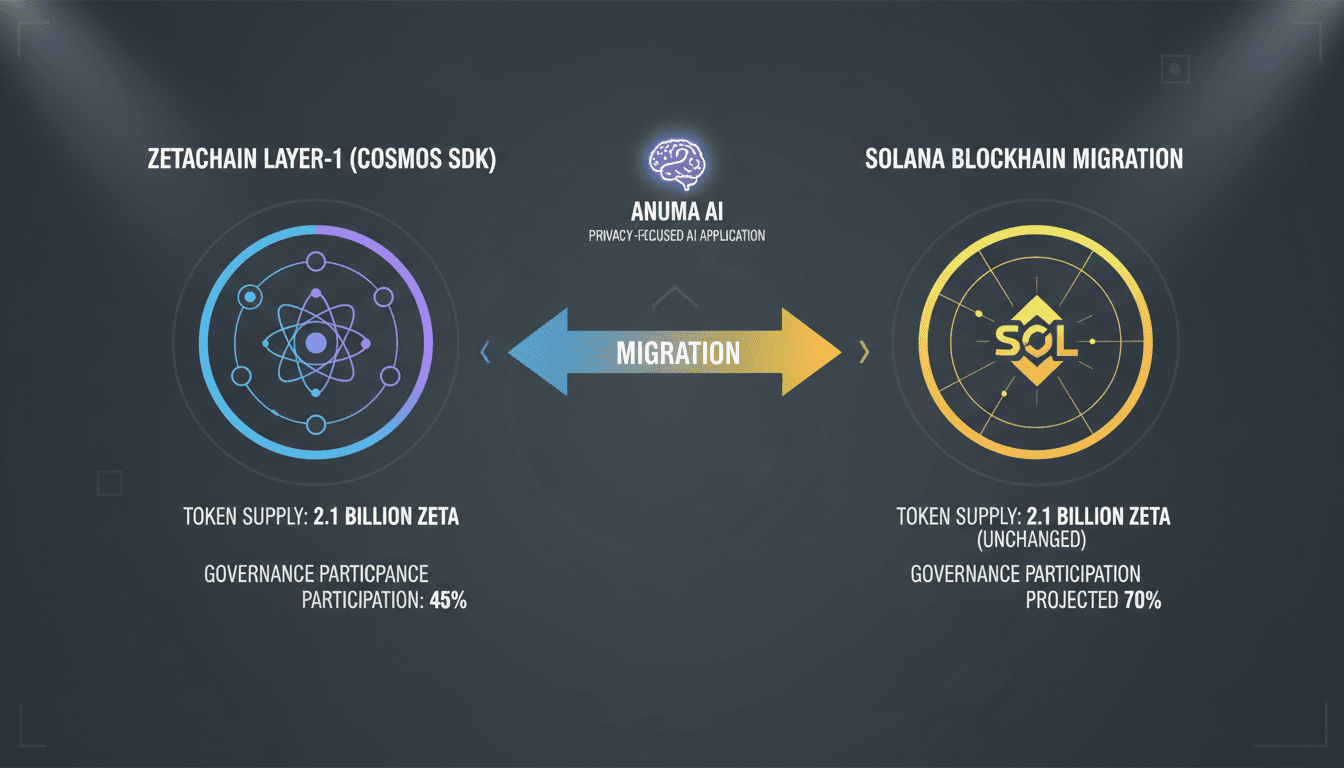
The migration to Solana signifies a strategic pivot in the blockchain landscape, emphasizing interoperability and resource allocation toward privacy-focused applications.
What happened (in 30 seconds)
- ZetaChain tokenholders approved Proposal 68 on September 20, 2026, with 99.4% support for migrating ZETA to Solana.
- The migration will occur at a 1:1 conversion rate, preserving the total supply and ticker while winding down the Cosmos-based Layer-1.
- A follow-up proposal is needed to finalize the migration mechanics and shutdown timeline for the existing Layer-1 network.
The context you actually need
- ZetaChain launched in 2021 as a Cosmos SDK-based Layer-1 aimed at connecting assets across blockchains, raising $27 million in 2023.
- The decision to migrate stems from a strategic shift towards developing Anuma, a privacy-oriented AI application, making the independent chain's maintenance less viable.
- The governance vote saw 58% participation, exceeding the required quorum, indicating strong community engagement in the decision-making process.
What's really happening
On September 17, 2026, ZetaChain introduced Proposal 68, which outlined the plan to migrate its native ZETA token to the Solana blockchain while initiating the wind-down of its Cosmos-based Layer-1 network. The governance vote concluded with an overwhelming 99.4% approval, reflecting a strong consensus among tokenholders. This migration allows for a seamless 1:1 conversion of ZETA tokens into Solana's SPL token format, ensuring that the total supply and ticker remain unchanged. However, it is important to note that ZETA tokens already issued on Ethereum and BNB Chain will not be included in this migration.
The decision to transition to Solana is driven by a strategic pivot towards Anuma, a privacy-focused AI application that aims to enhance user data security through a Private Memory Layer. This shift indicates a broader trend in the blockchain space, where projects are increasingly prioritizing privacy and interoperability over maintaining independent chains. The operational maintenance of ZetaChain's Layer-1 was deemed incompatible with the new focus on Anuma, prompting the governance proposal.
As part of the migration process, validators and staking rewards will continue until a follow-on proposal is approved, which will define critical aspects such as the snapshot height, claim process, and exchange coordination. This ensures that tokenholders are not left in limbo during the transition. The existing Layer-1 network will remain operational until the second governance vote is conducted, allowing for a smooth transition without immediate disruptions.
The implications of this migration extend beyond just ZetaChain. It highlights a growing trend among blockchain projects to consolidate resources and focus on specific applications that offer greater utility and user engagement. As the blockchain ecosystem evolves, projects that can effectively pivot and adapt to changing market demands are likely to thrive, while those that remain stagnant may struggle to maintain relevance.
Who feels it first (and how)
- ZetaChain tokenholders: Directly impacted by the migration, requiring adjustments in their asset management strategies.
- Developers and contributors: Those involved in ZetaChain will need to adapt to the new Solana environment and its development ecosystem.
- Investors in privacy-focused applications: As resources shift towards Anuma, stakeholders in privacy tech may see increased opportunities.
What to watch next
- Follow-up governance proposal: The details of the second proposal will clarify the migration mechanics and shutdown timeline, crucial for tokenholders.
- Market reaction to the migration: Observing how the broader crypto market responds to ZetaChain's transition could indicate investor sentiment towards similar projects.
- Development progress on Anuma: Tracking advancements in the privacy-focused AI application will reveal the effectiveness of ZetaChain's strategic pivot.
Proposal 68 was approved with 99.4% support, authorizing the migration to Solana.
The follow-up proposal will outline the migration mechanics and shutdown timeline for the Layer-1 network.
The immediate market reaction and price movements for ZETA post-migration remain uncertain.
Frequently Asked Questions
- Why it matters?
- The migration to Solana signifies a strategic pivot in the blockchain landscape, emphasizing interoperability and resource allocation toward privacy-focused applications.
- What happened (in 30 seconds)?
- ZetaChain tokenholders approved Proposal 68 on September 20, 2026, with 99.4% support for migrating ZETA to Solana. The migration will occur at a 1:1 conversion rate, preserving the total supply and ticker while winding down the Cosmos-based Layer-1. A follow-up proposal is needed to finalize the migration mechanics and shutdown timeline for the existing Layer-1 network.
- What's really happening?
- On September 17, 2026, ZetaChain introduced Proposal 68, which outlined the plan to migrate its native ZETA token to the Solana blockchain while initiating the wind-down of its Cosmos-based Layer-1 network. The governance vote concluded with an overwhelming 99.4% approval, reflecting a strong consensus among tokenholders. This migration allows for a seamless 1:1 conversion of ZETA tokens into Solana's SPL token format, ensuring that the total supply and ticker remain unchanged. However, it is im
- Who feels it first (and how)?
- ZetaChain tokenholders: Directly impacted by the migration, requiring adjustments in their asset management strategies. Developers and contributors: Those involved in ZetaChain will need to adapt to the new Solana environment and its development ecosystem. Investors in privacy-focused applications: As resources shift towards Anuma, stakeholders in privacy tech may see increased opportunities.
- What to watch next?
- Follow-up governance proposal: The details of the second proposal will clarify the migration mechanics and shutdown timeline, crucial for tokenholders. Market reaction to the migration: Observing how the broader crypto market responds to ZetaChain's transition could indicate investor sentiment towards similar projects. Development progress on Anuma: Tracking advancements in the privacy-focused AI application will reveal the effectiveness of ZetaChain's strategic pivot.
Beginner-friendly crypto tutorials, guides, and news.
"99Bitcoins is a crypto education and news site known for easy-to-understand content and comprehensive guides."
— A47 Editor
A New Home on Solana: ZETA Migration Wins 99.4% Vote
ZetaChain tokenholders have overwhelmingly approved a 1:1 migration of ZETA tokens to the Solana blockchain, achieving a remarkable 99.4% support in the vote. This decision marks a significant strategic shift as ZetaChain plans to wind down its Cosmo...
Covers blockchain, cryptocurrency news, project analysis, and market insights.
"Cointelegraph is a leading crypto-focused media outlet known for timely news, analysis, and educational content related to blockchain and digital assets."
— A47 Editor
ZetaChain holders approve plan to wind down L1, move ZETA to Solana
ZetaChain holders have approved a plan to wind down its Cosmos-based layer 1 blockchain and migrate ZETA tokens to the Solana network, reflecting a significant shift in strategy for the project. This decision was supported by an overwhelming 99.4% of...
Real-time updates, analysis, and reports on the blockchain and cryptocurrency sectors.
"Crypto News delivers real-time updates, analysis, and reports on the blockchain and cryptocurrency sectors."
— A47 Editor
ZETA Solana migration wins 99.4% support in vote
ZetaChain holders have overwhelmingly voted in favor of a 1:1 migration of ZETA tokens to the Solana blockchain, achieving a remarkable 99.4% support. This migration is a significant step for ZetaChain as it seeks to enhance its operational capabilit...