
European Central Banks Recommend Changes to MiCA Stablecoin Reserve Requirements
Why it matters
This proposal could redefine the stability and operational framework of stablecoins in the EU, impacting their integration into the broader financial system.
What happened (in 30 seconds)
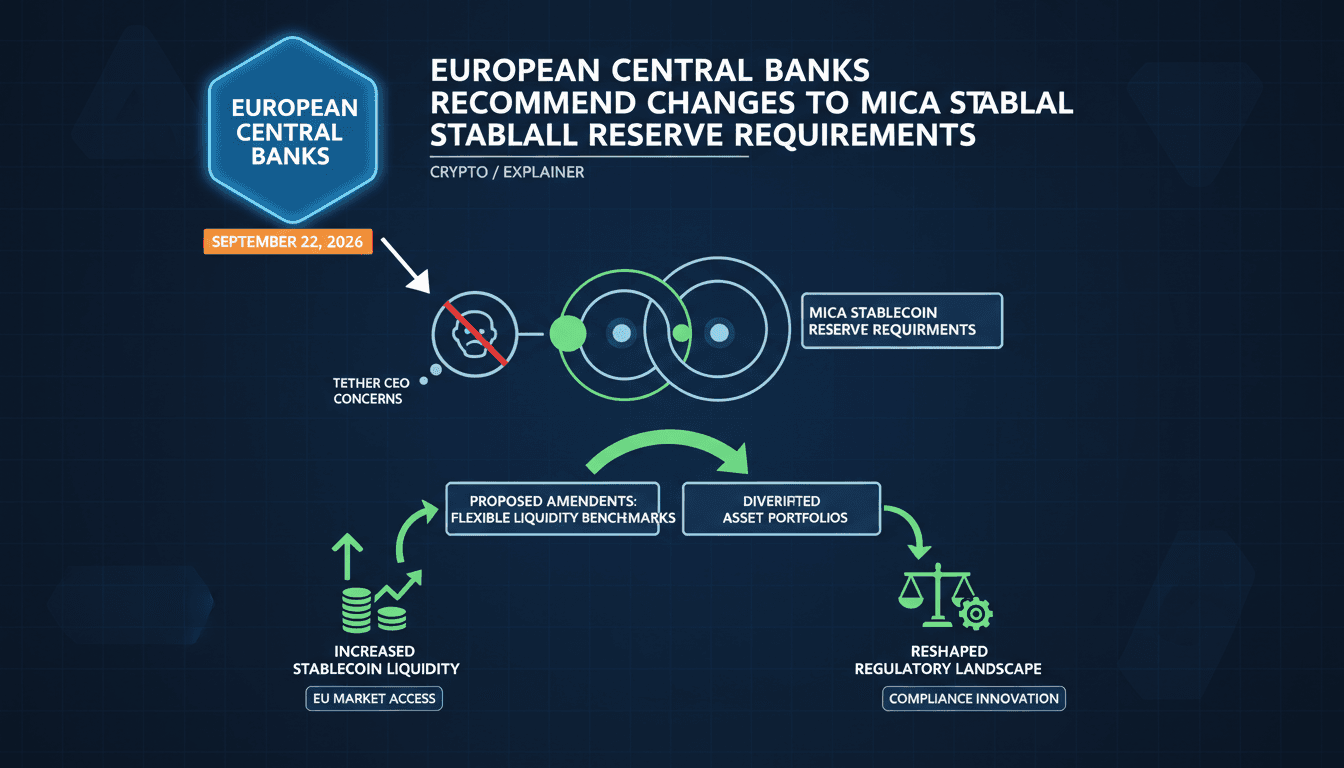
- On September 22, 2026, the European System of Central Banks recommended changes to MiCA stablecoin reserve requirements.
- The proposal suggests replacing fixed deposit floors with maturity-based liquidity thresholds to mitigate risks.
- Tether CEO Paolo Ardoino previously flagged these concerns in 2024, leading to Tether's non-compliance with MiCA.
The context you actually need
- MiCA regulations, effective from 2024, mandated stablecoin issuers to hold a minimum of 30% to 60% of reserves in commercial bank deposits.
- Ardoino's criticism highlighted that fixed deposit requirements could create systemic vulnerabilities during mass redemptions, as seen in the 2023 Silicon Valley Bank collapse.
- The European Commission is currently reviewing the proposal following a public consultation that closed on August 31, 2026.
What's really happening
The European Central Bank (ECB) and the European System of Central Banks (ESCB) are pushing for a significant shift in how stablecoins are regulated under the Markets in Crypto-Assets (MiCA) framework. The current rules require stablecoin issuers to maintain a fixed percentage of their reserves in commercial bank deposits—30% for smaller tokens and 60% for those deemed significant. This structure was initially designed to provide a liquidity buffer, but it has come under scrutiny for potentially introducing systemic risks.
Tether's CEO, Paolo Ardoino, has been vocal about the flaws in this approach since 2024, arguing that the rigid deposit requirements could expose issuers and holders to liquidity shortfalls during periods of high redemption demand. His concerns were validated by the fallout from the 2023 collapse of Silicon Valley Bank, which illustrated how interconnected and fragile the banking system can be when faced with sudden liquidity demands.
In response to these risks, the ESCB's recent proposal suggests replacing the fixed deposit requirements with maturity-based liquidity thresholds. This means that instead of a set percentage of reserves being tied up in bank deposits, stablecoin issuers would need to ensure that a portion of their reserves is available for redemption within one to five working days. This change aims to enhance the resilience of stablecoins against market volatility and reduce the risk of destabilizing the banking system during mass redemptions.
The proposal is currently under review by the European Commission, which is considering stakeholder feedback from its consultation process. While the recommendation does not immediately alter the regulatory landscape, it signals a shift in how regulators view the relationship between stablecoins and traditional banking systems. If adopted, this could lead to a more flexible and potentially safer framework for stablecoin operations in the EU.
For Tether, the implications are significant. The company has already opted out of pursuing MiCA authorization for its USDT token, citing the deposit rule as a primary reason. As of Q2 2026, Tether reported an outstanding supply of $184.6 billion in USDT, with reserves exceeding liabilities by approximately $4.11 billion. However, without compliance with MiCA, USDT remains unavailable on regulated EU exchanges, limiting its market access.
Who feels it first (and how)
- Stablecoin issuers: Companies like Tether may need to adapt their reserve strategies to comply with new regulations.
- Investors and traders: Those relying on stablecoins for liquidity could face changes in availability and stability.
- European banks: Financial institutions may experience shifts in deposit flows and liquidity management strategies due to changing stablecoin reserve requirements.
What to watch next
- Regulatory approval timeline: Keep an eye on how quickly the European Commission acts on the ESCB's proposal, as this will determine the future landscape for stablecoins in the EU.
- Market response from stablecoin issuers: Watch for how major players like Tether react to the proposed changes, particularly regarding their compliance strategies.
- Impact on liquidity: Monitor any shifts in liquidity within the stablecoin market, especially if new regulations lead to changes in reserve management practices.
The ESCB has submitted a proposal to amend MiCA stablecoin reserve requirements.
The European Commission will consider the proposal and may implement changes based on stakeholder feedback.
The long-term effects on stablecoin market dynamics and banking stability remain uncertain until regulations are finalized.
Frequently Asked Questions
- Why it matters?
- This proposal could redefine the stability and operational framework of stablecoins in the EU, impacting their integration into the broader financial system.
- What happened (in 30 seconds)?
- On September 22, 2026, the European System of Central Banks recommended changes to MiCA stablecoin reserve requirements. The proposal suggests replacing fixed deposit floors with maturity-based liquidity thresholds to mitigate risks. Tether CEO Paolo Ardoino previously flagged these concerns in 2024, leading to Tether's non-compliance with MiCA.
- What's really happening?
- The European Central Bank (ECB) and the European System of Central Banks (ESCB) are pushing for a significant shift in how stablecoins are regulated under the Markets in Crypto-Assets (MiCA) framework. The current rules require stablecoin issuers to maintain a fixed percentage of their reserves in commercial bank deposits—30% for smaller tokens and 60% for those deemed significant. This structure was initially designed to provide a liquidity buffer, but it has come under scrutiny for potentially
- Who feels it first (and how)?
- Stablecoin issuers: Companies like Tether may need to adapt their reserve strategies to comply with new regulations. Investors and traders: Those relying on stablecoins for liquidity could face changes in availability and stability. European banks: Financial institutions may experience shifts in deposit flows and liquidity management strategies due to changing stablecoin reserve requirements.
- What to watch next?
- Regulatory approval timeline: Keep an eye on how quickly the European Commission acts on the ESCB's proposal, as this will determine the future landscape for stablecoins in the EU. Market response from stablecoin issuers: Watch for how major players like Tether react to the proposed changes, particularly regarding their compliance strategies. Impact on liquidity: Monitor any shifts in liquidity within the stablecoin market, especially if new regulations lead to changes in reserve management
Real-time updates, analysis, and reports on the blockchain and cryptocurrency sectors.
"Crypto News delivers real-time updates, analysis, and reports on the blockchain and cryptocurrency sectors."
— A47 Editor
ECB seeks MiCA reserve change flagged by Tether in 2024
The European Central Bank (ECB) and the EU’s 27 national central banks have proposed replacing the current 30% and 60% bank-deposit floors for stablecoin reserves under the Markets in Crypto-Assets (MiCA) framework with maturity-based liquidity requi...
Covers blockchain, cryptocurrency news, project analysis, and market insights.
"Cointelegraph is a leading crypto-focused media outlet known for timely news, analysis, and educational content related to blockchain and digital assets."
— A47 Editor
ECB, EU cenbanks seek changes in MiCA’s minimum bank deposit for stablecoins
The European Central Bank (ECB) and EU central banks are advocating for changes to the Markets in Crypto-Assets (MiCA) regulation, specifically seeking to replace the minimum bank deposit requirements for stablecoins with liquidity thresholds. This s...
Real-time updates, analysis, and reports on the blockchain and cryptocurrency sectors.
"Crypto News delivers real-time updates, analysis, and reports on the blockchain and cryptocurrency sectors."
— A47 Editor
ECB wants stablecoin yield ban expanded across crypto lending and staking
The European Central Bank (ECB) and national central banks within the European Union have advocated for an expansion of the stablecoin remuneration ban under the Markets in Crypto-Assets (MiCA) framework to include lending, borrowing, and staking act...
Covers blockchain, cryptocurrency news, project analysis, and market insights.
"CoinDesk is a well-established cryptocurrency and blockchain news provider, offering comprehensive insights, market data, and industry research."
— A47 Editor
European central banks push to expand stablecoin yield ban to crypto lending and staking
European central banks are advocating for an expansion of the ban on stablecoin yields to include crypto lending and staking, arguing that these indirect yield structures blur the lines between electronic payment tokens and traditional bank deposits....