
White-hat researchers recover 52.37 BTC from Coldcard exploit into Wyoming trust
If you hold cryptocurrency, this incident highlights the importance of security measures and recovery options in the digital asset space.
Why it matters
This recovery operation underscores the vulnerabilities in hardware wallets and the ongoing battle between malicious actors and ethical hackers in the cryptocurrency ecosystem.
What happened (in 30 seconds)
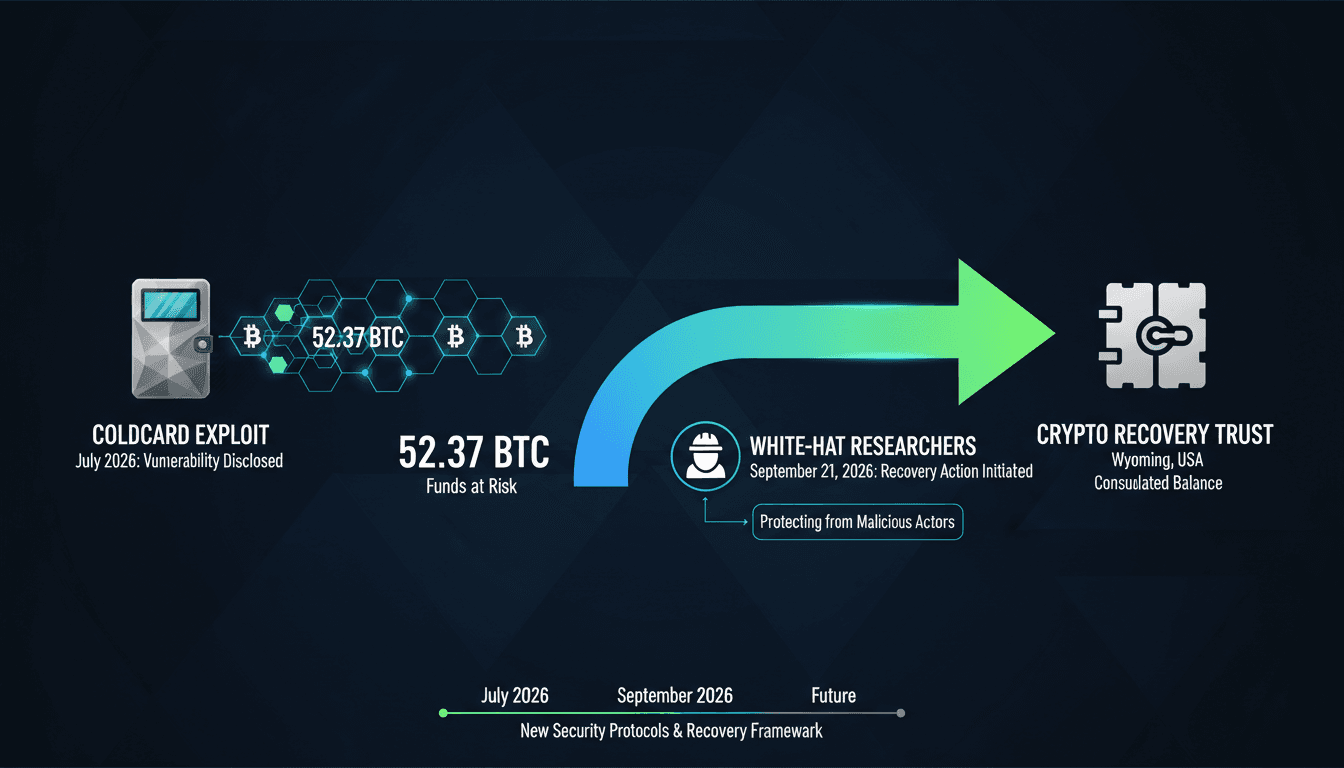
- On September 21, 2026, white-hat researchers moved 52.37 BTC from a Coldcard exploit into a recovery trust, preventing further loss.
- This amount represents 2.8% of the total exploited Bitcoin and 40% of the funds from the second wave of attacks.
- The Crypto Recovery Trust now holds these assets for verified claims from victims, utilizing forensic evidence for ownership verification.
The context you actually need
- Firmware vulnerability: A flaw in Coldcard devices allowed for predictable seed generation, affecting over 8,600 wallets and leading to significant losses.
- Exploitation timeline: The vulnerability was disclosed in late July 2026, with attacks commencing shortly after, draining approximately 1,779 BTC valued at over $100 million.
- White-hat intervention: Ethical hackers acted swiftly to consolidate and protect a portion of the exploited funds, showcasing the proactive measures within the crypto community.
What's really happening
The Coldcard incident is a stark reminder of the fragility of digital asset security. The firmware flaw in Coldcard Mk2 and Mk3 devices, which emerged from a March 2021 build error, allowed malicious actors to exploit predictable seed generation. This vulnerability was a result of using a software pseudo-random number generator instead of relying on hardware randomness, leading to compromised wallet security.
Once the flaw was disclosed in July 2026, the cryptocurrency community witnessed a race against time. Malicious actors began draining funds from vulnerable wallets, resulting in significant financial losses. On-chain analysts tracked multiple waves of exploitation, culminating in over 1,789 BTC being siphoned off, valued at more than $100 million.
In response, white-hat researchers, including those from Galaxy Digital and the Crypto Recovery Trust, mobilized to protect what they could. On September 21, 2026, they successfully consolidated 52.37 BTC into a new address controlled by the Crypto Recovery Trust. This operation not only safeguarded a portion of the exploited funds but also represented a significant 40% of the second wave of attacks.
The funds are currently held in trust, pending ownership verification through device forensics and other evidence. Victims can submit claims via the trust's website, which is a crucial step in restoring confidence among users of hardware wallets. The proactive measures taken by ethical hackers highlight the importance of community-driven solutions in the face of systemic vulnerabilities.
As the cryptocurrency landscape continues to evolve, the Coldcard incident serves as a critical case study in the ongoing battle between security and exploitation. The remaining funds from the second wave and other waves are still under analysis, with some portions being routed through mixers, complicating recovery efforts. This situation emphasizes the need for robust security protocols and the potential for ethical hacking to play a pivotal role in asset recovery.
Who feels it first (and how)
- Coldcard users: Individuals who own affected devices are at risk of losing their funds.
- Crypto investors: Broader market participants may experience shifts in confidence regarding hardware wallet security.
- Regulatory bodies: Increased scrutiny on cryptocurrency security practices may lead to new regulations.
What to watch next
- Victim claims: Monitor the number of claims submitted to the Crypto Recovery Trust, as this will indicate the extent of the impact on users.
- Market response: Watch for any shifts in Bitcoin prices or hardware wallet sales as confidence in security measures fluctuates.
- Regulatory developments: Keep an eye on potential regulatory actions that may arise from this incident, particularly concerning hardware wallet security standards.
The Coldcard firmware vulnerability has led to significant financial losses.
Increased scrutiny on hardware wallet security practices and potential regulatory responses.
The long-term impact on user confidence in hardware wallets and the cryptocurrency market as a whole.
Frequently Asked Questions
- Why it matters?
- This recovery operation underscores the vulnerabilities in hardware wallets and the ongoing battle between malicious actors and ethical hackers in the cryptocurrency ecosystem.
- What happened (in 30 seconds)?
- On September 21, 2026, white-hat researchers moved 52.37 BTC from a Coldcard exploit into a recovery trust, preventing further loss. This amount represents 2.8% of the total exploited Bitcoin and 40% of the funds from the second wave of attacks. The Crypto Recovery Trust now holds these assets for verified claims from victims, utilizing forensic evidence for ownership verification.
- What's really happening?
- The Coldcard incident is a stark reminder of the fragility of digital asset security. The firmware flaw in Coldcard Mk2 and Mk3 devices, which emerged from a March 2021 build error, allowed malicious actors to exploit predictable seed generation. This vulnerability was a result of using a software pseudo-random number generator instead of relying on hardware randomness, leading to compromised wallet security. Once the flaw was disclosed in July 2026, the cryptocurrency community witnessed a rac
- Who feels it first (and how)?
- Coldcard users: Individuals who own affected devices are at risk of losing their funds. Crypto investors: Broader market participants may experience shifts in confidence regarding hardware wallet security. Regulatory bodies: Increased scrutiny on cryptocurrency security practices may lead to new regulations.
- What to watch next?
- Victim claims: Monitor the number of claims submitted to the Crypto Recovery Trust, as this will indicate the extent of the impact on users. Market response: Watch for any shifts in Bitcoin prices or hardware wallet sales as confidence in security measures fluctuates. Regulatory developments: Keep an eye on potential regulatory actions that may arise from this incident, particularly concerning hardware wallet security standards.
Covers Bitcoin plus altcoin news, market updates, and educational resources.
"Bitcoin.com provides news, market data, and guides focused on Bitcoin and the wider crypto industry."
— A47 Editor
White Hats Beat Coldcard Attackers, Rescuing Millions of Dollars in Bitcoin
White hat hackers successfully intervened in a significant security breach involving Coldcard hardware wallets, managing to rescue 52 Bitcoin, valued at millions of dollars, from the attackers. This operation underscores the ongoing battle between et...
Covers blockchain, cryptocurrency news, project analysis, and market insights.
"Cointelegraph is a leading crypto-focused media outlet known for timely news, analysis, and educational content related to blockchain and digital assets."
— A47 Editor
White hats outrun Coldcard hackers in 52-Bitcoin evacuation
White hat hackers successfully secured approximately 40% of the Bitcoin involved in the Coldcard exploit's second wave, transferring the funds to a Wyoming trust designated for victims. This operation highlights the ongoing battle between ethical hac...
Real-time updates, analysis, and reports on the blockchain and cryptocurrency sectors.
"Crypto News delivers real-time updates, analysis, and reports on the blockchain and cryptocurrency sectors."
— A47 Editor
Coldcard whitehats move 52.37 BTC to recovery trust
White hat hackers associated with Coldcard successfully transferred 52.37 BTC from wallets linked to a recent exploit into a recovery trust, which will verify claims from affected owners. This operation highlights the proactive measures taken to secu...
Covers blockchain, cryptocurrency news, project analysis, and market insights.
"CoinDesk is a well-established cryptocurrency and blockchain news provider, offering comprehensive insights, market data, and industry research."
— A47 Editor
Whitehats move 52 bitcoin from the Coldcard hack to a recovery trust
White hat hackers have successfully moved 52 Bitcoin from the Coldcard hack to a recovery trust, as reported by Galaxy Digital. This transfer includes an OP_RETURN message directing to a recovery website, indicating a proactive approach to securing f...