
Circle Launches Digital Asset-Backed Borrowing for Institutional Clients
Why it matters
This innovation enhances liquidity options for institutions, potentially increasing Bitcoin's utility in financial markets.
What happened (in 30 seconds)
- Circle launched Digital Asset-Backed Borrowing (DABB) on September 21, 2026, allowing institutions to borrow USDC against Bitcoin.
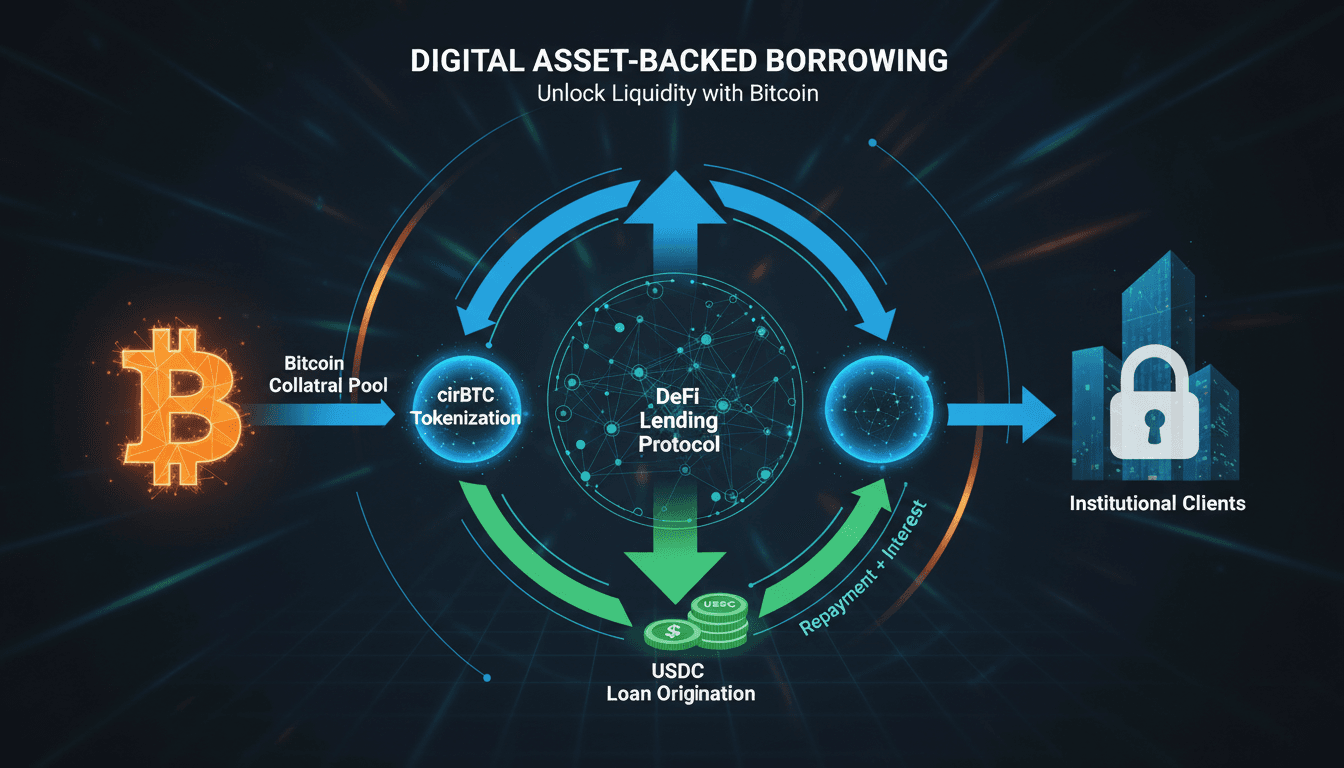
- Eligible customers can mint cirBTC, a Bitcoin-backed token, and use it as collateral in decentralized finance (DeFi) markets.
- Initial uptake shows $18.86 million borrowed against $157.85 million available liquidity, indicating strong interest.
The context you actually need
- Circle introduced cirBTC in June 2026, establishing a 1:1 Bitcoin backing and integrating Chainlink Proof of Reserve for transparency.
- Arc, Circle's Layer-1 blockchain, launched its public mainnet just days before DABB, enhancing the infrastructure for this service.
- Morpho is the first supported protocol, with plans for Aave integration, expanding the borrowing options for institutions.
What's really happening
Circle's Digital Asset-Backed Borrowing (DABB) represents a significant shift in how institutions can manage their Bitcoin holdings. By allowing eligible institutional customers to deposit Bitcoin and mint cirBTC, Circle provides a mechanism for these entities to access liquidity without the need to sell their underlying assets. This is particularly appealing in a market where Bitcoin's value can be volatile, and institutions may want to retain their exposure while still accessing cash.
The process is straightforward: institutions deposit Bitcoin, receive cirBTC in return, and can then use this token as collateral in supported DeFi markets like Morpho on Arc or Ethereum. This setup allows for the borrowing of USDC, which can be used for various operational needs, from funding new investments to managing cash flow. The integration of third-party lending markets means that Circle acts primarily as a facilitator, providing the necessary technology and interface while leaving the credit and liquidation risks to the DeFi protocols.
At launch, the Arc Morpho cirBTC-USDC market reported $18.86 million borrowed, indicating a healthy appetite for this new product. The liquidity available in the market stands at $157.85 million, with an 86% liquidation loan-to-value (LTV) ratio. This suggests that institutions are cautiously optimistic about leveraging their Bitcoin holdings while being mindful of the risks involved.
The implications of DABB extend beyond just liquidity. By enabling institutions to borrow against their Bitcoin, Circle is effectively increasing the utility of Bitcoin as a financial asset. This could lead to greater adoption of Bitcoin in institutional portfolios, as firms may feel more comfortable holding Bitcoin if they know they can access liquidity without selling. Furthermore, as more protocols like Aave are integrated into the DABB framework, the options for institutions will expand, potentially leading to a more robust DeFi ecosystem.
However, it's important to note that New York-based customers are excluded from this service, which may limit the immediate impact in one of the largest financial markets. Additionally, all lending and collateral management risks are borne by the third-party protocols, which means institutions must conduct thorough due diligence before engaging with these platforms.
Who feels it first (and how)
- Institutional investors: They can leverage Bitcoin holdings for liquidity without selling.
- DeFi platforms: Increased activity on platforms like Morpho and Aave as they integrate with Circle's offerings.
- Crypto asset managers: They may adjust strategies to include cirBTC in portfolios, enhancing liquidity management.
What to watch next
- Adoption rates: Monitor how quickly institutions begin utilizing DABB and the volume of USDC borrowed.
- Protocol integrations: Watch for announcements regarding additional DeFi protocols like Aave joining the DABB ecosystem.
- Market reactions: Observe any shifts in Bitcoin's price and institutional sentiment as liquidity options expand.
Circle's DABB is live and operational for eligible institutions.
Additional DeFi protocols will integrate with DABB, increasing borrowing options.
The long-term impact on Bitcoin's price and institutional adoption rates remains to be seen.
Frequently Asked Questions
- Why it matters?
- This innovation enhances liquidity options for institutions, potentially increasing Bitcoin's utility in financial markets.
- What happened (in 30 seconds)?
- Circle launched Digital Asset-Backed Borrowing (DABB) on September 21, 2026, allowing institutions to borrow USDC against Bitcoin. Eligible customers can mint cirBTC, a Bitcoin-backed token, and use it as collateral in decentralized finance (DeFi) markets. Initial uptake shows $18.86 million borrowed against $157.85 million available liquidity, indicating strong interest.
- What's really happening?
- Circle's Digital Asset-Backed Borrowing (DABB) represents a significant shift in how institutions can manage their Bitcoin holdings. By allowing eligible institutional customers to deposit Bitcoin and mint cirBTC, Circle provides a mechanism for these entities to access liquidity without the need to sell their underlying assets. This is particularly appealing in a market where Bitcoin's value can be volatile, and institutions may want to retain their exposure while still accessing cash. The pro
- Who feels it first (and how)?
- Institutional investors: They can leverage Bitcoin holdings for liquidity without selling. DeFi platforms: Increased activity on platforms like Morpho and Aave as they integrate with Circle's offerings. Crypto asset managers: They may adjust strategies to include cirBTC in portfolios, enhancing liquidity management.
- What to watch next?
- Adoption rates: Monitor how quickly institutions begin utilizing DABB and the volume of USDC borrowed. Protocol integrations: Watch for announcements regarding additional DeFi protocols like Aave joining the DABB ecosystem. Market reactions: Observe any shifts in Bitcoin's price and institutional sentiment as liquidity options expand.
Real-time updates, analysis, and reports on the blockchain and cryptocurrency sectors.
"Crypto News delivers real-time updates, analysis, and reports on the blockchain and cryptocurrency sectors."
— A47 Editor
Circle launches Bitcoin-backed USDC borrowing
Circle has launched a new Bitcoin-backed USDC borrowing service through Circle Mint, allowing eligible institutions to use cirBTC as collateral on the Arc and Ethereum blockchains. This innovative service enables institutions to access liquidity with...
Covers Bitcoin plus altcoin news, market updates, and educational resources.
"Bitcoin.com provides news, market data, and guides focused on Bitcoin and the wider crypto industry."
— A47 Editor
Circle Now Lets Institutional Clients Borrow USDC Against Their Bitcoin
Circle has introduced a new service allowing institutional clients to borrow USDC against their Bitcoin holdings, enabling access to liquidity without the need to liquidate their assets. This innovative approach is designed to enhance financial flexi...
Covers blockchain, cryptocurrency news, project analysis, and market insights.
"Cointelegraph is a leading crypto-focused media outlet known for timely news, analysis, and educational content related to blockchain and digital assets."
— A47 Editor
Circle launches Bitcoin-backed USDC borrowing for institutional clients
Circle has launched a new Bitcoin-backed borrowing service for institutional clients, enabling them to access USDC liquidity without liquidating their Bitcoin holdings. This innovative approach allows institutions to leverage their cryptocurrency ass...