
THORChain Rejects Request to Block Addresses Linked to Bitget Hack
Why it matters
The ongoing debate over decentralization versus regulatory compliance could redefine the operational landscape of DeFi protocols.
What happened (in 30 seconds)
- On September 24, 2026, hackers linked to North Korea stole approximately $387.5 million from Bitget exchange.
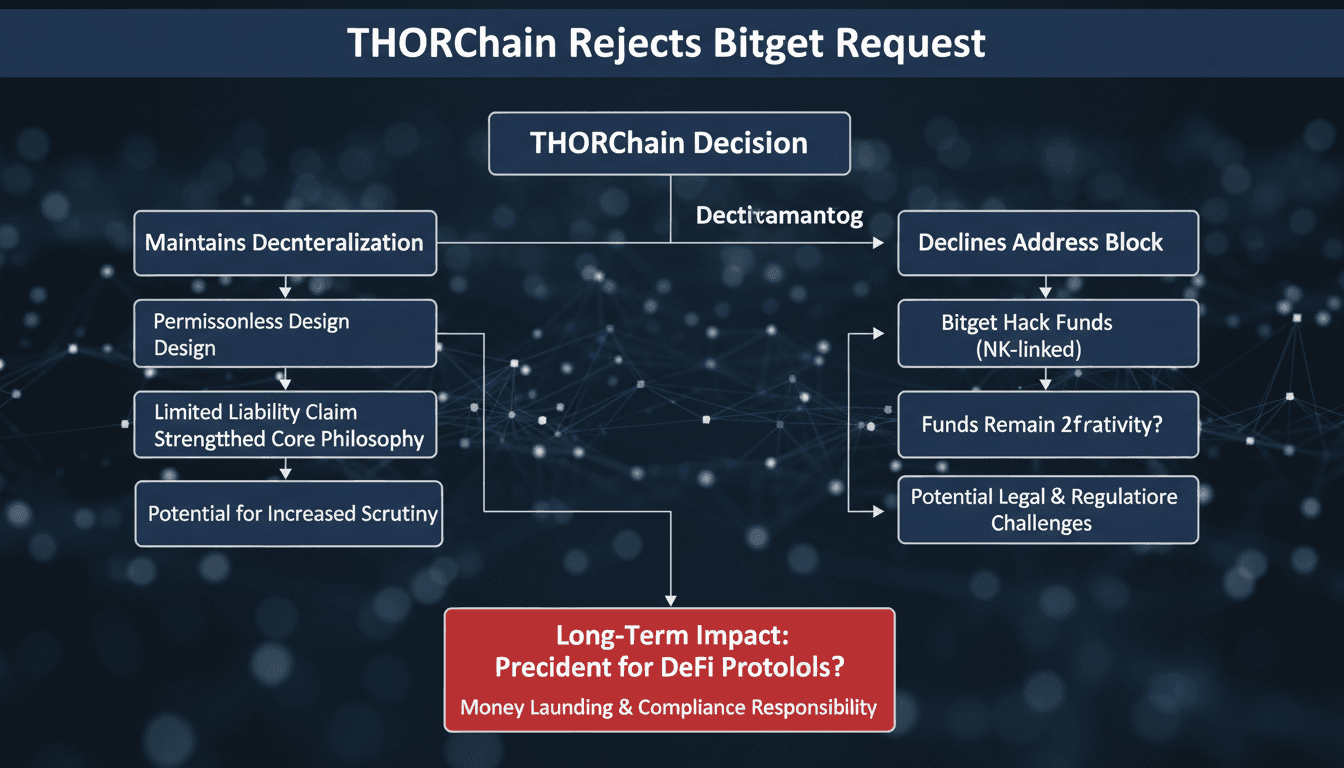
- THORChain declined Bitget's request to block the traced hacker addresses, citing its permissionless design.
- Legal expert Yuriy Brisov assessed the risk of prosecution for THORChain as low, but noted potential exposure due to past incidents.
The context you actually need
- THORChain previously processed around $1.2 billion in funds from the 2025 Bybit hack, raising concerns about its exposure to future claims.
- The DeFi sector is under scrutiny from regulators globally, with frameworks like MiCA and SEC guidelines focusing on anti-money laundering (AML) obligations.
- NEAR Intents successfully blocked over $50 million in attempted swaps related to the Bitget hack, contrasting THORChain's inaction and highlighting differing approaches to compliance.
What's really happening
The Bitget hack has intensified scrutiny on decentralized protocols like THORChain, which prides itself on a permissionless design similar to Bitcoin and Ethereum. When Bitget's CEO, Gracy Chen, requested THORChain to block the hacker addresses, the protocol's response was rooted in its foundational principles of decentralization. By refusing to act, THORChain emphasized its commitment to a system where no single entity holds control over transactions, a stance that resonates with many in the crypto community.
However, this refusal raises critical questions about the responsibilities of decentralized platforms in the face of illicit activities. Legal expert Yuriy Brisov pointed out that while the risk of prosecution for money laundering is low due to THORChain's retired admin key and decentralized structure, the protocol's past involvement with the Bybit hack complicates its legal standing. The Bybit incident, where THORChain processed stolen funds, exposes it to potential future claims, especially if regulators decide to take a more aggressive stance on AML compliance.
The broader DeFi landscape is grappling with similar challenges. As regulators worldwide tighten their grip on financial systems, the question of how decentralized protocols can operate without central oversight becomes increasingly pertinent. The MiCA framework in Europe and the SEC's focus on crypto assets are just two examples of how the regulatory environment is evolving. These frameworks aim to ensure that platforms adhere to AML obligations, which could conflict with the ethos of decentralization.
In contrast, NEAR Intents has taken a proactive approach by implementing an automated system to block suspicious transactions, effectively freezing over $503,000 in the process. This raises the stakes for THORChain, as its inaction could be perceived as a failure to protect users and the integrity of the financial system. The industry is now watching closely to see how THORChain navigates this complex landscape, especially as it balances its commitment to decentralization with the need for compliance.
As the situation unfolds, the implications for THORChain and similar protocols could be significant. If regulators begin to view decentralized platforms as liable for facilitating illicit activities, it could lead to a shift in how these platforms operate, potentially requiring them to implement more stringent controls. This could alter the very nature of DeFi, which has thrived on the principles of permissionless access and user autonomy.
Who feels it first (and how)
- DeFi Protocols: Increased scrutiny could lead to operational changes and compliance costs.
- Investors: Potential legal ramifications may affect the value and security of investments in decentralized platforms.
- Regulators: Heightened focus on AML compliance could lead to new regulations impacting the entire crypto ecosystem.
What to watch next
- Regulatory Developments: Keep an eye on new regulations from bodies like the SEC and MiCA, as they could reshape compliance requirements for DeFi.
- Legal Precedents: Watch for any legal actions against THORChain or similar protocols that could set important precedents for liability in decentralized finance.
- Market Reactions: Monitor how the market responds to THORChain's stance and any shifts in user trust or investment patterns.
THORChain processed funds from the Bybit hack, raising legal concerns.
Regulatory scrutiny on DeFi protocols will increase, impacting operational practices.
The long-term implications of THORChain's refusal to block hacker addresses on its legal standing and user trust.
Frequently Asked Questions
- Why it matters?
- The ongoing debate over decentralization versus regulatory compliance could redefine the operational landscape of DeFi protocols.
- What happened (in 30 seconds)?
- On September 24, 2026, hackers linked to North Korea stole approximately $387.5 million from Bitget exchange. THORChain declined Bitget's request to block the traced hacker addresses, citing its permissionless design. Legal expert Yuriy Brisov assessed the risk of prosecution for THORChain as low, but noted potential exposure due to past incidents.
- What's really happening?
- The Bitget hack has intensified scrutiny on decentralized protocols like THORChain, which prides itself on a permissionless design similar to Bitcoin and Ethereum. When Bitget's CEO, Gracy Chen, requested THORChain to block the hacker addresses, the protocol's response was rooted in its foundational principles of decentralization. By refusing to act, THORChain emphasized its commitment to a system where no single entity holds control over transactions, a stance that resonates with many in the cr
- Who feels it first (and how)?
- DeFi Protocols: Increased scrutiny could lead to operational changes and compliance costs. Investors: Potential legal ramifications may affect the value and security of investments in decentralized platforms. Regulators: Heightened focus on AML compliance could lead to new regulations impacting the entire crypto ecosystem.
- What to watch next?
- Regulatory Developments: Keep an eye on new regulations from bodies like the SEC and MiCA, as they could reshape compliance requirements for DeFi. Legal Precedents: Watch for any legal actions against THORChain or similar protocols that could set important precedents for liability in decentralized finance. Market Reactions: Monitor how the market responds to THORChain's stance and any shifts in user trust or investment patterns.
Covers blockchain, cryptocurrency news, project analysis, and market insights.
"Cointelegraph is a leading crypto-focused media outlet known for timely news, analysis, and educational content related to blockchain and digital assets."
— A47 Editor
Could THORChain face prosecution over stolen Bitget funds? Legal opinion
THORChain is facing potential legal scrutiny after refusing to block addresses linked to a $387.5 million hack of the cryptocurrency exchange Bitget. Legal expert Yuriy Brisov indicated that the situation is complex, raising questions about whether T...
Real-time updates, analysis, and reports on the blockchain and cryptocurrency sectors.
"Crypto News delivers real-time updates, analysis, and reports on the blockchain and cryptocurrency sectors."
— A47 Editor
Bitget’s hack exposes a double standard on stolen funds
Bitget, a cryptocurrency exchange, recently suffered a significant security breach resulting in unauthorized transfers totaling approximately $388 million. The exchange has paused withdrawals as investigations reveal a backend breach, prompting Bitge...
Real-time updates, analysis, and reports on the blockchain and cryptocurrency sectors.
"Crypto News delivers real-time updates, analysis, and reports on the blockchain and cryptocurrency sectors."
— A47 Editor
Bitget hacker moves $6.3 million into Bitcoin after THORChain rejects freeze request
A wallet associated with the Bitget hacker has converted approximately $6.3 million in Ethereum to Bitcoin via THORChain, following the network's refusal to honor Bitget's request to freeze addresses linked to a recent security breach. This breach ha...
Real-time updates, analysis, and reports on the blockchain and cryptocurrency sectors.
"Crypto News delivers real-time updates, analysis, and reports on the blockchain and cryptocurrency sectors."
— A47 Editor
Bitget wants stolen funds blocked. Who can make a cross chain network comply?
Bitget has requested THORChain to block addresses associated with a recent security breach that resulted in the theft of approximately $387.5 million. THORChain, however, has stated that its emergency halt is intended to protect the network as a whol...
Covers blockchain, cryptocurrency news, project analysis, and market insights.
"CoinDesk is a well-established cryptocurrency and blockchain news provider, offering comprehensive insights, market data, and industry research."
— A47 Editor
THORChain rejects Bitget request to block hacker as $6 million moves to bitcoin
THORChain has declined a request from Bitget to block addresses linked to a recent $387.5 million hack, as approximately $6 million has been moved from Ethereum to Bitcoin. This decision comes amidst ongoing scrutiny of THORChain's security measures ...
Real-time updates, analysis, and reports on the blockchain and cryptocurrency sectors.
"Crypto News delivers real-time updates, analysis, and reports on the blockchain and cryptocurrency sectors."
— A47 Editor
Bitget hack sparks dispute over THORChain’s permissionless design
THORChain has defended its permissionless design after Bitget requested that the cross-chain protocol block addresses linked to a recent security breach that resulted in the theft of approximately $387.5 million. This request has sparked a dispute re...