
Blast Ethereum Layer-2 Network to Shut Down by October 2026 Due to Unsustainable Costs
Why it matters
The closure of Blast highlights the financial pressures facing smaller Ethereum Layer-2 networks, impacting users and investors alike.
What happened (in 30 seconds)
- Blast announced its wind-down on October 2, 2026, due to operating costs exceeding revenue.
- Users must withdraw assets by October 26, 2026, or face more complex withdrawal processes.
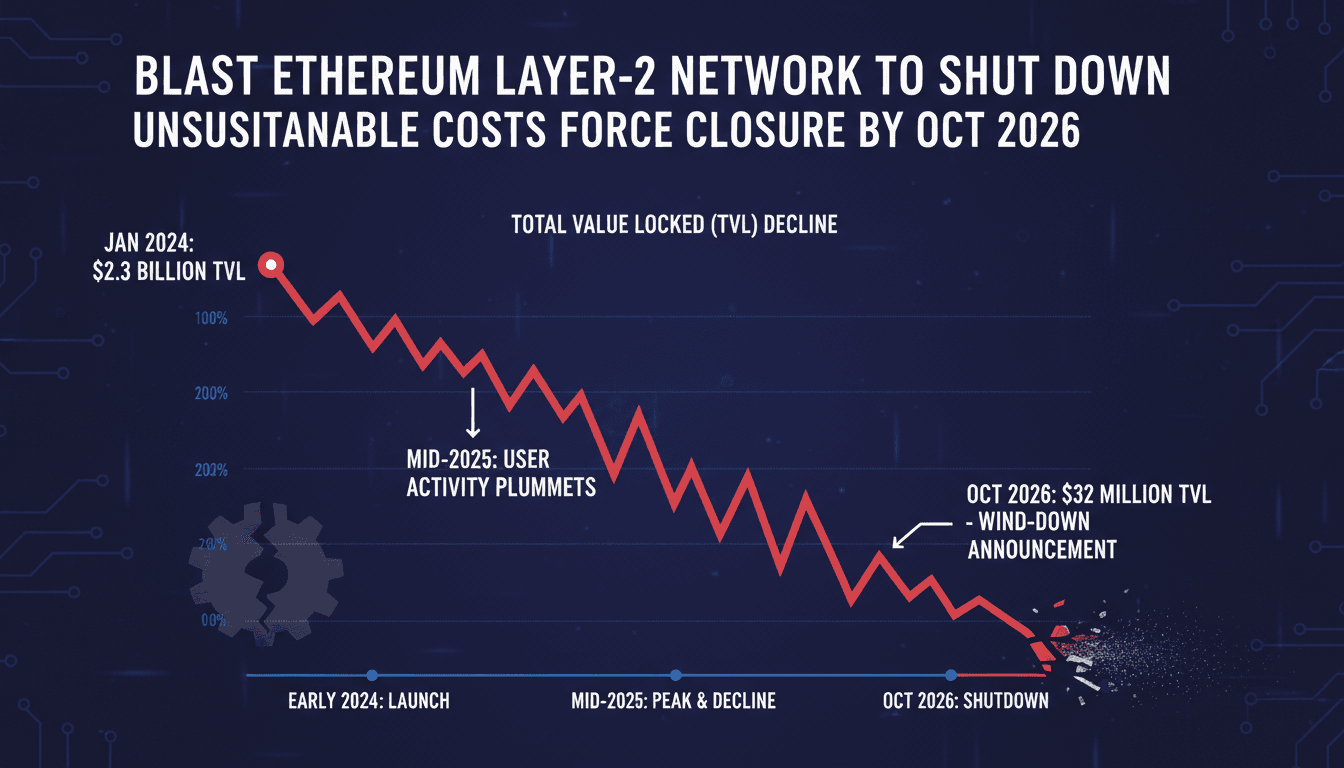
- Total value locked (TVL) plummeted from over $2.3 billion to around $32 million, reflecting a significant decline in user activity.
The context you actually need
- Blast was launched amid the NFT market boom, attracting significant deposits but struggled to maintain growth as the market shifted.
- Operating costs became unsustainable, with monthly revenue dropping from peaks near $3.5 million to under $2,000.
- The Ethereum Layer-2 landscape is consolidating, with smaller networks facing challenges as user activity migrates to larger platforms.
What's really happening
The decision to wind down the Blast Ethereum Layer-2 network stems from a combination of rising operational costs and declining user engagement. Initially launched with great promise during the NFT boom, Blast attracted over $2 billion in deposits, driven by innovative yield offerings and a points program that anticipated a token airdrop. However, as the NFT market began to cool, user activity shifted towards other platforms, leading to a dramatic decline in total value locked (TVL).
By October 2026, Blast's TVL had plummeted over 98%, from its peak of approximately $2.3 billion to around $32 million. This stark drop in user engagement directly impacted the network's revenue, which fell from monthly highs of nearly $3.5 million to less than $2,000. The financial model that once seemed viable became untenable, forcing the team to announce the wind-down.
The operational costs associated with maintaining a Layer-2 network are significant, including infrastructure, security, and ongoing development. As revenue dwindled, the Blast team recognized that there was no credible path to economic sustainability. The decision to initiate the wind-down process was communicated to users, urging them to withdraw their assets before the October 26 deadline. After this date, users will need to engage directly with bridge contracts, complicating the withdrawal process.
This situation reflects broader trends within the Ethereum ecosystem, where smaller Layer-2 networks are struggling to compete against larger, more established platforms. As user activity consolidates, the economic viability of these smaller networks is increasingly called into question. The Blast wind-down serves as a cautionary tale for other emerging projects, highlighting the importance of sustainable growth strategies in a rapidly evolving market.
Who feels it first (and how)
- Investors in Blast: They risk losing access to their funds if they do not withdraw by the deadline.
- NFT traders: Those who relied on Blast for transactions may need to shift to other platforms, affecting their trading strategies.
- Developers: Teams working on projects within the Blast ecosystem may face job insecurity or need to pivot to other networks.
- Ethereum users: Broader implications for the Ethereum ecosystem as users reassess the viability of Layer-2 solutions.
What to watch next
- Withdrawal activity: Monitor how quickly users withdraw their assets before the October 26 deadline, which will indicate user confidence in the network.
- Market response: Watch for price movements of the BLAST token and other Layer-2 tokens, reflecting investor sentiment and market consolidation trends.
- Emerging Layer-2 solutions: Keep an eye on new projects entering the space, particularly those that can demonstrate sustainable growth and user engagement.
The Blast network is winding down due to unsustainable operating costs.
Other smaller Layer-2 networks may face similar challenges, leading to further consolidations in the market.
The long-term impact on Ethereum's Layer-2 ecosystem and how it will adapt to these changes remains uncertain.
Frequently Asked Questions
- Why it matters?
- The closure of Blast highlights the financial pressures facing smaller Ethereum Layer-2 networks, impacting users and investors alike.
- What happened (in 30 seconds)?
- Blast announced its wind-down on October 2, 2026, due to operating costs exceeding revenue. Users must withdraw assets by October 26, 2026, or face more complex withdrawal processes. Total value locked (TVL) plummeted from over $2.3 billion to around $32 million, reflecting a significant decline in user activity.
- What's really happening?
- The decision to wind down the Blast Ethereum Layer-2 network stems from a combination of rising operational costs and declining user engagement. Initially launched with great promise during the NFT boom, Blast attracted over $2 billion in deposits, driven by innovative yield offerings and a points program that anticipated a token airdrop. However, as the NFT market began to cool, user activity shifted towards other platforms, leading to a dramatic decline in total value locked (TVL). By Octobe
- Who feels it first (and how)?
- Investors in Blast: They risk losing access to their funds if they do not withdraw by the deadline. NFT traders: Those who relied on Blast for transactions may need to shift to other platforms, affecting their trading strategies. Developers: Teams working on projects within the Blast ecosystem may face job insecurity or need to pivot to other networks. Ethereum users: Broader implications for the Ethereum ecosystem as users reassess the viability of Layer-2 solutions.
- What to watch next?
- Withdrawal activity: Monitor how quickly users withdraw their assets before the October 26 deadline, which will indicate user confidence in the network. Market response: Watch for price movements of the BLAST token and other Layer-2 tokens, reflecting investor sentiment and market consolidation trends. Emerging Layer-2 solutions: Keep an eye on new projects entering the space, particularly those that can demonstrate sustainable growth and user engagement.
Covers blockchain, cryptocurrency news, project analysis, and market insights.
"Cointelegraph is a leading crypto-focused media outlet known for timely news, analysis, and educational content related to blockchain and digital assets."
— A47 Editor
Blast to wind down Ethereum L2 after costs outpace revenue
Blast, once a leading Ethereum layer-2 network, is set to wind down operations as rising costs have outpaced revenue, prompting the company to advise users to transfer their assets to the Ethereum mainnet before the shutdown.
Covers blockchain, cryptocurrency news, project analysis, and market insights.
"CoinDesk is a well-established cryptocurrency and blockchain news provider, offering comprehensive insights, market data, and industry research."
— A47 Editor
Once a $2 billion Ethereum layer-2, Blast is shutting down after assets plunge 98%
Blast, once a prominent Ethereum layer-2 network valued at over $2 billion, is set to shut down as it faces a dramatic 98% decline in assets, coupled with rising operational costs and diminishing user activity.
Real-time updates, analysis, and reports on the blockchain and cryptocurrency sectors.
"Crypto News delivers real-time updates, analysis, and reports on the blockchain and cryptocurrency sectors."
— A47 Editor
Blast announces shutdown as network costs exceed Layer 2 revenue
Blast has announced the shutdown of its Layer 2 network, urging users to withdraw their assets by October 26, 2026, due to rising operational costs that have surpassed revenue. This decision was made public on October 2, 2026, via an announcement on ...