
South Korea's FSC Proposes Regulations for Tokenization of Securities Effective February 2027
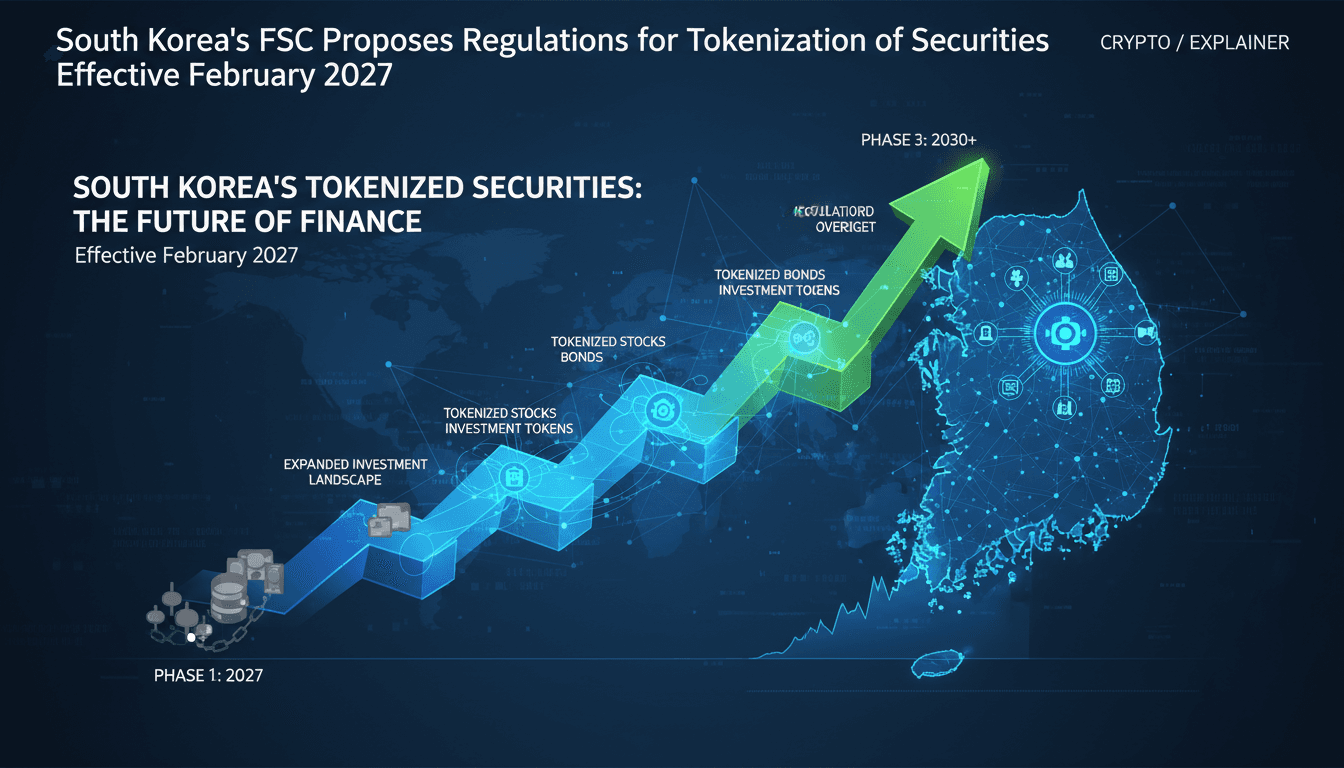
If you're an investor in South Korea, new regulations could reshape how you access and trade securities.
Why it matters
These regulations aim to integrate blockchain technology into traditional finance, potentially increasing market efficiency and accessibility.
What happened (in 30 seconds)
- On October 2, 2026, South Korea's Financial Services Commission (FSC) began public consultation on regulations for tokenizing stocks, bonds, and funds.
- Implementation is set for February 4, 2027, following a phased approach that starts with private investment products.
- Retail investors will face a purchase limit of KRW100 million per year on licensed over-the-counter (OTC) exchanges.
The context you actually need
- Legal framework established: In January 2026, South Korea amended key financial laws to recognize distributed ledgers as valid securities registries.
- Phased rollout: The FSC's roadmap includes three stages, starting with institutional products and gradually expanding to broader offerings.
- Regulatory oversight maintained: The Korea Securities Depository will oversee compliance, ensuring investor protections are in place.
What's really happening
The South Korean Financial Services Commission (FSC) is taking significant steps to modernize its financial markets through the proposed regulations for tokenization. By allowing stocks, bonds, and investment funds to be tokenized, the FSC is not only embracing blockchain technology but also aiming to enhance the efficiency and transparency of capital markets. This move follows legislative amendments made in January 2026, which granted legal recognition to distributed ledgers as securities registries, laying the groundwork for this regulatory framework.
The proposed regulations specify operational requirements for distributed ledgers, including the need for at least two account managers and the Korea Securities Depository (KSD) to ensure a robust and secure environment for trading tokenized securities. This structure is designed to mitigate risks associated with digital assets while providing a clear pathway for integrating these innovations into the existing financial system.
The introduction of a new OTC licensing category for debt securities is particularly noteworthy. This will allow for a more flexible trading environment for tokenized assets, catering to both institutional and retail investors. However, retail investors will be subject to an annual net purchase limit of KRW100 million, which aims to protect less experienced investors from overexposure to potentially volatile markets.
The phased approach to implementation is crucial. The first phase, set to launch on February 4, 2027, will focus on private money market funds (MMFs), bonds for institutional investors, unlisted shares via trusts, and public fractional securities. This gradual rollout allows for adjustments based on market feedback and regulatory assessments, ensuring that the system can adapt to the evolving landscape of digital finance.
As firms like KB Securities and Eugene Investment prepare for these changes, the industry is closely monitoring the public consultation period, which runs until November 11, 2026. Feedback from this consultation will likely influence final regulations, particularly concerning thresholds such as the retail cap and capital requirements for issuers.
Who feels it first (and how)
- Retail investors: Limited to KRW100 million annual purchases, they will experience new trading options but with restrictions.
- Institutional investors: They will gain early access to a broader range of tokenized products, enhancing their investment strategies.
- Financial firms: Companies involved in securities trading will need to adapt to new compliance requirements and operational standards.
What to watch next
- Public consultation outcomes: The feedback received by November 11, 2026, will shape the final regulations and could impact investor protections.
- Market readiness: Watch for how quickly financial firms can adapt to the new rules and what products they will offer post-implementation.
- Investor adoption rates: The uptake of tokenized securities by both retail and institutional investors will indicate the success of these regulations.
The regulations will officially start on February 4, 2027, focusing initially on private investment products.
Increased interest in tokenized securities from both retail and institutional investors as the market adapts.
The long-term impact on market volatility and investor behavior as tokenized assets become more mainstream.
Frequently Asked Questions
- Why it matters?
- These regulations aim to integrate blockchain technology into traditional finance, potentially increasing market efficiency and accessibility.
- What happened (in 30 seconds)?
- On October 2, 2026, South Korea's Financial Services Commission (FSC) began public consultation on regulations for tokenizing stocks, bonds, and funds. Implementation is set for February 4, 2027, following a phased approach that starts with private investment products. Retail investors will face a purchase limit of KRW100 million per year on licensed over-the-counter (OTC) exchanges.
- What's really happening?
- The South Korean Financial Services Commission (FSC) is taking significant steps to modernize its financial markets through the proposed regulations for tokenization. By allowing stocks, bonds, and investment funds to be tokenized, the FSC is not only embracing blockchain technology but also aiming to enhance the efficiency and transparency of capital markets. This move follows legislative amendments made in January 2026, which granted legal recognition to distributed ledgers as securities regis
- Who feels it first (and how)?
- Retail investors: Limited to KRW100 million annual purchases, they will experience new trading options but with restrictions. Institutional investors: They will gain early access to a broader range of tokenized products, enhancing their investment strategies. Financial firms: Companies involved in securities trading will need to adapt to new compliance requirements and operational standards.
- What to watch next?
- Public consultation outcomes: The feedback received by November 11, 2026, will shape the final regulations and could impact investor protections. Market readiness: Watch for how quickly financial firms can adapt to the new rules and what products they will offer post-implementation. Investor adoption rates: The uptake of tokenized securities by both retail and institutional investors will indicate the success of these regulations.
Real-time updates, analysis, and reports on the blockchain and cryptocurrency sectors.
"Crypto News delivers real-time updates, analysis, and reports on the blockchain and cryptocurrency sectors."
— A47 Editor
South Korea clears token rules for stocks, bonds and funds
South Korea has proposed new regulations to enable the tokenization of stocks, bonds, and funds, with a retail over-the-counter (OTC) transaction cap set at KRW100 million, scheduled to take effect by February 4, 2027. This initiative aims to moderni...
Covers blockchain, cryptocurrency news, project analysis, and market insights.
"Cointelegraph is a leading crypto-focused media outlet known for timely news, analysis, and educational content related to blockchain and digital assets."
— A47 Editor
South Korea advances tokenized securities rules ahead of 2027 rollout
South Korea's financial regulator has proposed detailed rules for tokenized securities, which include capital requirements, OTC trading licenses, and limits on retail investments, as part of a broader initiative to establish a tokenized securities ma...
Real-time updates, analysis, and reports on the blockchain and cryptocurrency sectors.
"Crypto News delivers real-time updates, analysis, and reports on the blockchain and cryptocurrency sectors."
— A47 Editor
South Korea to let stocks, bonds and funds go onchain
South Korea has proposed new regulations to allow the tokenization of stocks, bonds, and funds, with a limit of 100 million won for over-the-counter transactions, set to take effect by February 4, 2027. This initiative aims to modernize the financial...