
U.S. Government Moves 12,267 BTC from 2016 Bitfinex Hack to New Wallets
Why it matters
This transfer reflects ongoing government strategies to manage seized cryptocurrency assets, impacting market perceptions and potential restitution processes.
What happened (in 30 seconds)
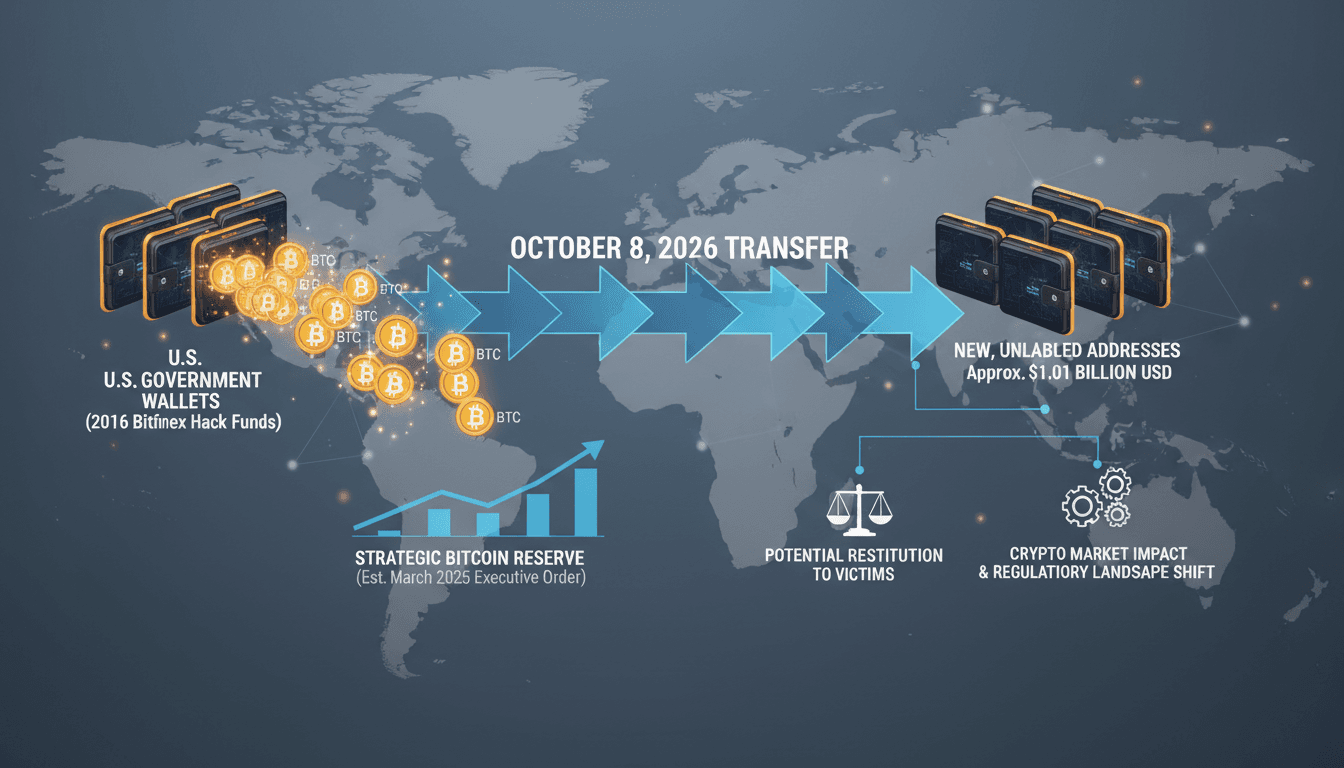
- On October 8, 2026, the U.S. government transferred 12,267 BTC (approximately $1.01 billion) from wallets linked to the 2016 Bitfinex hack to new unlabeled addresses.
- Arkham Intelligence identified the movement as part of internal custody reshuffling, not liquidation, following previous transfers to Coinbase Prime.
- Bitcoin prices dipped temporarily below $81,000 post-transfer, though the connection to the government movement remains unconfirmed.
The context you actually need
- The 2016 Bitfinex hack resulted in the theft of around 120,000 BTC, with 94,000 BTC seized from Ilya Lichtenstein and Heather Morgan in 2022.
- A March 2025 executive order established a Strategic Bitcoin Reserve, directing that forfeited Bitcoin be held for restitution rather than sold.
- Post-transfer, the U.S. government holds approximately 307,000 BTC, valued at around $25 billion, indicating significant control over the market.
What's really happening
On October 8, 2026, the U.S. government executed a significant transfer of 12,267 BTC from wallets associated with the 2016 Bitfinex hack. This transfer was part of a broader strategy to manage seized assets, particularly in light of a March 2025 executive order that established a Strategic Bitcoin Reserve. This reserve prohibits the sale of seized Bitcoin except for restitution or legal obligations, indicating a shift in how the government approaches cryptocurrency management.
The transfer did not involve any deposits to exchanges, which suggests that the government is not looking to liquidate these assets for cash. Instead, it appears to be a custody management move, possibly in preparation for future restitution to victims of the Bitfinex hack. The fact that the funds were moved to unlabeled wallets further supports the notion that this is an internal reshuffling rather than an attempt to cash out.
Market analysts have interpreted the transfer as a sign of ongoing management rather than a signal of impending sales, which could have broader implications for Bitcoin's market stability. The temporary dip in Bitcoin prices following the transfer indicates that market participants are closely monitoring government actions, as they can influence market sentiment and price movements.
The U.S. government's approach to cryptocurrency is evolving, with a focus on maintaining control over seized assets while also considering the rights of victims. This balance between asset management and restitution is crucial, as it sets a precedent for how similar cases may be handled in the future. The government's significant holdings in Bitcoin also raise questions about its long-term strategy in the cryptocurrency space, particularly as regulatory frameworks continue to develop.
Who feels it first (and how)
- Cryptocurrency investors: Market volatility may increase as government actions influence prices.
- Victims of the Bitfinex hack: Potential restitution could provide financial recovery for those affected.
- Regulatory bodies: Increased scrutiny on government-held assets may lead to new regulations in the crypto space.
- Exchanges: Changes in government policy could affect trading volumes and liquidity.
What to watch next
- Future transfers: Monitor any additional movements of seized assets, which could indicate the government's strategy regarding restitution or market intervention.
- Bitcoin price trends: Watch for price fluctuations in response to government actions, as they may signal broader market sentiment.
- Regulatory developments: Keep an eye on new regulations or executive orders that could impact how seized cryptocurrencies are managed.
The U.S. government transferred 12,267 BTC from Bitfinex hack wallets to new addresses.
The transfer is part of a strategy for managing seized assets and preparing for potential restitution.
The long-term implications of this transfer on Bitcoin's market stability and government policy remain uncertain.
Frequently Asked Questions
- Why it matters?
- This transfer reflects ongoing government strategies to manage seized cryptocurrency assets, impacting market perceptions and potential restitution processes.
- What happened (in 30 seconds)?
- On October 8, 2026, the U.S. government transferred 12,267 BTC (approximately $1.01 billion) from wallets linked to the 2016 Bitfinex hack to new unlabeled addresses. Arkham Intelligence identified the movement as part of internal custody reshuffling, not liquidation, following previous transfers to Coinbase Prime. Bitcoin prices dipped temporarily below $81,000 post-transfer, though the connection to the government movement remains unconfirmed.
- What's really happening?
- On October 8, 2026, the U.S. government executed a significant transfer of 12,267 BTC from wallets associated with the 2016 Bitfinex hack. This transfer was part of a broader strategy to manage seized assets, particularly in light of a March 2025 executive order that established a Strategic Bitcoin Reserve. This reserve prohibits the sale of seized Bitcoin except for restitution or legal obligations, indicating a shift in how the government approaches cryptocurrency management. The transfer did
- Who feels it first (and how)?
- Cryptocurrency investors: Market volatility may increase as government actions influence prices. Victims of the Bitfinex hack: Potential restitution could provide financial recovery for those affected. Regulatory bodies: Increased scrutiny on government-held assets may lead to new regulations in the crypto space. Exchanges: Changes in government policy could affect trading volumes and liquidity.
- What to watch next?
- Future transfers: Monitor any additional movements of seized assets, which could indicate the government's strategy regarding restitution or market intervention. Bitcoin price trends: Watch for price fluctuations in response to government actions, as they may signal broader market sentiment. Regulatory developments: Keep an eye on new regulations or executive orders that could impact how seized cryptocurrencies are managed.
Covers blockchain, cryptocurrency news, project analysis, and market insights.
"CoinDesk is a well-established cryptocurrency and blockchain news provider, offering comprehensive insights, market data, and industry research."
— A47 Editor
U.S. government moves $1 billion in bitcoin tied to Bitfinex hack, with no sign of sale
The U.S. government has moved $1 billion in Bitcoin linked to the Bitfinex hack, transferring 12,267 BTC to unlabeled wallets rather than an exchange, following a previous transfer of $383 million to Coinbase Prime.
Covers blockchain, cryptocurrency news, project analysis, and market insights.
"Cointelegraph is a leading crypto-focused media outlet known for timely news, analysis, and educational content related to blockchain and digital assets."
— A47 Editor
US government moves $1B in seized Bitcoin after $770M transfers
The US government has moved $1 billion in seized Bitcoin, following a series of transfers totaling $770 million. This action is linked to the recovery of funds from the Bitfinex hack, as identified by blockchain analysts who traced the government wal...
Real-time updates, analysis, and reports on the blockchain and cryptocurrency sectors.
"Crypto News delivers real-time updates, analysis, and reports on the blockchain and cryptocurrency sectors."
— A47 Editor
U.S. government sends $770M BTC to Coinbase, why now?
The U.S. government has transferred 9,261 BTC, valued at approximately $770 million, to Coinbase Prime. This movement of cryptocurrency does not indicate a sale due to custody use and reserve rules governing such transactions.
Covers blockchain, cryptocurrency news, project analysis, and market insights.
"Cointelegraph is a leading crypto-focused media outlet known for timely news, analysis, and educational content related to blockchain and digital assets."
— A47 Editor
US government moves $770M of seized Bitcoin to Coinbase Prime
The US government has transferred 9,261 Bitcoin, valued at approximately $770 million, to Coinbase Prime, which includes 2,456 BTC from recently identified federal law enforcement seizures. This move marks a significant engagement with the government...
Real-time updates, analysis, and reports on the blockchain and cryptocurrency sectors.
"Crypto News delivers real-time updates, analysis, and reports on the blockchain and cryptocurrency sectors."
— A47 Editor
Why did the US government send $71M in Bitcoin to Coinbase Prime?
The U.S. government has transferred over $71 million in Bitcoin to Coinbase Prime, part of a larger movement involving more than $103 million in Bitcoin and Binance Coin (BNB). This transaction has raised questions about the government's intentions, ...