
Ledger Hardware Wallets Compromised in Supply Chain Attack Resulting in $93.4 Million Losses
Why it matters
This incident highlights vulnerabilities in hardware wallet distribution, potentially undermining user trust in cryptocurrency security.
What happened (in 30 seconds)
- On October 9, 2026, reports emerged of significant cryptocurrency drains from Ledger wallets linked to purchases from Southeast Asian reseller CryptoBilis.
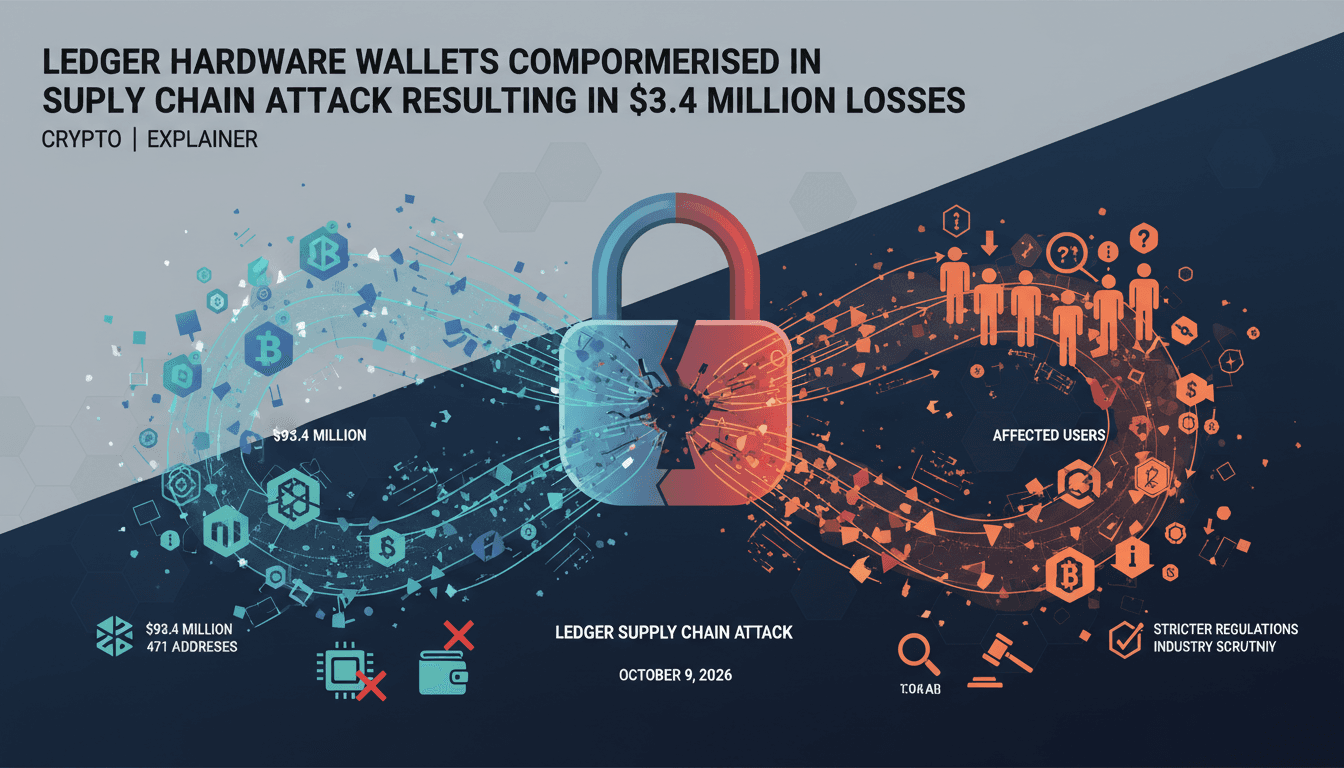
- Estimated losses reached $93.4 million, affecting 471 addresses, primarily in USDT on Tron, Bitcoin, and Ethereum.
- Ledger has paused sales through CryptoBilis and is investigating the incident while advising users to refrain from setting up their devices.
The context you actually need
- Recent breaches: This incident follows data breaches at competitors like Trezor and Safepal, raising concerns about hardware wallet security.
- Supply chain vulnerabilities: The involvement of third-party resellers like CryptoBilis complicates the integrity of hardware wallets before they reach consumers.
- Cross-chain laundering: Analysts have identified sophisticated laundering techniques, indicating a well-organized attack rather than random theft.
What's really happening
On October 9, 2026, the cryptocurrency community was rocked by reports of significant losses linked to Ledger hardware wallets purchased from the Southeast Asian reseller CryptoBilis. Initial estimates of losses were around $86 million, but on-chain analyses refined this figure to approximately $93.4 million across 471 addresses. The primary assets affected were USDT on the Tron blockchain, Bitcoin, and smaller amounts on Ethereum.
Ledger, a prominent player in the hardware wallet market, quickly responded by pausing all sales and shipments through CryptoBilis and advising users who purchased devices in the last 90 days to avoid setting them up or transferring assets. This swift action indicates the seriousness of the situation and the potential for a supply chain attack, where unauthorized access to recovery phrases or signing keys may have occurred.
Independent blockchain analysts, including Specter and John Kamal (Yfarmx), have been instrumental in tracing the funds and identifying patterns consistent with a single actor controlling multiple wallets. The investigation revealed that funds were moved through cross-chain operations, including the use of Tornado Cash, a service known for obfuscating transaction origins. Tether, the issuer of USDT, has already frozen approximately $10 million linked to the stolen funds, showcasing the immediate response from the crypto ecosystem to mitigate further losses.
The incident raises critical questions about the integrity of hardware wallets, especially when third-party resellers are involved. CryptoBilis, while an authorized distributor, also sells competing brands, which complicates the narrative around device security. The community is now left waiting for a formal postmortem from Ledger, which could provide more clarity on whether the issue stemmed from tampering or a remote exploit.
As the investigation unfolds, the implications for hardware wallet security and user trust in cryptocurrency are profound. Users are left to wonder about the safety of their assets and the reliability of the devices they rely on for secure storage.
Who feels it first (and how)
- Cryptocurrency investors: Users who purchased Ledger wallets from CryptoBilis are at immediate risk of losing their assets.
- Hardware wallet manufacturers: Companies like Ledger may face reputational damage and decreased sales as trust in their products wanes.
- Regulatory bodies: Increased scrutiny on hardware wallet security and supply chain practices may lead to new regulations in the cryptocurrency space.
What to watch next
- Ledger's investigation outcomes: The results of Ledger's inquiry will be crucial in determining the cause of the incident and restoring user confidence.
- Market reactions: Watch for shifts in hardware wallet sales and user behavior in response to this incident, particularly among Southeast Asian consumers.
- Regulatory developments: Increased regulatory attention on hardware wallet security could lead to new standards and practices in the industry.
$93.4 million in losses linked to Ledger wallets purchased from CryptoBilis.
Increased scrutiny on hardware wallet security and potential regulatory changes in the cryptocurrency space.
The exact cause of the supply chain compromise and whether it will lead to widespread vulnerabilities across other hardware wallets.
Frequently Asked Questions
- Why it matters?
- This incident highlights vulnerabilities in hardware wallet distribution, potentially undermining user trust in cryptocurrency security.
- What happened (in 30 seconds)?
- On October 9, 2026, reports emerged of significant cryptocurrency drains from Ledger wallets linked to purchases from Southeast Asian reseller CryptoBilis. Estimated losses reached $93.4 million, affecting 471 addresses, primarily in USDT on Tron, Bitcoin, and Ethereum. Ledger has paused sales through CryptoBilis and is investigating the incident while advising users to refrain from setting up their devices.
- What's really happening?
- On October 9, 2026, the cryptocurrency community was rocked by reports of significant losses linked to Ledger hardware wallets purchased from the Southeast Asian reseller CryptoBilis. Initial estimates of losses were around $86 million, but on-chain analyses refined this figure to approximately $93.4 million across 471 addresses. The primary assets affected were USDT on the Tron blockchain, Bitcoin, and smaller amounts on Ethereum. Ledger, a prominent player in the hardware wallet market, quick
- Who feels it first (and how)?
- Cryptocurrency investors: Users who purchased Ledger wallets from CryptoBilis are at immediate risk of losing their assets. Hardware wallet manufacturers: Companies like Ledger may face reputational damage and decreased sales as trust in their products wanes. Regulatory bodies: Increased scrutiny on hardware wallet security and supply chain practices may lead to new regulations in the cryptocurrency space.
- What to watch next?
- Ledger's investigation outcomes: The results of Ledger's inquiry will be crucial in determining the cause of the incident and restoring user confidence. Market reactions: Watch for shifts in hardware wallet sales and user behavior in response to this incident, particularly among Southeast Asian consumers. Regulatory developments: Increased regulatory attention on hardware wallet security could lead to new standards and practices in the industry.
Covers Bitcoin plus altcoin news, market updates, and educational resources.
"Bitcoin.com provides news, market data, and guides focused on Bitcoin and the wider crypto industry."
— A47 Editor
Ledger Wallet Mystery Deepens as Suspected Losses Hit $93.4M
Ledger is facing a significant crisis as suspected losses related to its hardware wallets have reached approximately $93.4 million, raising alarms within the cryptocurrency community. The company is investigating potential tampering and theft linked ...
Covers blockchain, cryptocurrency news, project analysis, and market insights.
"Cointelegraph is a leading crypto-focused media outlet known for timely news, analysis, and educational content related to blockchain and digital assets."
— A47 Editor
Ledger investigates fund losses linked to Southeast Asian reseller, warns users
Ledger is currently investigating significant fund losses associated with the Southeast Asian reseller CryptoBilis, as researchers estimate that over $72 million to $86 million may have been stolen in suspected cryptocurrency thefts. This situation h...
Covers blockchain, cryptocurrency news, project analysis, and market insights.
"CoinDesk is a well-established cryptocurrency and blockchain news provider, offering comprehensive insights, market data, and industry research."
— A47 Editor
Ledger investigates potential wallet tampering after reports of $86 million in crypto stolen
Ledger is investigating potential tampering of its hardware wallets following reports of approximately $86 million in cryptocurrency stolen from users, particularly affecting Bitcoin, Ethereum, and Tron addresses. The investigation centers on devices...