
ESMA Launches Consultation on Tokenized Collateral in Central Clearing
Why it matters
The ESMA consultation could redefine the legal and operational frameworks for tokenized assets in the EU, impacting liquidity and risk management.
What happened (in 30 seconds)
- On October 9, 2026, ESMA launched a public consultation on the resilience of tokenized collateral in central clearing arrangements.
- The consultation seeks evidence from banks, clearinghouses, and technology providers regarding legal ownership and liquidity of blockchain-represented assets.
- Responses are due by January 15, 2027, with ESMA's analysis expected in Q1 2027, focusing on whether existing EU collateral standards are adequate.
The context you actually need
- European financial institutions began integrating distributed ledger technology for collateral mobilization in 2025, indicating a shift towards digital assets.
- Eurex Clearing launched a DLT-enabled service in July 2025, marking a significant step in the adoption of tokenized assets in the EU.
- Regulatory scrutiny is increasing as the use of tokenized assets grows, necessitating a review of their compliance with established collateral standards.
What's really happening
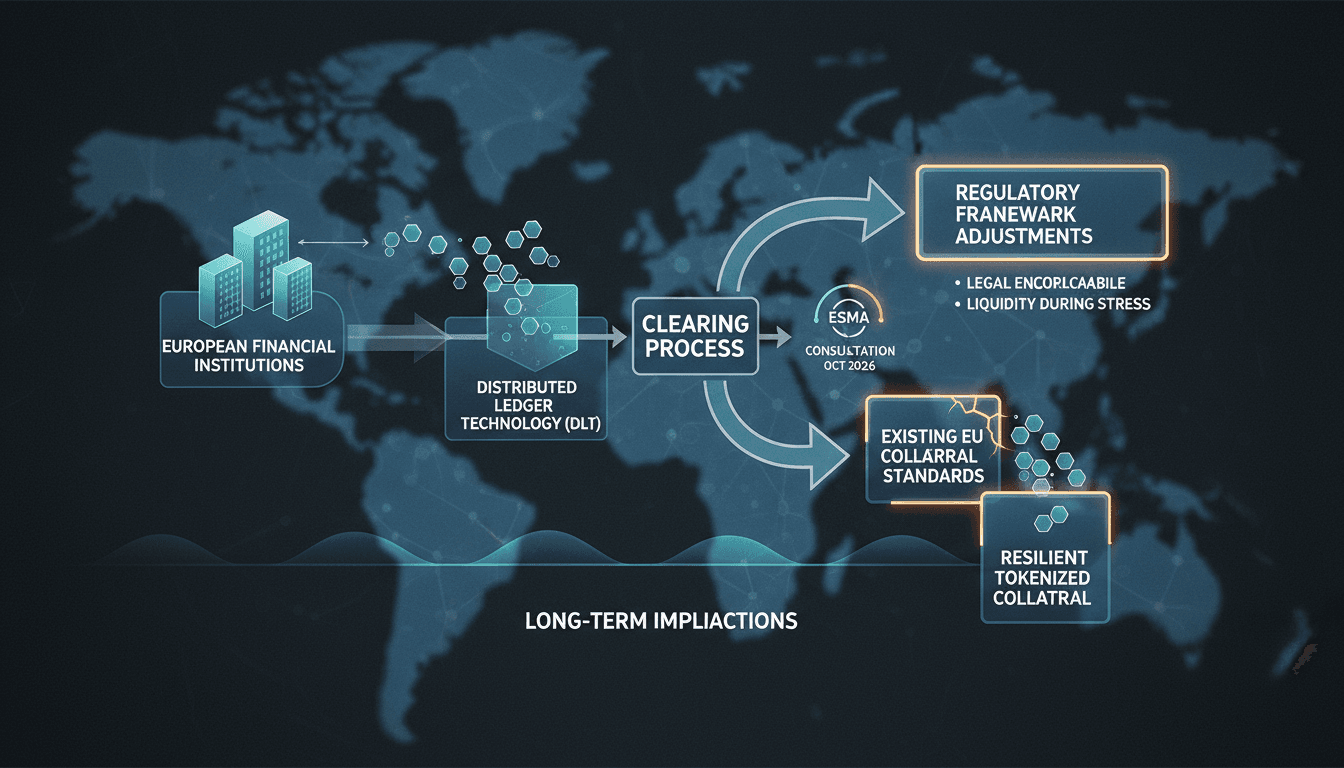
The European Securities and Markets Authority (ESMA) is taking a proactive approach to assess the implications of tokenized collateral in central clearing arrangements. This consultation is a response to the rapid integration of distributed ledger technology (DLT) within European financial markets, which began in earnest in 2025. The initiative aims to ensure that tokenized assets can meet the stringent requirements for high-quality, liquid, and legally enforceable collateral, especially during periods of market stress.
The 35-page call for evidence published by ESMA outlines specific areas of concern, including legal ownership, liquidity, and settlement finality of tokenized assets. As financial institutions increasingly adopt blockchain technology, the need for clarity around these issues becomes paramount. The consultation invites input on various forms of tokenized collateral, such as digital twins and native blockchain issuances, and seeks to understand the risks associated with stablecoins and tokenized deposits.
ESMA's focus on operational availability and transfer restrictions highlights the complexities involved in integrating tokenized assets into existing financial frameworks. The review does not propose new restrictions or bans; instead, it evaluates whether current EU regulations are sufficient for these emerging models. This approach reflects a balanced perspective, aiming to foster innovation while ensuring market stability.
The involvement of key players like Eurex Clearing, JPMorgan, and the European Central Bank (ECB) underscores the significance of this consultation. Their prior regulatory non-objections for live services indicate a readiness to embrace tokenized solutions, provided they align with established legal and operational standards. As the consultation progresses, ESMA will analyze the feedback received and determine the next steps, which could include guidance or adjustments to existing rules.
This initiative is crucial not only for the EU but also for global financial markets, as it sets a precedent for how tokenized assets are treated in regulatory frameworks. The outcomes of this consultation could influence similar discussions in other jurisdictions, shaping the future landscape of digital finance.
Who feels it first (and how)
- Banks and financial institutions: They will need to adapt their operational frameworks to comply with any new regulations regarding tokenized collateral.
- Clearinghouses: They must ensure their systems can handle the complexities of tokenized assets, impacting their liquidity management strategies.
- Technology providers: Companies developing blockchain solutions will need to align their offerings with regulatory expectations, influencing their market strategies.
- Investors and asset managers: They may face changes in how they assess and utilize collateral, affecting their investment strategies and risk profiles.
What to watch next
- Response submissions: The quality and quantity of responses by January 15, 2027, will indicate industry sentiment and readiness for tokenized assets.
- ESMA's analysis: The insights from ESMA's review in Q1 2027 will clarify the regulatory landscape for tokenized collateral and its implications for market participants.
- Market reactions: Watch for shifts in liquidity and operational practices among financial institutions as they adapt to any new guidance or rules.
ESMA is conducting a consultation on tokenized collateral.
The outcomes will influence regulatory frameworks for tokenized assets in the EU.
The specific changes that may arise from the consultation and their impact on market practices.
Frequently Asked Questions
- Why it matters?
- The ESMA consultation could redefine the legal and operational frameworks for tokenized assets in the EU, impacting liquidity and risk management.
- What happened (in 30 seconds)?
- On October 9, 2026, ESMA launched a public consultation on the resilience of tokenized collateral in central clearing arrangements. The consultation seeks evidence from banks, clearinghouses, and technology providers regarding legal ownership and liquidity of blockchain-represented assets. Responses are due by January 15, 2027, with ESMA's analysis expected in Q1 2027, focusing on whether existing EU collateral standards are adequate.
- What's really happening?
- The European Securities and Markets Authority (ESMA) is taking a proactive approach to assess the implications of tokenized collateral in central clearing arrangements. This consultation is a response to the rapid integration of distributed ledger technology (DLT) within European financial markets, which began in earnest in 2025. The initiative aims to ensure that tokenized assets can meet the stringent requirements for high-quality, liquid, and legally enforceable collateral, especially during
- Who feels it first (and how)?
- Banks and financial institutions: They will need to adapt their operational frameworks to comply with any new regulations regarding tokenized collateral. Clearinghouses: They must ensure their systems can handle the complexities of tokenized assets, impacting their liquidity management strategies. Technology providers: Companies developing blockchain solutions will need to align their offerings with regulatory expectations, influencing their market strategies. Investors and asset managers:
- What to watch next?
- Response submissions: The quality and quantity of responses by January 15, 2027, will indicate industry sentiment and readiness for tokenized assets. ESMA's analysis: The insights from ESMA's review in Q1 2027 will clarify the regulatory landscape for tokenized collateral and its implications for market participants. Market reactions: Watch for shifts in liquidity and operational practices among financial institutions as they adapt to any new guidance or rules.
Real-time updates, analysis, and reports on the blockchain and cryptocurrency sectors.
"Crypto News delivers real-time updates, analysis, and reports on the blockchain and cryptocurrency sectors."
— A47 Editor
ESMA questions whether tokenized assets are safe in a crisis
The European Securities and Markets Authority (ESMA) is seeking input from financial firms regarding the liquidity and operational risks associated with tokenized collateral, particularly its ability to be quickly liquidated during a crisis. Response...
Covers blockchain, cryptocurrency news, project analysis, and market insights.
"Cointelegraph is a leading crypto-focused media outlet known for timely news, analysis, and educational content related to blockchain and digital assets."
— A47 Editor
ESMA seeks evidence tokenized collateral can be cashed out in crisis
The European Securities and Markets Authority (ESMA) is actively seeking feedback from the industry regarding the legal, liquidity, and operational risks associated with tokenized collateral, particularly in the context of potential crises. This inqu...
Real-time updates, analysis, and reports on the blockchain and cryptocurrency sectors.
"Crypto News delivers real-time updates, analysis, and reports on the blockchain and cryptocurrency sectors."
— A47 Editor
Europe wants stablecoins off exchanges. What happens to coins customers still hold?
The European Securities and Markets Authority (ESMA) has mandated that cryptocurrency firms in the EU must cease operations involving stablecoins that do not comply with the Markets in Crypto-Assets (MiCA) regulation within three months. This directi...
Covers blockchain, cryptocurrency news, project analysis, and market insights.
"CoinDesk is a well-established cryptocurrency and blockchain news provider, offering comprehensive insights, market data, and industry research."
— A47 Editor
EU securities regulator gives crypto platforms 3 months to remove unauthorized stablecoins
The European Securities and Markets Authority (ESMA) has given cryptocurrency platforms a three-month deadline to cease operations involving stablecoins that do not comply with the Markets in Crypto-Assets (MiCA) regulation. Authorized platforms are ...
Real-time updates, analysis, and reports on the blockchain and cryptocurrency sectors.
"Crypto News delivers real-time updates, analysis, and reports on the blockchain and cryptocurrency sectors."
— A47 Editor
ESMA gives crypto firms 3 months to drop some stablecoins
The European Securities and Markets Authority (ESMA) has mandated that cryptocurrency firms in the EU must cease operations involving stablecoins that do not comply with the Markets in Crypto-Assets (MiCA) regulation within three months. This directi...