
Greece Proposes 10% Capital Gains Tax on Cryptocurrency with Annual Exemption
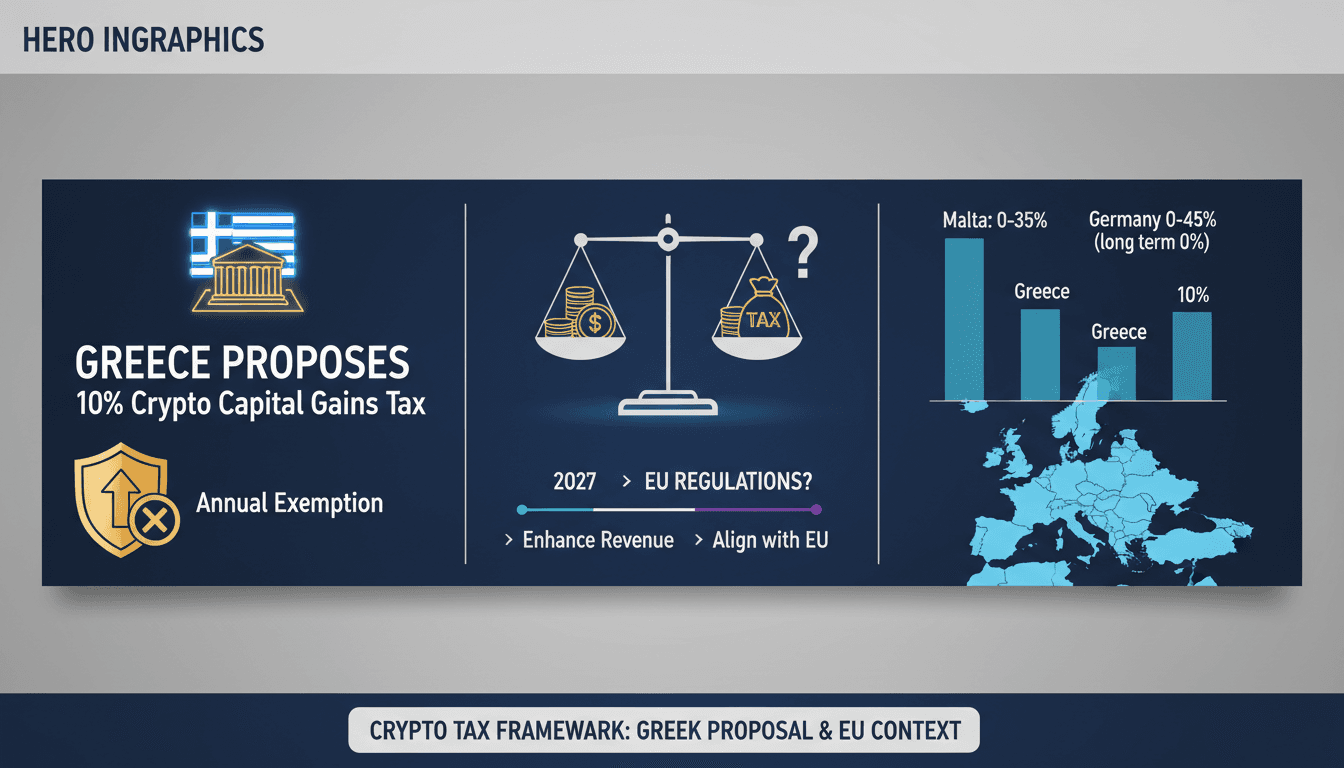
If you're involved in cryptocurrency investments, understanding Greece's new tax framework could impact your financial strategies.
Why it matters
This legislation marks Greece's first comprehensive approach to taxing cryptocurrencies, aligning with broader EU regulatory efforts.
What happened (in 30 seconds)
- Greece's Ministry of National Economy and Finance published a draft bill proposing a 10% capital gains tax on cryptocurrency.
- Investors can benefit from a €500 annual exemption on net gains, with specific rules on taxable events.
- Public consultation is open until October 22, 2026, before the bill is submitted to parliament in November.
The context you actually need
- Previous ambiguity: Greece lacked a specific legal framework for taxing cryptocurrencies, complicating market estimates.
- EU alignment: The proposal aligns with the EU's DAC8 rules for digital asset reporting, which aim to standardize tax practices across member states.
- Market variability: Capital gains tax rates across the EU range from 8% to 30%, making Greece's 10% rate competitive yet cautious.
What's really happening
On October 8, 2026, Greece's Ministry of National Economy and Finance released a draft bill that introduces a 10% capital gains tax on cryptocurrency transactions. This marks a significant shift for a country that previously had no specific legal framework for taxing digital assets. The proposed legislation includes a €500 annual exemption for net gains, which means that individuals can realize up to €500 in profits without incurring tax liabilities. This exemption is particularly relevant for casual investors who may not engage in high-volume trading.
The bill outlines that the tax applies to various forms of disposals, including sales for fiat currency, payments for goods and services, and contributions to company capital. However, it notably excludes crypto-to-crypto exchanges from immediate taxation, allowing investors to swap assets without triggering tax events. This provision is designed to encourage trading and investment within the crypto ecosystem, potentially fostering a more vibrant market.
Additionally, the legislation allows for loss carryforward for up to five years, providing a safety net for investors who may experience downturns in their portfolios. It also offers a 12-month window for declaring past gains without penalties, which could incentivize compliance among taxpayers who may have previously avoided reporting their crypto activities.
The timing of this proposal is crucial as it coincides with the EU's broader efforts to regulate digital assets and enhance revenue collection from this burgeoning sector. With capital gains tax rates varying significantly across EU member states, Greece's decision to implement a 10% rate positions it as a competitive player in the digital asset landscape. This move could attract both domestic and foreign investors looking for a stable regulatory environment.
As the public consultation period runs until October 22, 2026, stakeholders have the opportunity to voice their opinions and influence the final legislation. The bill is expected to be submitted to parliament in November, with potential implementation starting from the 2027 tax year. This timeline suggests that Greece is keen to establish a clear regulatory framework for cryptocurrencies, which could have lasting implications for the market.
Who feels it first (and how)
- Crypto Investors: Individuals trading or investing in cryptocurrencies will need to adjust their strategies to account for the new tax implications.
- Tax Advisors: Professionals in tax consultancy will see increased demand for guidance on compliance with the new regulations.
- E-commerce Businesses: Companies accepting cryptocurrency as payment will need to navigate the tax landscape for their transactions.
What to watch next
- Public consultation outcomes: The feedback received during the consultation period could lead to adjustments in the final legislation, impacting its implementation.
- Parliamentary approval: The timeline for parliamentary submission and approval will be crucial in determining when the tax will take effect.
- Market reactions: Observing how the crypto market responds to the proposed tax could provide insights into investor sentiment and potential shifts in trading behavior.
The proposed tax rate is 10% with a €500 annual exemption.
The bill will be submitted to parliament in November 2026 and may be implemented for the 2027 tax year.
The exact impact on investor behavior and market dynamics following the tax implementation remains uncertain.
Frequently Asked Questions
- Why it matters?
- This legislation marks Greece's first comprehensive approach to taxing cryptocurrencies, aligning with broader EU regulatory efforts.
- What happened (in 30 seconds)?
- Greece's Ministry of National Economy and Finance published a draft bill proposing a 10% capital gains tax on cryptocurrency. Investors can benefit from a €500 annual exemption on net gains, with specific rules on taxable events. Public consultation is open until October 22, 2026, before the bill is submitted to parliament in November.
- What's really happening?
- On October 8, 2026, Greece's Ministry of National Economy and Finance released a draft bill that introduces a 10% capital gains tax on cryptocurrency transactions. This marks a significant shift for a country that previously had no specific legal framework for taxing digital assets. The proposed legislation includes a €500 annual exemption for net gains, which means that individuals can realize up to €500 in profits without incurring tax liabilities. This exemption is particularly relevant for c
- Who feels it first (and how)?
- Crypto Investors: Individuals trading or investing in cryptocurrencies will need to adjust their strategies to account for the new tax implications. Tax Advisors: Professionals in tax consultancy will see increased demand for guidance on compliance with the new regulations. E-commerce Businesses: Companies accepting cryptocurrency as payment will need to navigate the tax landscape for their transactions.
- What to watch next?
- Public consultation outcomes: The feedback received during the consultation period could lead to adjustments in the final legislation, impacting its implementation. Parliamentary approval: The timeline for parliamentary submission and approval will be crucial in determining when the tax will take effect. Market reactions: Observing how the crypto market responds to the proposed tax could provide insights into investor sentiment and potential shifts in trading behavior.
Covers blockchain, cryptocurrency news, project analysis, and market insights.
"CoinDesk is a well-established cryptocurrency and blockchain news provider, offering comprehensive insights, market data, and industry research."
— A47 Editor
Greece prepares to levy 10% capital gains tax on cryptocurrency
Greece is set to introduce a 10% capital gains tax on cryptocurrency, with a draft bill to be submitted to parliament in November. The proposal includes exemptions for annual gains up to 500 euros ($560) and for crypto-to-crypto swaps, marking a sign...
Real-time updates, analysis, and reports on the blockchain and cryptocurrency sectors.
"Crypto News delivers real-time updates, analysis, and reports on the blockchain and cryptocurrency sectors."
— A47 Editor
Greece proposes 10% crypto capital gains tax with €500 annual exemption
Greece has proposed a 10% capital gains tax on cryptocurrency profits, with an annual exemption of €500, under draft legislation set to be presented to parliament in November. This proposal aims to regulate the growing digital asset market in the cou...
Covers blockchain, cryptocurrency news, project analysis, and market insights.
"Cointelegraph is a leading crypto-focused media outlet known for timely news, analysis, and educational content related to blockchain and digital assets."
— A47 Editor
Greece plans 10% capital gains tax on cryptocurrencies
Greece has introduced a draft bill proposing a 10% capital gains tax on cryptocurrencies, which includes exemptions for annual gains up to 500 euros and for crypto-to-crypto swaps. This move is part of the country's efforts to regulate the growing di...