
Unauthorized Hardware Implant in Ledger Wallet Sparks Security Debate in Crypto Custody
Why it matters
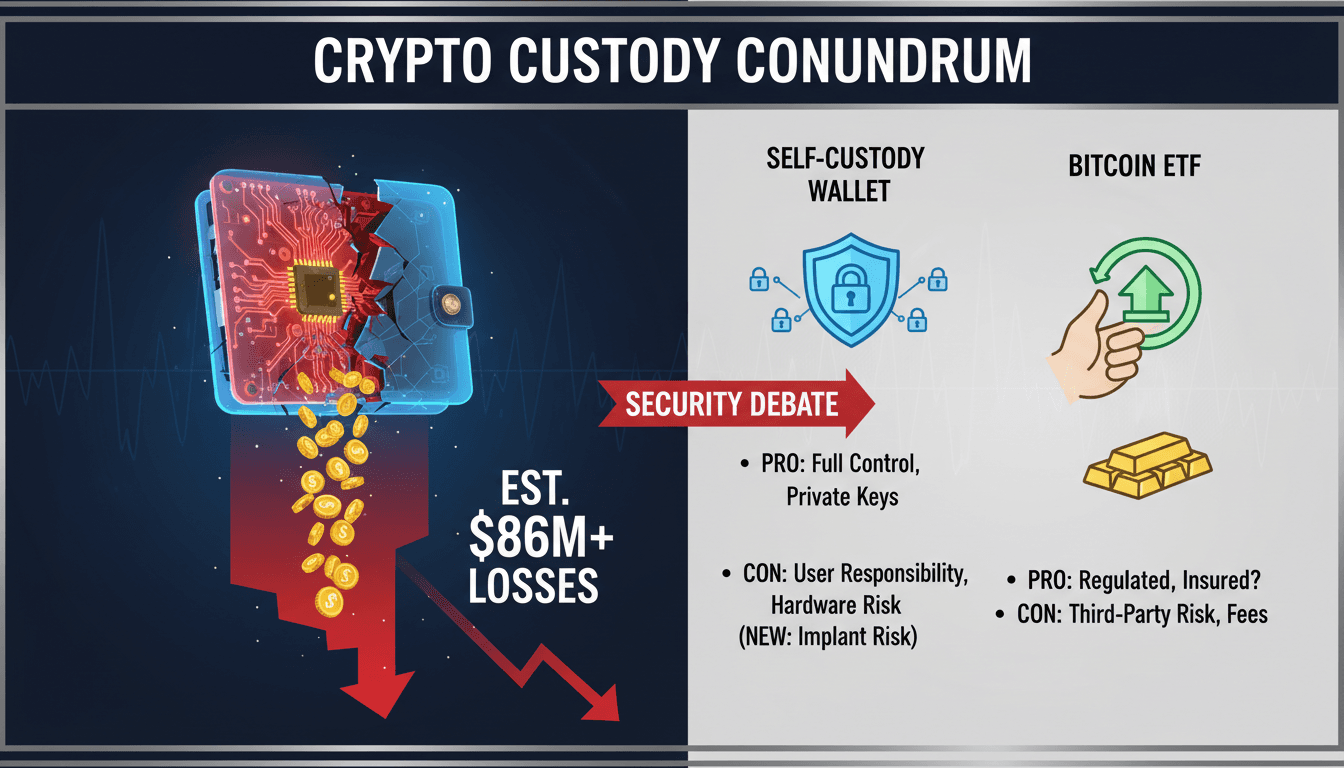
This incident highlights the ongoing tension between self-custody and institutional-grade custody solutions in the cryptocurrency market.
What happened (in 30 seconds)
- Unauthorized hardware implant: A compromised Ledger wallet was discovered, allowing interception of recovery phrases.
- Significant financial impact: Estimated losses from the incident exceed $86 million across multiple blockchain networks.
- Shift in custody preferences: Analysts and industry leaders are debating the merits of Bitcoin ETFs versus hardware wallets for asset security.
The context you actually need
- Supply-chain vulnerabilities: Prior to this incident, hardware wallets faced scrutiny over potential supply-chain attacks and phishing exploits.
- Migration to ETFs: Large Bitcoin holders have increasingly moved assets to ETFs since 2024-2025, citing reduced operational risks compared to self-custody.
- Expert opinions: Industry figures emphasize the need for improved threat modeling for hardware wallets while cautioning against hasty migrations to ETFs.
What's really happening
On October 12, 2026, Cointelegraph reported a significant security breach involving Ledger wallets, where a hidden microcontroller was found to intercept recovery phrases. This discovery has raised alarms about the security of self-custody solutions, particularly as blockchain investigators linked the implants to potential losses exceeding $86 million across Bitcoin, Ethereum, and Tron networks. The incident has reignited discussions about the relative safety of Bitcoin ETFs compared to hardware wallets.
Bitcoin analyst Plan B publicly reaffirmed his decision to transition to ETFs, expressing "zero regrets," while 21Shares co-founder Ophelia Snyder pointed out that large holders have long favored ETFs for enhanced security. This shift is indicative of a broader trend where institutional-grade custody solutions are becoming increasingly appealing to investors who prioritize asset protection.
Experts like Adam Back, CEO of Blockstream, and security researcher Jameson Lopp have weighed in on the debate, advocating for improved threat modeling for hardware manufacturers. They caution against a mass migration to ETFs, warning that such a shift could lead to centralization risks within the cryptocurrency ecosystem. This highlights the delicate balance between security and decentralization that the industry must navigate.
The incident underscores the vulnerabilities inherent in self-custodial devices, particularly in light of the estimated losses. As the industry grapples with these challenges, the conversation around custody solutions is likely to evolve, with an emphasis on finding a balance between self-custody and institutional options.
Who feels it first (and how)
- Individual cryptocurrency holders: Those using hardware wallets may reconsider their security measures.
- Institutional investors: Large holders may accelerate their shift to ETFs for enhanced security.
- Hardware wallet manufacturers: Companies like Ledger may face increased scrutiny and pressure to improve security protocols.
- Regulatory bodies: Potential for increased regulatory interest in custody solutions and security standards.
What to watch next
- Regulatory responses: Watch for any new regulations or guidelines from authorities regarding cryptocurrency custody solutions.
- Market trends: Monitor shifts in asset allocations between self-custody and ETFs among large Bitcoin holders.
- Security innovations: Keep an eye on advancements in hardware wallet security and threat modeling practices.
The Ledger implant incident has resulted in significant financial losses and renewed debate over custody solutions.
Increased interest in regulated ETF custody solutions as a response to security concerns.
The long-term impact on hardware wallet sales and user trust in self-custody solutions.
Frequently Asked Questions
- Why it matters?
- This incident highlights the ongoing tension between self-custody and institutional-grade custody solutions in the cryptocurrency market.
- What happened (in 30 seconds)?
- Unauthorized hardware implant: A compromised Ledger wallet was discovered, allowing interception of recovery phrases. Significant financial impact: Estimated losses from the incident exceed $86 million across multiple blockchain networks. Shift in custody preferences: Analysts and industry leaders are debating the merits of Bitcoin ETFs versus hardware wallets for asset security.
- What's really happening?
- On October 12, 2026, Cointelegraph reported a significant security breach involving Ledger wallets, where a hidden microcontroller was found to intercept recovery phrases. This discovery has raised alarms about the security of self-custody solutions, particularly as blockchain investigators linked the implants to potential losses exceeding $86 million across Bitcoin, Ethereum, and Tron networks. The incident has reignited discussions about the relative safety of Bitcoin ETFs compared to hardware
- Who feels it first (and how)?
- Individual cryptocurrency holders: Those using hardware wallets may reconsider their security measures. Institutional investors: Large holders may accelerate their shift to ETFs for enhanced security. Hardware wallet manufacturers: Companies like Ledger may face increased scrutiny and pressure to improve security protocols. Regulatory bodies: Potential for increased regulatory interest in custody solutions and security standards.
- What to watch next?
- Regulatory responses: Watch for any new regulations or guidelines from authorities regarding cryptocurrency custody solutions. Market trends: Monitor shifts in asset allocations between self-custody and ETFs among large Bitcoin holders. Security innovations: Keep an eye on advancements in hardware wallet security and threat modeling practices.
Covers blockchain, cryptocurrency news, project analysis, and market insights.
"Cointelegraph is a leading crypto-focused media outlet known for timely news, analysis, and educational content related to blockchain and digital assets."
— A47 Editor
Ledger implant tests Bitcoin ETFs as safer custodial solutions than hardware wallets
The discovery of an unauthorized hardware implant in Ledger's crypto wallets has sparked renewed debate over the safety of Bitcoin exchange-traded funds (ETFs) compared to traditional hardware wallets. This incident has raised significant security co...
Covers Bitcoin plus altcoin news, market updates, and educational resources.
"Bitcoin.com provides news, market data, and guides focused on Bitcoin and the wider crypto industry."
— A47 Editor
User Exposes Hidden Hardware Implant in European Ledger Wallet
Recent reports have revealed that a user discovered a hidden hardware implant in a Ledger wallet purchased in Europe, raising significant security concerns within the cryptocurrency community. This incident is part of a larger investigation into pote...
Covers Bitcoin plus altcoin news, market updates, and educational resources.
"Bitcoin.com provides news, market data, and guides focused on Bitcoin and the wider crypto industry."
— A47 Editor
Ledger Confirms Hidden Hardware Implant in Affected User’s Wallet
Ledger has confirmed the presence of a hidden hardware implant in the wallets of affected users, contributing to a growing mystery surrounding suspected losses that have reached approximately $93 million. This revelation has raised significant concer...