
IMF Warns of Financial Risks in $65 Billion Tokenized Asset Market
Why it matters
The IMF's warning highlights systemic vulnerabilities that could impact global financial stability as the tokenized asset market expands.
What happened (in 30 seconds)
- On October 8, 2026, the IMF released a report detailing risks in the $65 billion tokenized real-world asset market.
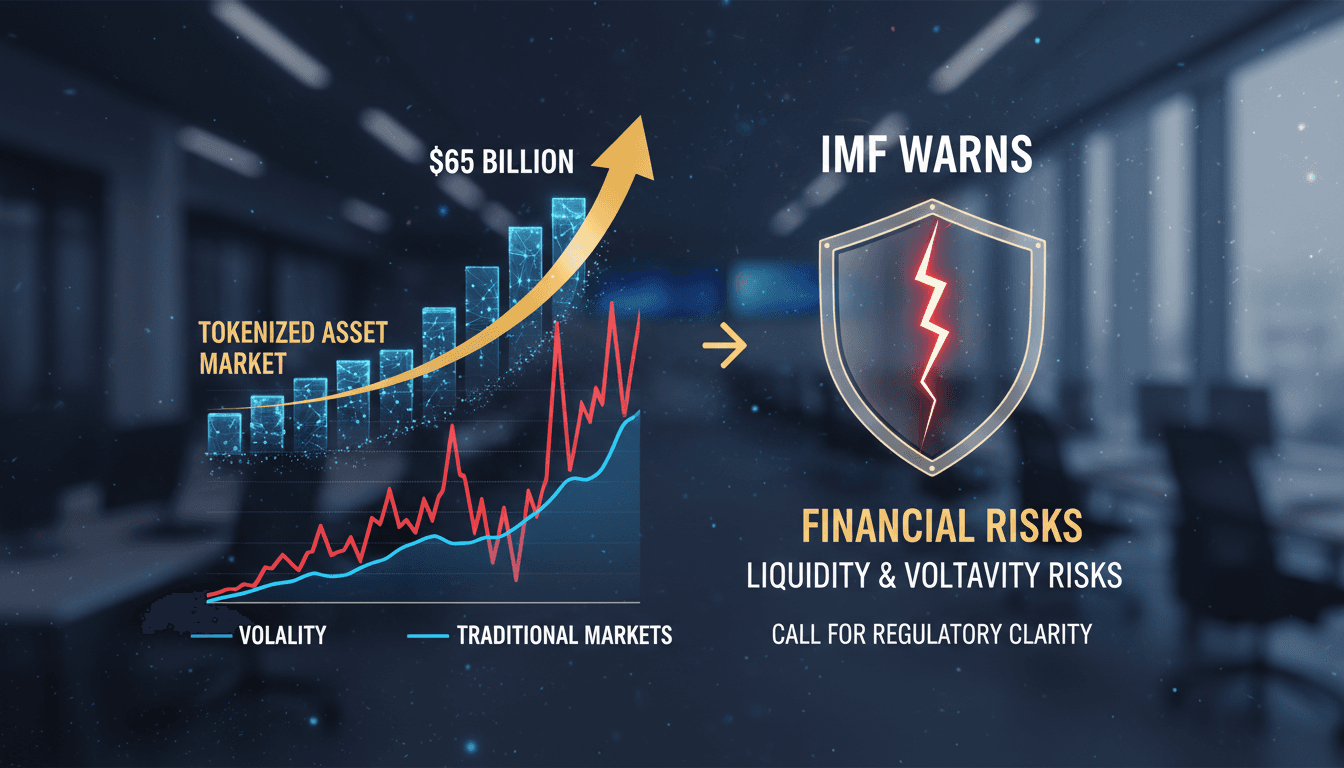
- The report identified lower liquidity and higher volatility compared to traditional markets, raising concerns about rapid contagion risks.
- Regulatory clarity is needed to mitigate vulnerabilities as the market scales, according to the IMF and the Bank of Korea.
The context you actually need
- Asset tokenization has surged due to blockchain technology, enabling fractional ownership and 24/7 trading.
- As of July 2026, the tokenized RWA market reached approximately $65 billion, primarily driven by fixed-income products.
- The IMF's analysis found that tokenized equities exhibit 1.5 times higher volatility than conventional markets, indicating potential instability.
What's really happening
The tokenized asset market, valued at $65 billion as of mid-2026, is experiencing rapid growth fueled by blockchain adoption. This technology allows for fractional ownership, enabling investors to buy smaller portions of assets, which can lead to increased market participation. However, the IMF's recent report raises alarms about the inherent risks associated with this burgeoning sector.
The report highlights that tokenized assets, particularly in the realm of real-world assets (RWAs), are characterized by lower liquidity and heightened volatility. For instance, tokenized equities have been found to have approximately 1.5 times the realized volatility compared to traditional equity markets. This volatility can be attributed to the market's relatively small size compared to the $151.9 trillion global equity market, which means that even minor shifts in demand can lead to significant price fluctuations.
Moreover, the report emphasizes the potential for rapid contagion effects in the event of market shocks. Features such as automated collateral management and instant settlement, while designed to enhance efficiency, could inadvertently accelerate liquidity runs and deleveraging. This interconnectedness poses a systemic risk, as the failure of one tokenized asset could lead to a domino effect across the market.
The IMF's call for regulatory clarity is crucial. It advocates for technology-neutral regulations that ensure legal certainty and interoperability standards. The preference for central bank money in settlements over stablecoins is also highlighted to mitigate concentration risks. As jurisdictions like South Korea and the United States explore frameworks for 24/7 trading and on-chain settlement, the need for a robust regulatory environment becomes increasingly apparent.
In summary, while the tokenized asset market presents opportunities for efficiency and accessibility, the risks outlined by the IMF cannot be overlooked. As the market continues to grow, stakeholders must remain vigilant and proactive in addressing these vulnerabilities to ensure financial stability.
Who feels it first (and how)
- Investors: Those investing in tokenized assets may face increased volatility and liquidity risks.
- Financial institutions: Banks and investment firms involved in tokenized markets could experience contagion effects from market shocks.
- Regulators: Authorities will need to adapt to the evolving landscape and implement necessary regulations to safeguard financial stability.
What to watch next
- Regulatory developments: Keep an eye on how global regulators respond to the IMF's recommendations, as this will shape the market's future.
- Market volatility trends: Monitor the volatility levels of tokenized assets compared to traditional markets to gauge systemic risks.
- Adoption rates: Watch for changes in adoption rates among traditional finance institutions, as increased participation could amplify risks.
The tokenized asset market is valued at $65 billion as of July 2026.
Regulatory frameworks will evolve to address the risks highlighted by the IMF.
The long-term impact of these risks on global financial stability remains uncertain.
Frequently Asked Questions
- Why it matters?
- The IMF's warning highlights systemic vulnerabilities that could impact global financial stability as the tokenized asset market expands.
- What happened (in 30 seconds)?
- On October 8, 2026, the IMF released a report detailing risks in the $65 billion tokenized real-world asset market. The report identified lower liquidity and higher volatility compared to traditional markets, raising concerns about rapid contagion risks. Regulatory clarity is needed to mitigate vulnerabilities as the market scales, according to the IMF and the Bank of Korea.
- What's really happening?
- The tokenized asset market, valued at $65 billion as of mid-2026, is experiencing rapid growth fueled by blockchain adoption. This technology allows for fractional ownership, enabling investors to buy smaller portions of assets, which can lead to increased market participation. However, the IMF's recent report raises alarms about the inherent risks associated with this burgeoning sector. The report highlights that tokenized assets, particularly in the realm of real-world assets (RWAs), are char
- Who feels it first (and how)?
- Investors: Those investing in tokenized assets may face increased volatility and liquidity risks. Financial institutions: Banks and investment firms involved in tokenized markets could experience contagion effects from market shocks. Regulators: Authorities will need to adapt to the evolving landscape and implement necessary regulations to safeguard financial stability.
- What to watch next?
- Regulatory developments: Keep an eye on how global regulators respond to the IMF's recommendations, as this will shape the market's future. Market volatility trends: Monitor the volatility levels of tokenized assets compared to traditional markets to gauge systemic risks. Adoption rates: Watch for changes in adoption rates among traditional finance institutions, as increased participation could amplify risks.
Covers Bitcoin plus altcoin news, market updates, and educational resources.
"Bitcoin.com provides news, market data, and guides focused on Bitcoin and the wider crypto industry."
— A47 Editor
IMF Warns $65 Billion Tokenization Market Has a Dangerous Catch
The International Monetary Fund (IMF) has issued a warning regarding the $65 billion tokenization market, highlighting significant risks associated with increased volatility and reduced liquidity. The IMF's concerns stem from the challenges that toke...
Real-time updates, analysis, and reports on the blockchain and cryptocurrency sectors.
"Crypto News delivers real-time updates, analysis, and reports on the blockchain and cryptocurrency sectors."
— A47 Editor
IMF warns tokenized stocks are 1.5 times more volatile
The International Monetary Fund (IMF) has issued a warning regarding the volatility of tokenized stocks, indicating that they are 1.5 times more volatile and less liquid than traditional shares. This finding comes amid a growing demand for tokenized ...
Covers blockchain, cryptocurrency news, project analysis, and market insights.
"CoinDesk is a well-established cryptocurrency and blockchain news provider, offering comprehensive insights, market data, and industry research."
— A47 Editor
IMF finds demand for tokenized stocks, says the market is still volatile, illiquid
The International Monetary Fund (IMF) has reported a growing demand for tokenized stocks, primarily used for smaller and after-hours trades, while cautioning that the market remains volatile and illiquid due to lagging liquidity, legal frameworks, an...