
XRP Ledger Foundation Discloses Decade-Old Vulnerability in Payment Engine
Why it matters
This incident highlights the importance of proactive security measures in decentralized financial systems, impacting user trust and network integrity.
What happened (in 30 seconds)
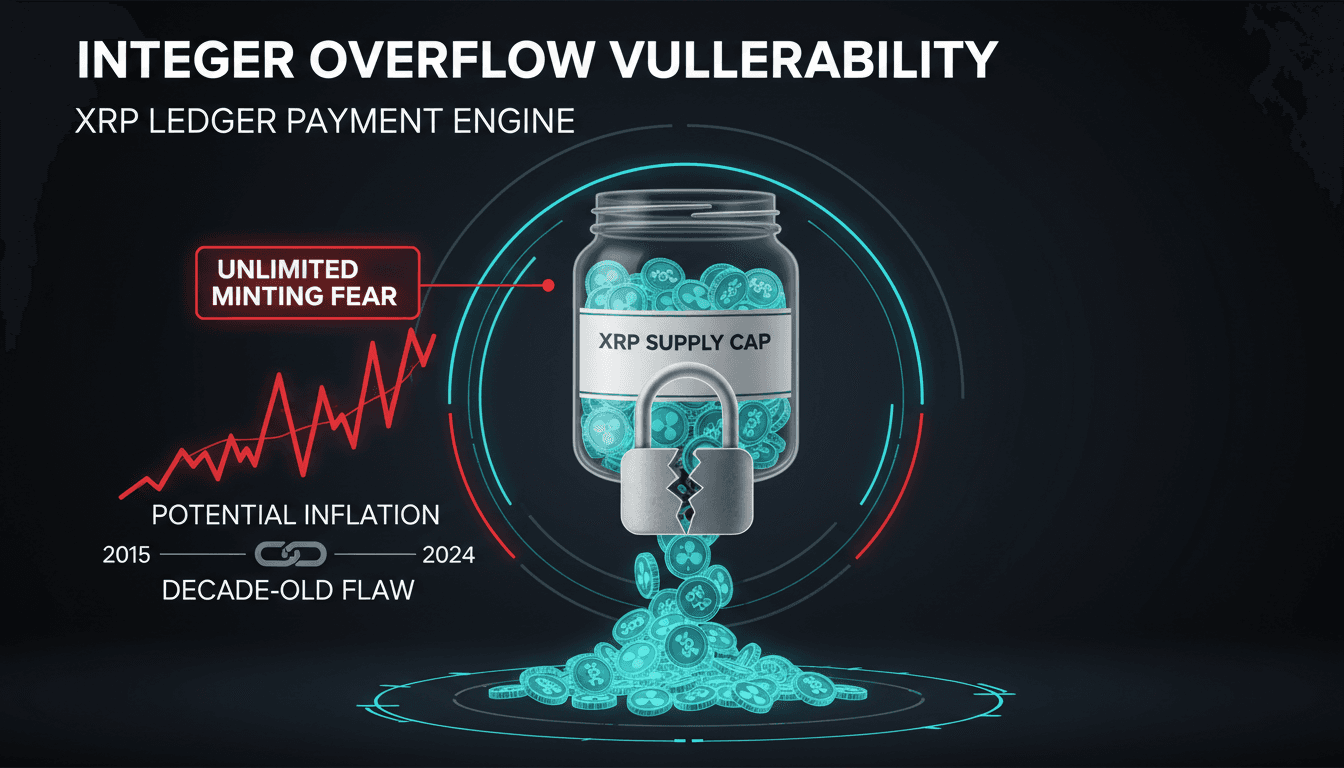
- A critical vulnerability was discovered in the XRP Ledger payment engine that could have allowed the creation of XRP beyond its 100 billion supply cap.
- The flaw was patched on September 25, 2026, just days after it was reported, bypassing the usual amendment process for the first time in over a decade.
- Public disclosure occurred on October 9-11, 2026, confirming no evidence of exploitation had occurred during the vulnerability's existence.
The context you actually need
- The XRP Ledger has a fixed supply of 100 billion XRP, with no new tokens able to be minted under normal protocol rules, making this vulnerability particularly concerning.
- The vulnerability stemmed from unchecked arithmetic in the payment engine, which could theoretically allow for the creation of approximately 18 trillion XRP in a single exploit transaction.
- RippleX and the XRP Ledger Foundation emphasized their commitment to security by implementing AI-assisted testing and rapid response protocols following the discovery.
What's really happening
The XRP Ledger, launched in 2012, operates on a decentralized validator system that typically requires over 80% support for protocol amendments. The integer overflow vulnerability, discovered by Cayden Liao from Veria Labs, was a significant oversight that had persisted since the payment engine's implementation around 2015. This flaw allowed for unchecked 64-bit integer arithmetic during offer summation, which could bypass the ledger's supply invariant check, theoretically enabling the creation of XRP beyond its fixed cap.
Upon private reporting of the vulnerability on September 22, 2026, RippleX quickly reproduced the exploit on a test server, confirming its critical nature. The urgency of the situation led to an unprecedented decision to patch the vulnerability in xrpld version 3.4.1 on September 25, 2026, without going through the standard amendment voting process. This rapid response was aimed at minimizing the exposure window, given the open-source nature of the server software and the potential for exploitation.
The patching process involved over 80% of default UNL validators upgrading their systems the same day, demonstrating a coordinated effort to secure the network. The public disclosure of the vulnerability on October 9-11, 2026, was accompanied by statements from both the XRP Ledger Foundation and RippleX, confirming the flaw's decade-long presence and the lack of any exploitation or unauthorized XRP creation.
This incident has broader implications for the cryptocurrency ecosystem, as it underscores the necessity for ongoing vigilance and proactive security measures in decentralized networks. The rapid coordination and the $250,000 bounty payout to Veria Labs for discovering the vulnerability are indicative of a growing emphasis on security within the crypto space. The incident also marks a pivotal moment in the XRP Ledger's governance, as it represents the first deliberate bypass of the amendment process for transaction-processing changes, raising questions about future governance and security protocols.
Who feels it first (and how)
- XRP Ledger users: Increased awareness of security vulnerabilities may affect user confidence and transaction behavior.
- Developers and validators: Those involved in maintaining the network will need to adapt to new security protocols and practices.
- Investors: Market participants may reassess their positions based on perceived risks associated with the network's integrity.
What to watch next
- Validator upgrades: Monitor the percentage of validators that adopt the latest patch, as this will indicate the network's overall security posture.
- Bug bounty program outcomes: The effectiveness of the XRPL bug bounty program in identifying vulnerabilities will be crucial for future security.
- Market reactions: Watch for any shifts in XRP's market price or trading volume as users and investors respond to the incident and its implications.
The vulnerability existed for nearly a decade without exploitation.
Increased scrutiny on security measures across decentralized networks will follow this incident.
The long-term impact on user trust and market dynamics remains to be seen.
Frequently Asked Questions
- Why it matters?
- This incident highlights the importance of proactive security measures in decentralized financial systems, impacting user trust and network integrity.
- What happened (in 30 seconds)?
- A critical vulnerability was discovered in the XRP Ledger payment engine that could have allowed the creation of XRP beyond its 100 billion supply cap. The flaw was patched on September 25, 2026, just days after it was reported, bypassing the usual amendment process for the first time in over a decade. Public disclosure occurred on October 9-11, 2026, confirming no evidence of exploitation had occurred during the vulnerability's existence.
- What's really happening?
- The XRP Ledger, launched in 2012, operates on a decentralized validator system that typically requires over 80% support for protocol amendments. The integer overflow vulnerability, discovered by Cayden Liao from Veria Labs, was a significant oversight that had persisted since the payment engine's implementation around 2015. This flaw allowed for unchecked 64-bit integer arithmetic during offer summation, which could bypass the ledger's supply invariant check, theoretically enabling the creation
- Who feels it first (and how)?
- XRP Ledger users: Increased awareness of security vulnerabilities may affect user confidence and transaction behavior. Developers and validators: Those involved in maintaining the network will need to adapt to new security protocols and practices. Investors: Market participants may reassess their positions based on perceived risks associated with the network's integrity.
- What to watch next?
- Validator upgrades: Monitor the percentage of validators that adopt the latest patch, as this will indicate the network's overall security posture. Bug bounty program outcomes: The effectiveness of the XRPL bug bounty program in identifying vulnerabilities will be crucial for future security. Market reactions: Watch for any shifts in XRP's market price or trading volume as users and investors respond to the incident and its implications.
Beginner-friendly crypto tutorials, guides, and news.
"99Bitcoins is a crypto education and news site known for easy-to-understand content and comprehensive guides."
— A47 Editor
A Decade-Old Ripple XRP Ledger Flaw Was Patched Before Disclosure
Ripple has patched a decade-old vulnerability in the XRP Ledger that could have allowed the creation of additional spendable XRP without proper funding. The company confirmed that the flaw was addressed prior to any public disclosure, and no exploita...
Real-time updates, analysis, and reports on the blockchain and cryptocurrency sectors.
"Crypto News delivers real-time updates, analysis, and reports on the blockchain and cryptocurrency sectors."
— A47 Editor
XRP Ledger confirms 100B supply is safe after major security flaw
The XRP Ledger has successfully addressed a significant security flaw that could have allowed the minting of up to 18 trillion XRP, confirming the safety of its 100 billion supply. This decade-old bug was identified by researchers, who were awarded a...
Covers blockchain, cryptocurrency news, project analysis, and market insights.
"Cointelegraph is a leading crypto-focused media outlet known for timely news, analysis, and educational content related to blockchain and digital assets."
— A47 Editor
XRP Ledger defends emergency patch for unlimited XRP bug
The XRP Ledger Foundation has defended its emergency security patch addressing a critical bug that could have allowed unlimited XRP issuance, countering claims that the patch was imposed on network operators. This response highlights the foundation's...