
Dubai Court Orders $468,332 Repayment in Crypto Phishing Case
Why it matters
This case underscores the growing legal recognition of digital assets as recoverable property, reinforcing the need for robust cybersecurity measures in the cryptocurrency space.
What happened (in 30 seconds)
- Dubai Civil Court ordered a defendant to repay $468,332 in cryptocurrency stolen through a phishing link on the X platform.
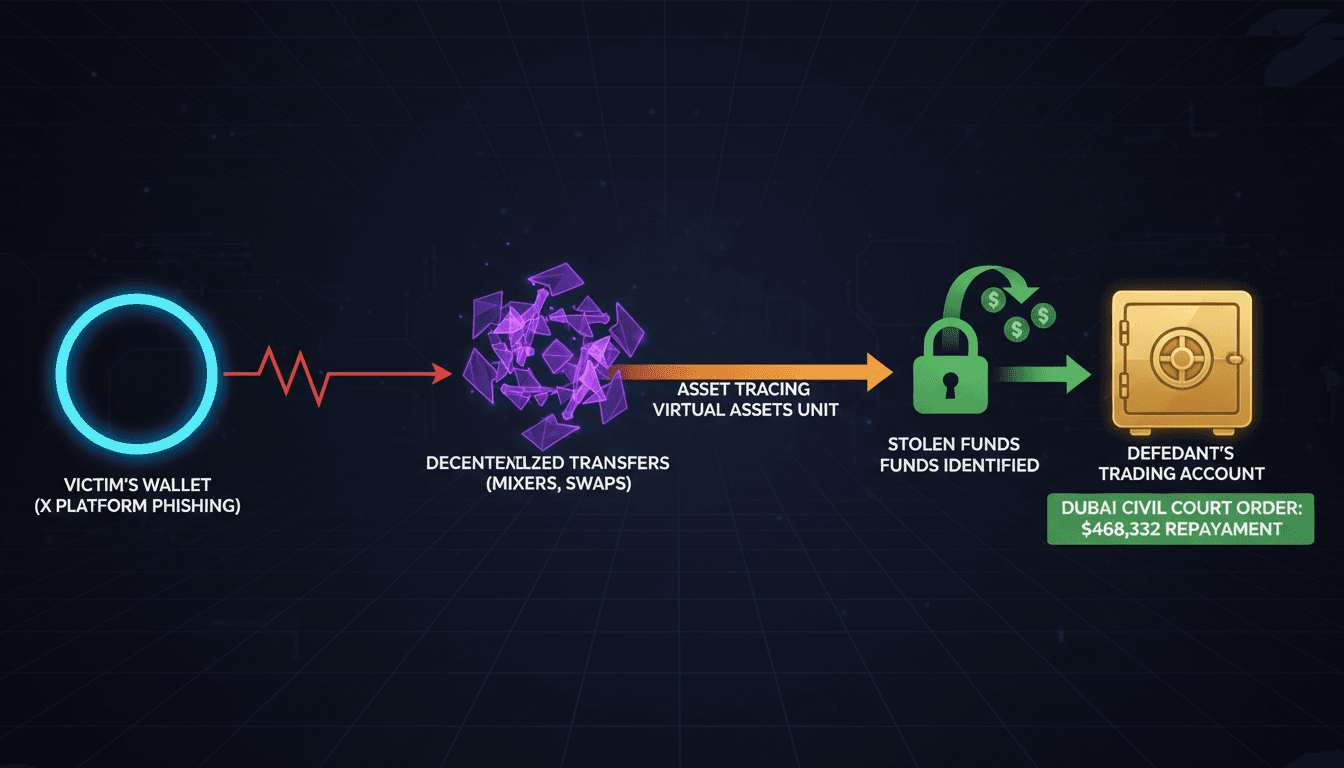
- Victim's wallet was depleted of approximately $803,000 after clicking a counterfeit link impersonating a digital asset platform.
- Dubai Police's Virtual Assets Crimes Unit traced the stolen funds through decentralized wallet swaps to the defendant's trading account, leading to a criminal conviction.
The context you actually need
- Dubai's regulatory framework: The emirate has established itself as a hub for virtual assets, yet phishing scams targeting cryptocurrency users are on the rise.
- Specialized police units: The Dubai Police have developed blockchain tracing capabilities to combat virtual asset crimes, reflecting a proactive approach to cybersecurity.
- Public awareness initiatives: Campaigns like "Don’t Get Played" aim to educate residents about recognizing scams, emphasizing the importance of vigilance in the digital asset space.
What's really happening
The incident began when the victim, a wallet owner in Dubai, clicked on a counterfeit link on the X platform that mimicked a legitimate digital asset trading service. This action led to the entry of their credentials and the subsequent unauthorized withdrawal of funds from their cryptocurrency wallet, which was valued at approximately $803,000. Recognizing the theft, the victim promptly reported the incident to the Dubai Police, activating the Virtual Assets Crimes Unit.
This specialized unit utilized advanced blockchain tracing techniques to follow the stolen assets through multiple decentralized wallet transfers until they reached the defendant's account on a registered trading platform. The criminal proceedings that followed resulted in a six-month prison term for the defendant, which was later reduced to one month on appeal, alongside a fine equivalent to the stolen value, confiscation of the device used for the crime, and deportation.
After the criminal judgment was finalized, the victim pursued a civil suit for recovery of the lost funds and additional compensation for moral damages. The Dubai Civil Court ruled in favor of the victim, awarding $468,332 (or its AED equivalent) plus 50,000 AED for moral damages. This ruling not only reflects the court's recognition of digital assets as recoverable property but also sets a precedent for future cases involving cryptocurrency theft.
The case highlights the increasing sophistication of phishing scams and the need for enhanced security measures among cryptocurrency users. As Dubai continues to position itself as a leader in the virtual asset space, the legal framework surrounding digital assets is evolving, with authorities emphasizing the importance of rapid response and inter-agency coordination in addressing cybercrime.
Who feels it first (and how)
- Cryptocurrency traders: Increased awareness of phishing risks and the importance of secure practices.
- Regulatory bodies: Pressure to enhance regulations and protections for digital asset users.
- Cybersecurity firms: Potential growth in demand for services aimed at preventing phishing and securing digital assets.
- Investors in Dubai: Greater scrutiny of digital asset platforms and a push for improved security measures.
What to watch next
- Increased regulatory measures: Watch for new regulations aimed at protecting cryptocurrency users from phishing scams, which could reshape the market landscape.
- Emergence of new cybersecurity technologies: Innovations in blockchain security and anti-phishing technologies may gain traction as the demand for protection increases.
- Public awareness campaigns: Continued efforts by Dubai authorities to educate the public on recognizing and avoiding scams will be crucial in mitigating risks.
The court ruling reinforces the legal status of digital assets as recoverable property.
Increased regulatory scrutiny and public awareness initiatives will emerge in response to rising phishing scams.
The long-term impact on cryptocurrency trading behaviors and market dynamics in Dubai remains to be seen.
Frequently Asked Questions
- Why it matters?
- This case underscores the growing legal recognition of digital assets as recoverable property, reinforcing the need for robust cybersecurity measures in the cryptocurrency space.
- What happened (in 30 seconds)?
- Dubai Civil Court ordered a defendant to repay $468,332 in cryptocurrency stolen through a phishing link on the X platform. Victim's wallet was depleted of approximately $803,000 after clicking a counterfeit link impersonating a digital asset platform. Dubai Police's Virtual Assets Crimes Unit traced the stolen funds through decentralized wallet swaps to the defendant's trading account, leading to a criminal conviction.
- What's really happening?
- The incident began when the victim, a wallet owner in Dubai, clicked on a counterfeit link on the X platform that mimicked a legitimate digital asset trading service. This action led to the entry of their credentials and the subsequent unauthorized withdrawal of funds from their cryptocurrency wallet, which was valued at approximately $803,000. Recognizing the theft, the victim promptly reported the incident to the Dubai Police, activating the Virtual Assets Crimes Unit. This specialized unit u
- Who feels it first (and how)?
- Cryptocurrency traders: Increased awareness of phishing risks and the importance of secure practices. Regulatory bodies: Pressure to enhance regulations and protections for digital asset users. Cybersecurity firms: Potential growth in demand for services aimed at preventing phishing and securing digital assets. Investors in Dubai: Greater scrutiny of digital asset platforms and a push for improved security measures.
- What to watch next?
- Increased regulatory measures: Watch for new regulations aimed at protecting cryptocurrency users from phishing scams, which could reshape the market landscape. Emergence of new cybersecurity technologies: Innovations in blockchain security and anti-phishing technologies may gain traction as the demand for protection increases. Public awareness campaigns: Continued efforts by Dubai authorities to educate the public on recognizing and avoiding scams will be crucial in mitigating risks.
English-language coverage focused on UAE news, government updates, and domestic affairs.
"Emirates 24|7 reflects a mainstream UAE editorial perspective with strong emphasis on official and domestic developments."
— A47 Editor
He clicked a fake link on X and lost $803,000 in crypto - Dubai court traced it and ordered $468,332 back
A Dubai Civil Court has ordered a defendant to return $468,332 in digital currencies to a victim of an electronic phishing scam, where the victim lost a total of $803,000 after clicking a fake link on the X platform. The court also mandated a compens...
Arabic-language local coverage focused on UAE domestic issues, civic affairs, and community reporting.
"Emarat Al Youm local coverage emphasizes UAE institutions, public services, and community-level developments."
— A47 Editor
سرقة عملات رقمية قيمتها 803 آلاف دولار عبر رابط مزيّف سرقة عملات رقمية قيمتها 803 آلاف دولار عبر رابط مزيّف
A Dubai civil court has ordered a defendant to return cryptocurrency valued at $468,332, part of a total theft of $803,000 that occurred through a fraudulent link. The court's ruling also includes a prison sentence for the accused who received a port...
Arabic-language local coverage focused on UAE domestic issues, civic affairs, and community reporting.
"Emarat Al Youm local coverage emphasizes UAE institutions, public services, and community-level developments."
— A47 Editor
محتال يستولي على 311.3 ألف درهم من شاب بوهم استيراد سيارة بمواصفات خاصة محتال يستولي على 311.3 ألف درهم من شاب بوهم استيراد سيارة بمواصفات خاصة
A court in Abu Dhabi has ordered a man to return 311,360 dirhams to a young man after he deceived him into believing he could import a vehicle with special specifications. The ruling also includes a compensation of 55,000 dirhams to the plaintiff.