
Qubic Blockchain Resumes Operations After $1.3 Million Wallet Exploit
Why it matters
This exploit underscores vulnerabilities in client-side wallet software that can affect users globally, potentially shaking confidence in cryptocurrency security.
What happened (in 30 seconds)
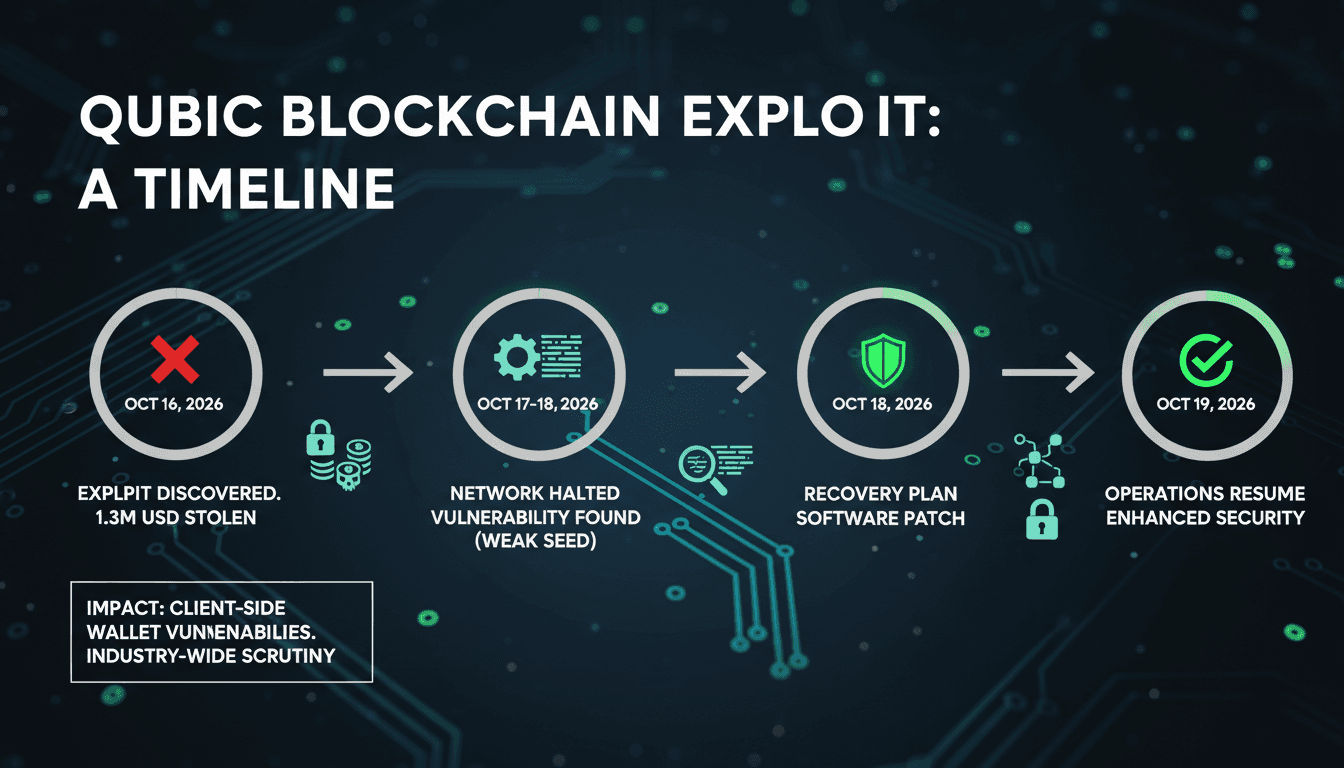
- On October 18, 2026, attackers drained 1,404 Qubic wallets of approximately 2.94 trillion QU tokens, valued at $1.3 million.
- Validators halted the network to freeze most stolen funds and approved a recovery plan for affected users.
- A claims portal was opened for verified victims, with a deadline for submissions set for May 1, 2027.
The context you actually need
- Weak seed generation in older wallet software allowed attackers to predict wallet recovery seeds, leading to the exploit.
- The incident was isolated to client-side software and did not compromise the core Qubic blockchain protocol.
- Validators acted quickly to mitigate losses, freezing 87.1% of the funds on-chain and collaborating with exchanges to secure the remaining assets.
What's really happening
The Qubic blockchain incident reveals critical flaws in the security architecture of cryptocurrency wallets, particularly those relying on outdated software. The exploit stemmed from a weakness in the random-number generator used for wallet recovery seed creation, specifically affecting users on legacy Apple devices and browsers. This vulnerability allowed attackers to reconstruct wallet seeds predictably, enabling them to access and drain funds without breaching the blockchain's core protocol.
Between 23:42 UTC on October 17 and 01:26 UTC on October 18, the attackers executed their plan, draining 1,404 wallets. The Qubic validators responded by halting the network at tick 85,371,949, effectively immobilizing 87.1% of the funds on-chain. The remaining 12.9% of the stolen tokens were sent to an exchange account, where MEXC quickly froze them to prevent further losses.
In the aftermath, Qubic released an updated wallet version (4.26.4) to address the seed generation flaw and resumed operations on October 19. The validators also approved a recovery plan, moving affected funds to escrow and launching a claims portal for victims. This portal requires users to submit proof of ownership by May 1, 2027, followed by a seven-day dispute period before any disbursement of recovered funds.
The incident has broader implications for the cryptocurrency market, as it highlights the need for continuous updates and security enhancements in wallet software. Users are now advised to create new wallets with the updated software and transfer their funds to mitigate risks. The lack of governmental regulatory responses indicates that the industry may still be navigating the complexities of security and user protection without formal oversight.
Who feels it first (and how)
- Cryptocurrency users: Individuals holding QU tokens in affected wallets are directly impacted, facing potential losses.
- Wallet developers: Companies responsible for wallet software must reassess security protocols to prevent similar incidents.
- Exchanges: Platforms like MEXC that facilitate trading of QU tokens may experience trust issues from users, affecting trading volumes.
What to watch next
- User adoption of updated wallets: Monitoring how quickly users transition to the new wallet version will indicate confidence in Qubic's recovery efforts.
- Market response to recovery claims: The effectiveness of the claims portal and the speed of fund recovery will influence user sentiment and market stability.
- Regulatory developments: Any emerging regulations regarding cryptocurrency security could reshape how wallet developers approach security measures.
The exploit was due to weak seed generation in outdated wallet software.
Users will demand stronger security measures and updates from wallet developers moving forward.
The long-term impact on Qubic's market position and user trust remains to be seen.
Frequently Asked Questions
- Why it matters?
- This exploit underscores vulnerabilities in client-side wallet software that can affect users globally, potentially shaking confidence in cryptocurrency security.
- What happened (in 30 seconds)?
- On October 18, 2026, attackers drained 1,404 Qubic wallets of approximately 2.94 trillion QU tokens, valued at $1.3 million. Validators halted the network to freeze most stolen funds and approved a recovery plan for affected users. A claims portal was opened for verified victims, with a deadline for submissions set for May 1, 2027.
- What's really happening?
- The Qubic blockchain incident reveals critical flaws in the security architecture of cryptocurrency wallets, particularly those relying on outdated software. The exploit stemmed from a weakness in the random-number generator used for wallet recovery seed creation, specifically affecting users on legacy Apple devices and browsers. This vulnerability allowed attackers to reconstruct wallet seeds predictably, enabling them to access and drain funds without breaching the blockchain's core protocol.
- Who feels it first (and how)?
- Cryptocurrency users: Individuals holding QU tokens in affected wallets are directly impacted, facing potential losses. Wallet developers: Companies responsible for wallet software must reassess security protocols to prevent similar incidents. Exchanges: Platforms like MEXC that facilitate trading of QU tokens may experience trust issues from users, affecting trading volumes.
- What to watch next?
- User adoption of updated wallets: Monitoring how quickly users transition to the new wallet version will indicate confidence in Qubic's recovery efforts. Market response to recovery claims: The effectiveness of the claims portal and the speed of fund recovery will influence user sentiment and market stability. Regulatory developments: Any emerging regulations regarding cryptocurrency security could reshape how wallet developers approach security measures.
Covers Bitcoin plus altcoin news, market updates, and educational resources.
"Bitcoin.com provides news, market data, and guides focused on Bitcoin and the wider crypto industry."
— A47 Editor
Qubic Restarts Chain as Victims Seek $1.3 Million in Stolen QU
Qubic has restarted its blockchain operations following a significant hack that resulted in the theft of approximately $1.3 million from over 1,400 wallets. The company has opened recovery claims for victims seeking to reclaim their stolen funds. Thi...
Real-time updates, analysis, and reports on the blockchain and cryptocurrency sectors.
"Crypto News delivers real-time updates, analysis, and reports on the blockchain and cryptocurrency sectors."
— A47 Editor
Qubic restarts blockchain after $1.4M hack, opens recovery claims until May 2027
Qubic has resumed its blockchain operations following a significant hack that resulted in the theft of approximately $1.4 million from over 1,400 wallets. The company has opened recovery claims for affected users, allowing them to submit requests unt...
Covers blockchain, cryptocurrency news, project analysis, and market insights.
"Cointelegraph is a leading crypto-focused media outlet known for timely news, analysis, and educational content related to blockchain and digital assets."
— A47 Editor
Qubic restarts blockchain, opens recovery claims after $1.4M hack
Qubic has restarted its blockchain and opened recovery claims following a significant hack that resulted in the theft of approximately $1.4 million from over 1,400 wallets. The network's validators approved a recovery plan, allowing claims to be subm...
Real-time updates, analysis, and reports on the blockchain and cryptocurrency sectors.
"Crypto News delivers real-time updates, analysis, and reports on the blockchain and cryptocurrency sectors."
— A47 Editor
Qubic hack leaves $1.4 million in stolen tokens frozen
Qubic has halted its layer-1 blockchain following a security breach that allowed an attacker to exploit a wallet flaw, resulting in the theft of approximately 2.94 trillion QU tokens valued at $1.4 million from over 1,400 accounts. The core team conf...