
Shinhan Card and SBI Group Initiate Yen Stablecoin Payment Testing for Japan-Korea Transactions
Why it matters
This collaboration aims to enhance the efficiency of cross-border payments, addressing longstanding issues in traditional remittance systems.
What happened (in 30 seconds)
- Shinhan Card and SBI Group signed a business agreement on October 20, 2026, to test yen-denominated stablecoin payments.
- The proof-of-concept targets multiple payment methods, including card-linked payments for travelers and wallet-to-wallet transfers.
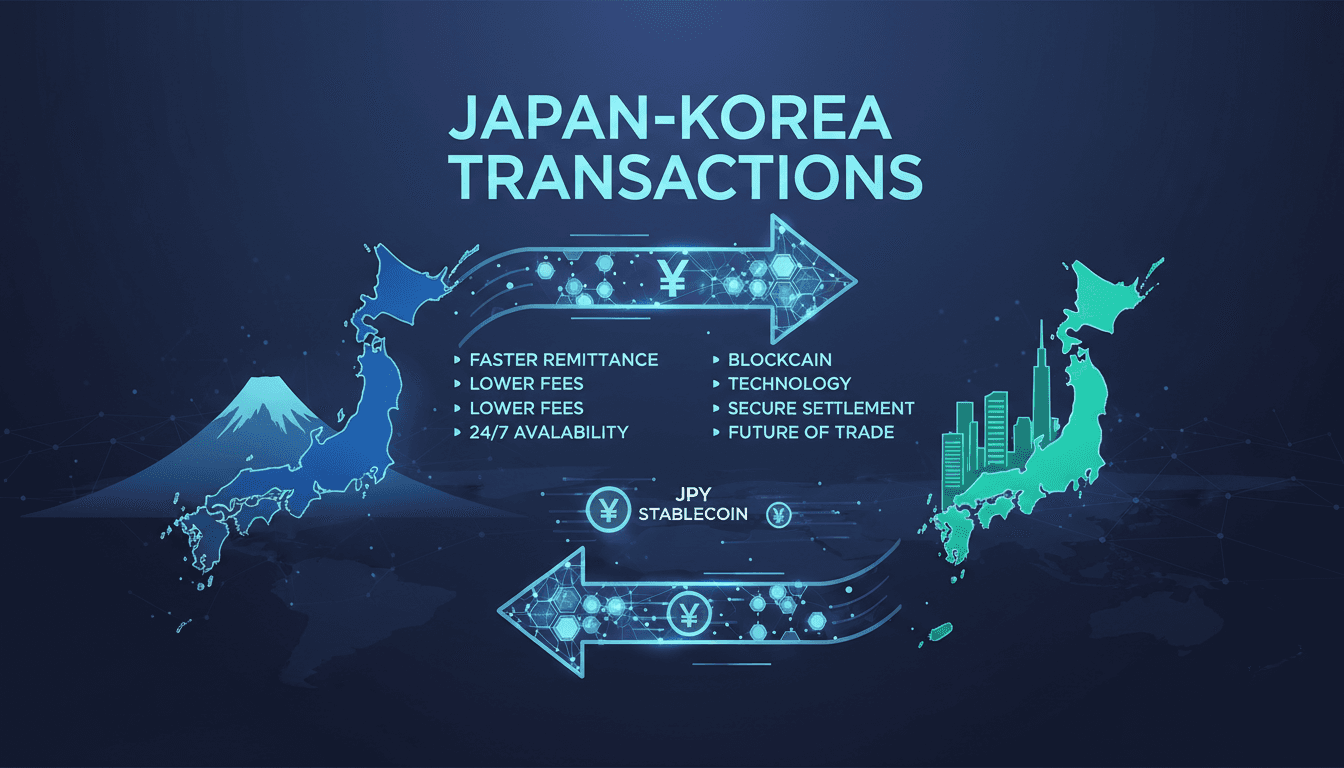
- The initiative leverages blockchain technology to improve transaction speed and reduce costs in cross-border trade settlements.
The context you actually need
- Japan and South Korea are advancing digital asset regulations, reflecting a broader East Asian interest in blockchain technology for financial infrastructure.
- Previous pilots have demonstrated successful direct currency exchanges between yen and won, eliminating the need for USD intermediaries.
- SBI launched a yen stablecoin platform in June 2026, setting the stage for this latest collaboration aimed at improving payment efficiency.
What's really happening
On October 20, 2026, Shinhan Card President Park Chang-hoon and SBI VC Trade Representative Director Tomohiko Kondo formalized a significant step in cross-border finance by signing a proof-of-concept (PoC) agreement in Tokyo. This initiative is designed to test yen-denominated stablecoin payments, which could revolutionize how transactions are conducted between Japan and South Korea. The PoC will focus on integrating stablecoin payments with existing payment card systems, allowing Japanese visitors to South Korea to make seamless transactions.
The collaboration also aims to facilitate wallet-to-wallet transfers and trade settlements using the XDC Network infrastructure. This is particularly relevant given the historical inefficiencies associated with traditional remittance networks, which often involve high costs, delays, and foreign exchange risks. By leveraging blockchain technology, the initiative seeks to provide a faster and more direct means of transferring value between the two countries.
The testing phase will assess not only the technical integration of these systems but also the effectiveness of anti-money laundering (AML) and fraud detection controls. This is crucial as both nations are currently navigating regulatory frameworks that support digital assets and stablecoins. The PoC builds on earlier successful pilots conducted by SBI affiliates and Korean institutions, which demonstrated the feasibility of direct currency-pair settlements without relying on USD as an intermediary.
As the PoC progresses, it will be essential to monitor how these developments align with ongoing regulatory discussions in both Japan and South Korea. The collaboration represents a significant move towards modernizing financial transactions in the region, potentially setting a precedent for future cross-border payment solutions.
Who feels it first (and how)
- Travelers: Japanese tourists in South Korea will benefit from easier payment methods.
- Businesses: Companies engaged in cross-border trade will experience reduced transaction costs and faster settlements.
- Financial institutions: Banks and payment processors may need to adapt to new technologies and regulatory frameworks.
What to watch next
- Regulatory developments: Keep an eye on how Japan and South Korea finalize their stablecoin regulations, as this will impact the initiative's scalability.
- Market adoption: Watch for announcements regarding commercial deployment and user adoption rates of the stablecoin payment system.
- Technological advancements: Monitor improvements in blockchain technology that could enhance transaction efficiency and security.
The PoC has been initiated and is currently underway.
Regulatory frameworks in both countries will evolve to accommodate stablecoin usage.
The timeline for commercial deployment and widespread adoption remains uncertain.
Frequently Asked Questions
- Why it matters?
- This collaboration aims to enhance the efficiency of cross-border payments, addressing longstanding issues in traditional remittance systems.
- What happened (in 30 seconds)?
- Shinhan Card and SBI Group signed a business agreement on October 20, 2026, to test yen-denominated stablecoin payments. The proof-of-concept targets multiple payment methods, including card-linked payments for travelers and wallet-to-wallet transfers. The initiative leverages blockchain technology to improve transaction speed and reduce costs in cross-border trade settlements.
- What's really happening?
- On October 20, 2026, Shinhan Card President Park Chang-hoon and SBI VC Trade Representative Director Tomohiko Kondo formalized a significant step in cross-border finance by signing a proof-of-concept (PoC) agreement in Tokyo. This initiative is designed to test yen-denominated stablecoin payments, which could revolutionize how transactions are conducted between Japan and South Korea. The PoC will focus on integrating stablecoin payments with existing payment card systems, allowing Japanese visit
- Who feels it first (and how)?
- Travelers: Japanese tourists in South Korea will benefit from easier payment methods. Businesses: Companies engaged in cross-border trade will experience reduced transaction costs and faster settlements. Financial institutions: Banks and payment processors may need to adapt to new technologies and regulatory frameworks.
- What to watch next?
- Regulatory developments: Keep an eye on how Japan and South Korea finalize their stablecoin regulations, as this will impact the initiative's scalability. Market adoption: Watch for announcements regarding commercial deployment and user adoption rates of the stablecoin payment system. Technological advancements: Monitor improvements in blockchain technology that could enhance transaction efficiency and security.
Bitcoin news, technical analysis, and forecasts across crypto markets.
"NewsBTC covers Bitcoin news, technical analysis, and forecasts across crypto markets and major blockchain projects."
— A47 Editor
Shinhan And SBI Plan Yen Stablecoin Payment Tests Across Japan And Korea
Shinhan Card and two SBI businesses have signed a memorandum of understanding to explore yen stablecoin payments and cross-border blockchain settlement, with a proof of concept as the next step. This initiative aims to assess the feasibility of stabl...
Covers blockchain, cryptocurrency news, project analysis, and market insights.
"CoinDesk is a well-established cryptocurrency and blockchain news provider, offering comprehensive insights, market data, and industry research."
— A47 Editor
Japanese visitors may be able to pay with yen stablecoins in South Korea under Shinhan-SBI pact
Shinhan Financial Group and SBI have entered a partnership to explore the use of yen stablecoins for payments by Japanese visitors in South Korea, focusing on card-linked merchant payments and peer-to-peer wallet transfers. This initiative aims to en...
Real-time updates, analysis, and reports on the blockchain and cryptocurrency sectors.
"Crypto News delivers real-time updates, analysis, and reports on the blockchain and cryptocurrency sectors."
— A47 Editor
Shinhan Card, SBI to test yen stablecoin payments for Japan–Korea travelers
Shinhan Card has partnered with SBI Group to test yen stablecoin payments, wallet transfers, and trade settlements aimed at enhancing the payment experience for travelers between Japan and South Korea. This initiative will explore the feasibility of ...
Covers blockchain, cryptocurrency news, project analysis, and market insights.
"Cointelegraph is a leading crypto-focused media outlet known for timely news, analysis, and educational content related to blockchain and digital assets."
— A47 Editor
Shinhan, SBI make Japan-Korea tourist spending a test case for yen stablecoins
Shinhan Financial Group and SBI are collaborating to assess the use of yen stablecoins for tourist spending between Japan and South Korea, focusing on enhancing payment systems for travelers. This initiative aims to evaluate safeguards and the potent...