
Generative AI Scandals Cause Major Book Publishing Deals to Collapse
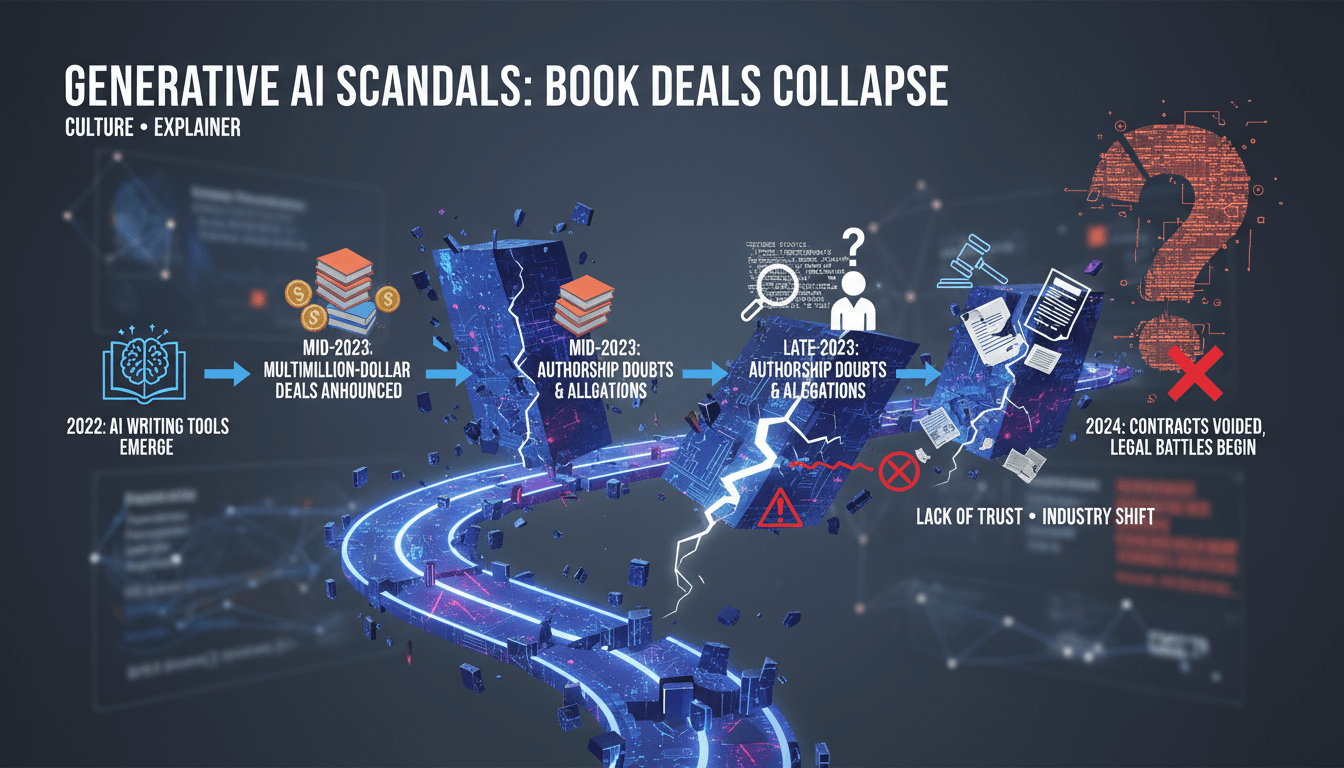
Here's what it means for you.
If you're involved in publishing or writing, the integrity of authorship is now under scrutiny, impacting how you navigate contracts and submissions.
Why it matters
The ongoing turmoil in the book publishing sector raises critical questions about creativity, trust, and intellectual property rights.
What happened (in 30 seconds)
- Generative AI scandals have led to the collapse of multimillion-dollar book deals due to unverified authorship claims.
- Prominent authors like Margaret Atwood and Jonathan Franzen have publicly urged publishers to avoid machine-generated content.
- Major publishers are entangled in lawsuits against AI developers while grappling with the implications of AI on traditional publishing practices.
The context you actually need
- Rapid adoption of generative AI tools since 2022-2023 has enabled quick content creation, complicating the verification of human authorship.
- Existing lawsuits against AI firms for unauthorized use of copyrighted material have heightened tensions between authors and technology companies.
- The Big Five publishers are caught between the need for innovation and the preservation of traditional values in authorship and originality.
What's really happening
The book publishing industry is experiencing a significant reckoning as generative AI tools become more prevalent. Since 2022, the rise of accessible AI technologies has allowed for rapid content creation, which has disrupted traditional publishing norms. Authors are increasingly concerned about the integrity of their work, particularly as AI-generated content enters submission pipelines. This has led to a crisis of trust, where the verification of human authorship is becoming increasingly difficult.
In early 2026, a group of 70 authors, including notable figures like Margaret Atwood and Jonathan Franzen, issued an open letter urging publishers to commit to not releasing machine-generated books. This collective action highlights the growing unease among writers regarding the implications of AI on their craft. The situation escalated when Hachette pulled a horror novel from publication due to allegations of AI involvement, signaling a shift in how publishers are approaching submissions.
The backlash against AI-generated content intensified when author Steven Rosenbaum faced criticism for including AI-hallucinated citations in his nonfiction work. This incident exemplifies the potential pitfalls of relying on AI tools without proper oversight. In July 2026, the agents for debut novelist Jerry Falade withdrew support for his multimillion-dollar deal after suspicions arose regarding the authenticity of his authorship. Such actions reflect a broader trend of increased scrutiny in the industry, where agents and publishers are now more cautious about the projects they support.
Despite the turmoil, major publishers have refrained from implementing sweeping bans on AI-generated content. Instead, they are pursuing litigation against AI developers, seeking to protect their intellectual property rights. This dual approach of litigation and cautious engagement with AI technologies illustrates the complex landscape that publishers must navigate. The lack of a unified regulatory framework further complicates matters, leaving the industry in a state of uncertainty.
As the situation evolves, the implications for authors, agents, and publishers are profound. The traditional value propositions of originality and creativity are being challenged, and the industry must grapple with the ethical considerations of AI in publishing. The ongoing debates over authorship verification and the role of technology in creative processes will shape the future of the book publishing sector.
Who feels it first (and how)
- Authors: Facing challenges in proving the authenticity of their work and potential backlash from readers.
- Literary Agents: Navigating increased scrutiny and potential deal collapses due to AI suspicions.
- Publishers: Balancing innovation with the need to protect intellectual property and maintain trust with authors.
- Tech Companies: Facing lawsuits and reputational risks as their AI tools come under fire for unauthorized content generation.
What to watch next
- Litigation outcomes: The results of ongoing lawsuits against AI developers will set precedents for the industry and influence future practices.
- Author responses: Continued collective actions from authors may lead to more stringent guidelines or industry standards regarding AI-generated content.
- Market shifts: Watch for changes in submission protocols and deal-making processes as publishers adapt to the evolving landscape.
The collapse of multimillion-dollar deals due to AI suspicions is impacting the publishing industry.
Increased scrutiny of submissions and potential slowdowns in deal-making will continue as the industry grapples with these challenges.
The long-term regulatory framework for AI in publishing remains undefined, leaving future implications uncertain.
Frequently Asked Questions
- Why it matters?
- The ongoing turmoil in the book publishing sector raises critical questions about creativity, trust, and intellectual property rights.
- What happened (in 30 seconds)?
- Generative AI scandals have led to the collapse of multimillion-dollar book deals due to unverified authorship claims. Prominent authors like Margaret Atwood and Jonathan Franzen have publicly urged publishers to avoid machine-generated content. Major publishers are entangled in lawsuits against AI developers while grappling with the implications of AI on traditional publishing practices.
- What's really happening?
- The book publishing industry is experiencing a significant reckoning as generative AI tools become more prevalent. Since 2022, the rise of accessible AI technologies has allowed for rapid content creation, which has disrupted traditional publishing norms. Authors are increasingly concerned about the integrity of their work, particularly as AI-generated content enters submission pipelines. This has led to a crisis of trust, where the verification of human authorship is becoming increasingly diffi
- Who feels it first (and how)?
- Authors: Facing challenges in proving the authenticity of their work and potential backlash from readers. Literary Agents: Navigating increased scrutiny and potential deal collapses due to AI suspicions. Publishers: Balancing innovation with the need to protect intellectual property and maintain trust with authors. Tech Companies: Facing lawsuits and reputational risks as their AI tools come under fire for unauthorized content generation.
- What to watch next?
- Litigation outcomes: The results of ongoing lawsuits against AI developers will set precedents for the industry and influence future practices. Author responses: Continued collective actions from authors may lead to more stringent guidelines or industry standards regarding AI-generated content. Market shifts: Watch for changes in submission protocols and deal-making processes as publishers adapt to the evolving landscape.
U.S. business news, corporate developments, and economy.
"The Wall Street Journal is respected for deep financial and economic reporting with a center-right editorial perspective."
— A47 Editor
AI Has Plunged the Book Publishing Industry Into Utter Chaos
The book publishing industry is facing significant turmoil as major deals collapse due to concerns over the use of artificial intelligence (AI), prompting a critical examination of creativity and trust within the sector.
Tech business coverage, major deals, product launches, and Silicon Valley trends.
"WSJ’s tech section offers authoritative reporting on the intersection of technology and business, including exclusive industry analysis."
— A47 Editor
AI Has Plunged the Book Publishing Industry Into Utter Chaos
The book publishing industry is currently facing significant turmoil due to the fallout from major deals that have collapsed amid concerns over the use of artificial intelligence (AI). This upheaval has raised critical questions about creativity, tru...
Reports on arts, film, culture, literature, and entertainment industry developments.
"Dow Jones Arts & Culture offers coverage of visual arts, theater, music, and cultural events with a WSJ-backed journalistic lens."
— A47 Editor
AI Has Plunged the Book Publishing Industry Into Utter Chaos
The book publishing industry is facing significant turmoil as major deals collapse over concerns regarding the use of artificial intelligence (AI), prompting a critical examination of creativity and trust within the sector.