
ARIA Bans AI-Generated Music from Australian Charts
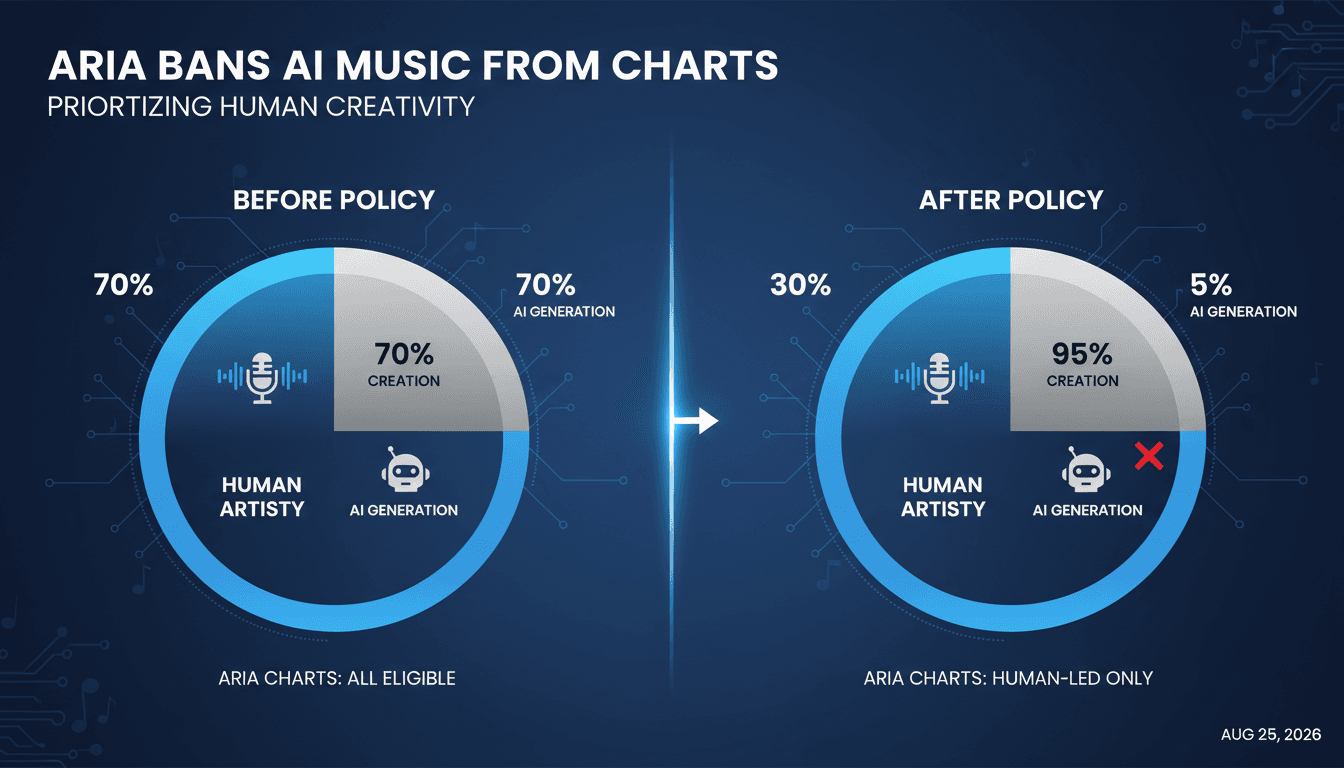
Here's what it means for you.
If you’re a music creator or consumer, expect a shift in how music is categorized and valued in Australia.
Why it matters
This policy aims to protect human artistry in an industry increasingly threatened by AI-generated content.
What happened (in 30 seconds)
- On August 25, 2026, the Australian Recording Industry Association (ARIA) announced new eligibility rules for music charts.
- Tracks must be 'substantially human made', barring wholly AI-generated music from official charts starting August 31, 2026.
- The decision follows a high-charting AI cover of Madonna's 'Like a Prayer,' which raised concerns about AI's impact on artists' livelihoods.
The context you actually need
- Generative AI tools have rapidly advanced, enabling the creation of music that mimics human artistry, leading to industry-wide concerns.
- The International Federation of the Phonographic Industry (IFPI) has set global principles advocating for human authorship in music, which Australia is now adopting.
- The move is supported by Australian artists, who fear that AI could undermine their creative work and economic stability.
What's really happening
The ARIA's decision to exclude wholly AI-generated music from its charts reflects a growing tension between technological advancement and the preservation of human creativity in the music industry. As generative AI tools become more sophisticated, they can produce music that closely resembles human-made tracks, raising ethical and economic concerns. The high-charting AI cover of Madonna's 'Like a Prayer' by producer Josh Fawaz, which spent 16 weeks in the Australian top 20, exemplified this issue. It not only showcased the capabilities of AI in music production but also sparked a backlash among artists who felt their livelihoods were at risk.
The new rules stipulate that for a track to be eligible for the charts, it must be 'substantially human made.' This means that human involvement is necessary in songwriting, lead vocals, and primary instrumentation, while AI can only play a supportive role. This policy aligns with the IFPI's global principles, which aim to maintain a focus on human artistry in music. By implementing these rules, ARIA seeks to ensure that charts remain a reflection of human creativity and artistry, rather than a competition between machines.
The implications of this policy extend beyond chart eligibility. It may lead to a reevaluation of how music is produced and consumed, as artists and producers navigate the boundaries of AI assistance. The policy could also influence how music is marketed and promoted, as tracks that do not meet the new criteria will be ineligible for ARIA Awards and other recognitions. This could create a clearer distinction between human-made and AI-generated music, potentially affecting consumer perceptions and preferences.
As the music industry adapts to these changes, the focus will likely shift towards fostering human creativity while responsibly integrating AI tools. This balance will be crucial in maintaining the integrity of the music industry and ensuring that artists can thrive in an increasingly automated landscape.
Who feels it first (and how)
- Musicians and songwriters: They will need to adapt their creative processes to comply with the new rules.
- Music producers: Those using AI tools will have to reassess their production methods to ensure eligibility for charts.
- Record labels: They may need to adjust marketing strategies and artist development programs to emphasize human artistry.
- Consumers: Listeners may experience a shift in the types of music available on official charts, influencing their music discovery and consumption habits.
What to watch next
- Industry reactions: Monitor how artists and producers respond to the new rules and whether they adapt their creative processes.
- Chart performance: Observe the impact on chart positions and sales of tracks that comply versus those that do not.
- Global trends: Watch for similar policies in other countries as the music industry grapples with the implications of AI-generated content.
The new rules are effective from August 31, 2026, and will exclude wholly AI-generated tracks from charts.
Other countries may adopt similar policies in response to the challenges posed by AI in music.
The long-term impact on artist income and music consumption patterns remains to be seen.
Frequently Asked Questions
- Why it matters?
- This policy aims to protect human artistry in an industry increasingly threatened by AI-generated content.
- What happened (in 30 seconds)?
- On August 25, 2026, the Australian Recording Industry Association (ARIA) announced new eligibility rules for music charts. Tracks must be 'substantially human made', barring wholly AI-generated music from official charts starting August 31, 2026. The decision follows a high-charting AI cover of Madonna's 'Like a Prayer,' which raised concerns about AI's impact on artists' livelihoods.
- What's really happening?
- The ARIA's decision to exclude wholly AI-generated music from its charts reflects a growing tension between technological advancement and the preservation of human creativity in the music industry. As generative AI tools become more sophisticated, they can produce music that closely resembles human-made tracks, raising ethical and economic concerns. The high-charting AI cover of Madonna's 'Like a Prayer' by producer Josh Fawaz, which spent 16 weeks in the Australian top 20, exemplified this issu
- Who feels it first (and how)?
- Musicians and songwriters: They will need to adapt their creative processes to comply with the new rules. Music producers: Those using AI tools will have to reassess their production methods to ensure eligibility for charts. Record labels: They may need to adjust marketing strategies and artist development programs to emphasize human artistry. Consumers: Listeners may experience a shift in the types of music available on official charts, influencing their music discovery and consumption ha
- What to watch next?
- Industry reactions: Monitor how artists and producers respond to the new rules and whether they adapt their creative processes. Chart performance: Observe the impact on chart positions and sales of tracks that comply versus those that do not. Global trends: Watch for similar policies in other countries as the music industry grapples with the implications of AI-generated content.
Corporate leadership, finance, technology, and market trends.
"Fortune covers financial trends, leadership, and innovation with a pragmatic editorial approach."
— A47 Editor
Australia bans AI-generated music—only ‘substantially human made’ music is eligible to make the charts
Australia has implemented a ban on AI-generated music, stating that only music deemed 'substantially human made' will be eligible for chart rankings, as announced by ARIA's chief executive. This decision reflects a commitment to preserving the human ...
Conservative-leaning political and national coverage.
"The Washington Times is a conservative-leaning newspaper known for its political coverage and advocacy of right-of-center viewpoints."
— A47 Editor
Australia's music industry bans AI-generated tracks from official charts
Australia's recorded music industry has announced a ban on tracks that are entirely generated by artificial intelligence from appearing on official charts, citing concerns over the impact of generative technologies on artists' livelihoods. This decis...
Pan-Arab news coverage spanning politics, business, sports, and regional affairs.
"Asharq Al-Awsat reflects a broad Arab editorial perspective with strong attention to regional geopolitics."
— A47 Editor
أستراليا تمنع إدراج الأغاني المنتَجة بالذكاء الاصطناعي على قوائم الموسيقى الرسمية
Australia has introduced new regulations that prohibit the inclusion of songs produced entirely or predominantly by artificial intelligence on official music charts. This move reflects growing concerns about the impact of AI on the music industry and...