
AI Text Detectors Under Scrutiny Amid Controversy Over Novel Authorship in France
Why it matters
The reliability of AI text detectors impacts the integrity of literary works and the educational frameworks that rely on them.
What happened (in 30 seconds)
- Allegations surfaced on September 26, 2026, claiming that Thelyson Orelien's bestselling novel was largely generated by AI tools.
- Orelien denied the claims, asserting that his writing comes from personal experience and emotion.
- Inconsistent results from AI text detectors like Pangram have raised questions about their accuracy in distinguishing human from AI-generated content.
The context you actually need
- AI text detectors have gained traction in both education and publishing, aiming to differentiate between human and AI-generated writing.
- Previous controversies have emerged in literature, including cases involving Japanese laureates and the broader industry grappling with AI-assisted books.
- The evolving capabilities of generative AI create a moving target for detection methods, complicating the reliability of static assessments.
What's really happening
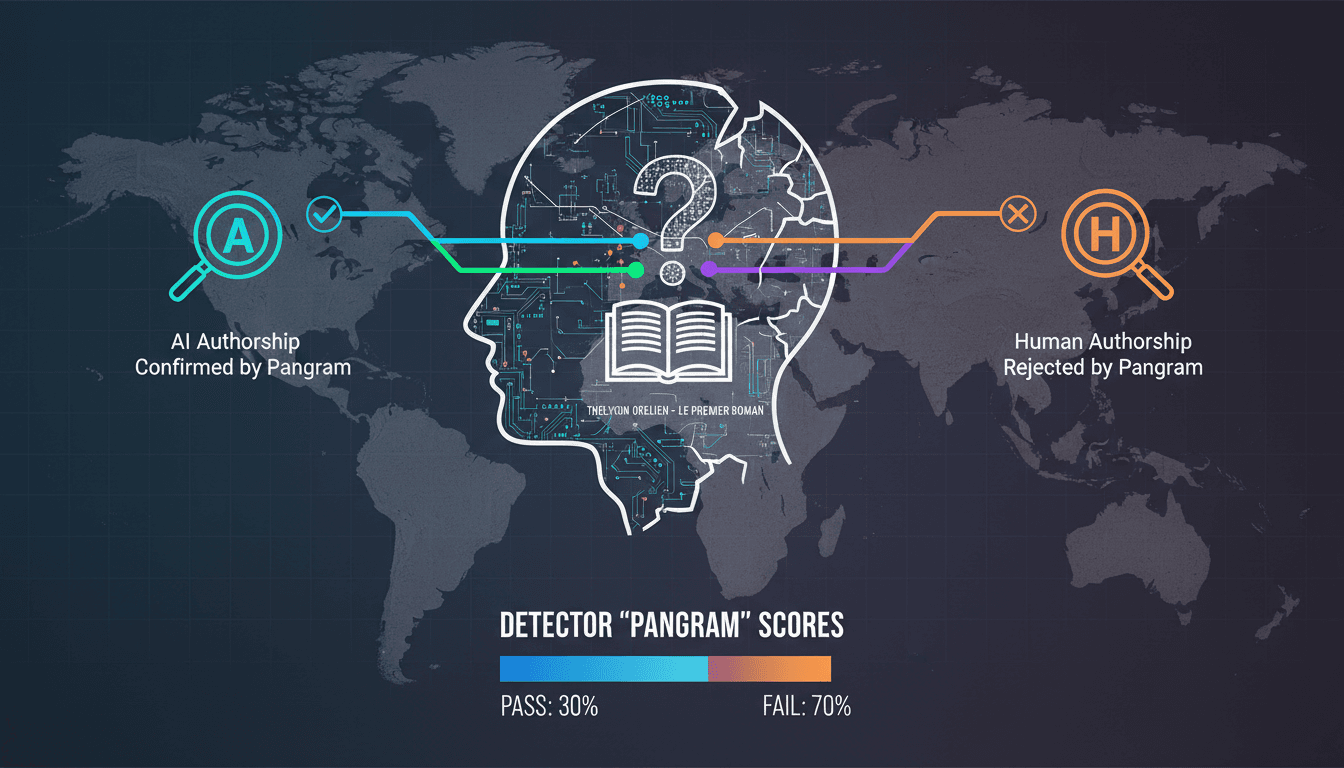
The controversy surrounding Thelyson Orelien's debut novel has ignited a broader debate about the reliability of AI text detectors, particularly in the literary world. The allegations that Orelien's work was significantly generated by AI tools like Claude or ChatGPT were sparked by a post on X, which cited the Pangram detector's findings. This claim has not only put Orelien's authorship under scrutiny but has also raised critical questions about the effectiveness of AI detection technologies.
Orelien has firmly denied these allegations, emphasizing that his writing is deeply personal, stemming from his experiences and emotions. However, the situation has highlighted the inconsistencies in AI text detection. Testing conducted by AFP on excerpts from Orelien's novel yielded mixed results, with some passages being classified as human-written while others were identified as 100% AI-generated. This inconsistency is troubling, especially given that researchers at the University of Chicago reported near-zero error rates for the Pangram detector on longer texts in a 2025 study.
Experts have pointed out that AI detectors often flag repetitive structures and linguistic tics, such as triadic phrasing, which may not necessarily indicate AI authorship but could reflect an author's unique style or cultural influences. Critics had previously noted formulaic elements in Orelien's writing, which may have contributed to the allegations. The literary community in France has reacted with public criticism, with podcasters and columnists discussing the repetitive nature of the novel's style.
Despite the controversy, Orelien's book had received critical acclaim and strong sales prior to the allegations. The CEO of Pangram has emphasized that their technology serves as a starting point for investigation rather than definitive proof of AI authorship. This incident underscores the challenges faced by authors, educators, and publishers in navigating the complexities of AI-generated content and the tools designed to detect it.
Who feels it first (and how)
- Authors: Facing scrutiny over their creative processes and potential reliance on AI tools.
- Educators: Relying on AI detectors for academic integrity may find their methods questioned.
- Publishers: Need to reassess how they evaluate manuscripts and the authenticity of authorship.
- Literary critics: Engaging in discussions about the implications of AI in literature and its impact on traditional writing styles.
What to watch next
- Further investigations into the reliability of AI text detectors will be crucial for establishing standards in literary authenticity.
- Emerging technologies in AI detection may evolve, potentially improving accuracy and reliability in distinguishing human from AI-generated content.
- Public discourse around AI in literature will likely intensify, influencing how authors approach writing and how readers perceive authenticity.
The controversy has raised significant questions about the reliability of AI text detectors.
The literary community will continue to debate the implications of AI on authorship and creativity.
The long-term effects on authorship standards and educational practices remain to be seen.
Frequently Asked Questions
- Why it matters?
- The reliability of AI text detectors impacts the integrity of literary works and the educational frameworks that rely on them.
- What happened (in 30 seconds)?
- Allegations surfaced on September 26, 2026, claiming that Thelyson Orelien's bestselling novel was largely generated by AI tools. Orelien denied the claims, asserting that his writing comes from personal experience and emotion. Inconsistent results from AI text detectors like Pangram have raised questions about their accuracy in distinguishing human from AI-generated content.
- What's really happening?
- The controversy surrounding Thelyson Orelien's debut novel has ignited a broader debate about the reliability of AI text detectors, particularly in the literary world. The allegations that Orelien's work was significantly generated by AI tools like Claude or ChatGPT were sparked by a post on X, which cited the Pangram detector's findings. This claim has not only put Orelien's authorship under scrutiny but has also raised critical questions about the effectiveness of AI detection technologies. O
- Who feels it first (and how)?
- Authors: Facing scrutiny over their creative processes and potential reliance on AI tools. Educators: Relying on AI detectors for academic integrity may find their methods questioned. Publishers: Need to reassess how they evaluate manuscripts and the authenticity of authorship. Literary critics: Engaging in discussions about the implications of AI in literature and its impact on traditional writing styles.
- What to watch next?
- Further investigations into the reliability of AI text detectors will be crucial for establishing standards in literary authenticity. Emerging technologies in AI detection may evolve, potentially improving accuracy and reliability in distinguishing human from AI-generated content. Public discourse around AI in literature will likely intensify, influencing how authors approach writing and how readers perceive authenticity.
Latest AI/ML research news and breakthroughs.
"Aggregated research highlights across institutions."
— A47 Editor
Spotting AI writing: How reliable are the detectors?
Claims have emerged that Thelyson Orelien, a Canadian-Haitian writer, utilized AI tools to compose his bestselling debut novel, stirring significant controversy within the French literary community. This revelation raises critical questions regarding...
News and features on AI from The Guardian.
"Progressive-leaning international outlet with critical AI coverage."
— A47 Editor
Novelist accused of using AI to write book removed from French prize list
Thélyson Orélien, a Canadian-Haitian novelist, has been removed from the longlist for France’s prestigious Académie Goncourt literary prize after an anonymous social media account alleged that his novel, C’était ça ou mourir (It Was That or Die), was...
Arts, film, music, pop culture, and media criticism.
"The Guardian is known for its progressive editorial stance and in-depth analysis, often exploring the cultural impact of entertainment."
— A47 Editor
Novelist accused of using AI to write book removed from French prize list
Thélyson Orélien, a Canadian-Haitian novelist, has been removed from the longlist for France’s prestigious Académie Goncourt literary prize after an anonymous social media account alleged that his novel, C’était ça ou mourir (It Was That or Die), was...
International coverage from The Guardian's global desks.
"The Guardian is known for its progressive editorial stance and in-depth analysis."
— A47 Editor
Novelist accused of using AI to write book removed from French prize list
Thélyson Orélien, a Canadian-Haitian novelist, has been removed from the longlist for France’s prestigious Académie Goncourt literary prize after an anonymous social media account alleged that his novel, C’était ça ou mourir (It Was That or Die), was...
Reports on arts, film, culture, literature, and entertainment industry developments.
"Dow Jones Arts & Culture offers coverage of visual arts, theater, music, and cultural events with a WSJ-backed journalistic lens."
— A47 Editor
His Debut Novel Was a Literary Sensation. Was It Actually Written by AI?
Thélyson Orélien, a Canadian-Haitian novelist, has been removed from the longlist for France's prestigious Académie Goncourt literary prize following allegations that his debut novel, 'It Was Either That or Die,' was largely written by artificial int...