
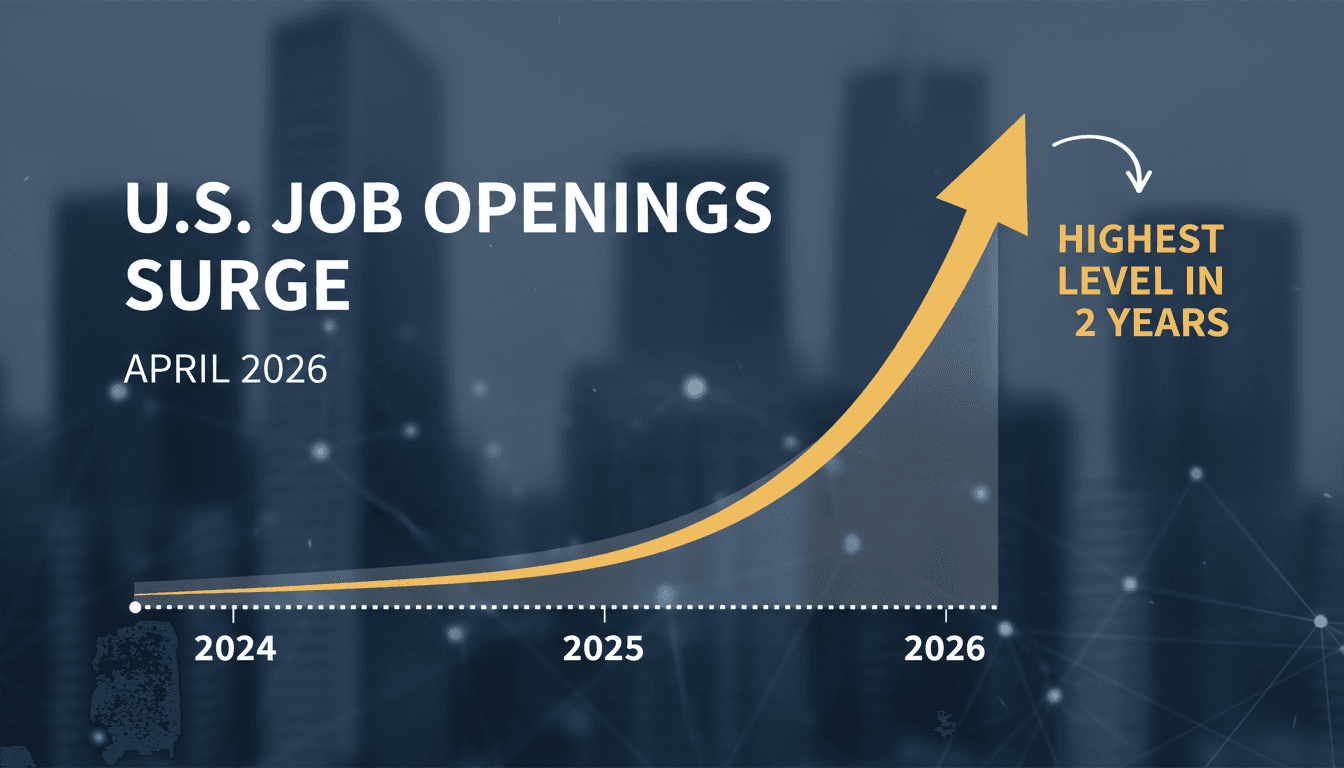
U.S. job openings reach highest level in nearly two years amid economic uncertainty
Here's what it means for you.
The recent surge in U.S. job openings signals a potential shift in the labor market, which could have significant implications for both employers and job seekers. As companies begin to adjust their hiring strategies, this may lead to improved economic conditions in the coming months. For professionals, this could mean more opportunities and a more competitive job market. Despite ongoing economic challenges, particularly those stemming from the Iran war, the rise in job openings suggests resilience within the labor market. Stakeholders should remain vigilant as these trends develop, as they may influence policy decisions and economic forecasts.
What happened
In April 2026, U.S. job openings rose significantly, reaching their highest level in nearly two years. This increase follows a challenging year in 2025, during which job growth was minimal, with fewer than 10,000 jobs added each month. The rise in job openings indicates a potential recovery in hiring practices among employers, despite their cautious approach.
This development is noteworthy as it suggests that employers may be beginning to adjust their strategies in response to changing economic conditions. The increase in job openings is a positive sign for the labor market, hinting at a possible turnaround after a prolonged period of stagnation.
The Context
The labor market's resilience is particularly significant given the backdrop of ongoing economic uncertainty related to the Iran war. Employers have remained cautious about hiring new employees, which has contributed to the slow job growth seen in the previous year. However, the recent uptick in job openings may reflect a shift in sentiment among businesses.
As the economy grapples with geopolitical tensions, the implications of this increase in job openings could extend beyond immediate hiring practices. It may also influence broader economic indicators and strategies as stakeholders assess the evolving landscape.
Takeaway
Looking ahead, it will be crucial to monitor hiring trends in the coming months to gauge the sustainability of this recovery. Observing how employers adjust their hiring strategies in response to economic conditions will provide insights into the labor market's trajectory. Additionally, economic indicators related to the Iran conflict will be important to watch, as they may impact overall economic stability.
The increase in job openings may signal a gradual recovery in the U.S. economy, but the long-term effects will depend on various external factors and how businesses navigate these challenges.
Global business headlines with AI angles.
"General business outlet that frequently covers AI."
— A47 Editor
U.S. Job Openings Jump To Highest Level In Nearly Two Years
U.S. job openings rose to their highest level in nearly two years in April, indicating a surprising resilience in the labor market despite employers remaining cautious in hiring new employees. This increase reflects a potential shift in economic dyna...
News from the United States including domestic politics, society, and culture.
"Global News is a mainstream Canadian media outlet generally considered to have a centrist editorial stance, covering news with a focus on factual reporting and national interest."
— A47 Editor
U.S. job openings rose in April, despite economic fallout from Iran war
U.S. job openings increased in April, signaling a recovery in the American job market despite the economic challenges posed by the ongoing conflict with Iran. This marks a notable improvement from 2025, when job growth was minimal, averaging fewer th...
Pan-Arab news coverage spanning politics, business, sports, and regional affairs.
"Asharq Al-Awsat reflects a broad Arab editorial perspective with strong attention to regional geopolitics."
— A47 Editor
النشاط الصناعي الأميركي يقفز لأعلى مستوى في 4 سنوات بفعل حرب إيران
U.S. industrial activity experienced significant growth in May, reaching its highest level in four years, driven by the ongoing conflict in Iran. This surge indicates a robust recovery in the manufacturing sector amidst geopolitical tensions.