
Trump Cancels Iran Strikes Leading to Decline in Treasury Yields and Dollar
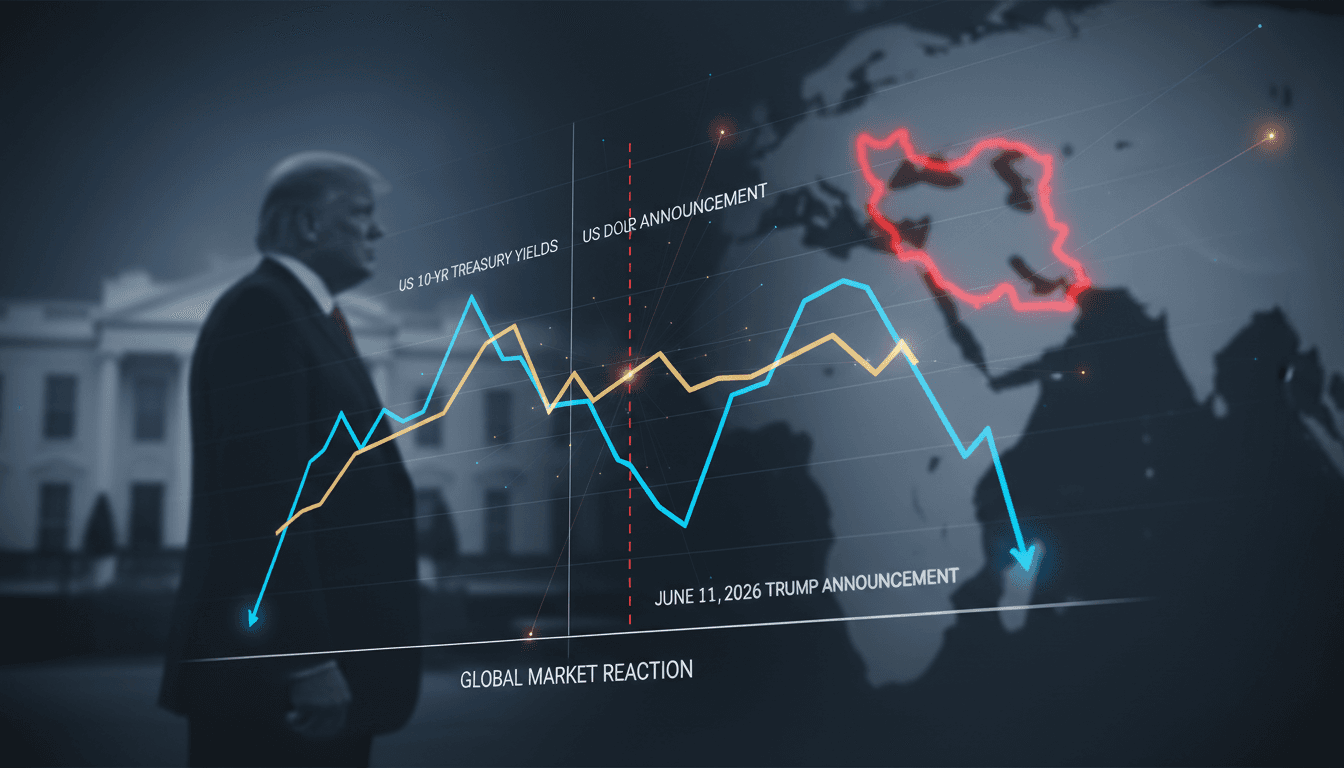
Here's what it means for you.
The recent shift in U.S. Treasury yields and the dollar's value could impact your investment strategies and financial decisions.
Why it matters
This event signals a potential shift in geopolitical stability, influencing global markets and investor confidence.
What happened (in 30 seconds)
- Trump canceled military strikes against Iran on June 11, 2026, aiming for de-escalation.
- U.S. Treasury yields fell sharply, with the 10-year benchmark dropping to approximately 4.47%.
- The dollar weakened, reflected in a decline of the Bloomberg Dollar Spot Index to about 96.4, down 0.2%.
The context you actually need
- Ongoing tensions between the U.S. and Iran have historically influenced global oil markets and economic stability.
- Rising inflation pressures in the U.S. are exacerbated by fluctuations in energy prices, making geopolitical events particularly impactful.
- Investor sentiment often reacts to military threats, with shifts in market dynamics reflecting broader concerns about stability and peace negotiations.
What's really happening
Following President Trump's announcement to cancel military strikes against Iran, the financial markets reacted swiftly. The U.S. Treasury yields, particularly the 10-year benchmark, fell to approximately 4.47%. This decline indicates a shift in investor sentiment, as lower yields typically suggest a flight to safety amid geopolitical uncertainties. Investors often view Treasury bonds as a safe haven during times of conflict, leading to increased demand and subsequently lower yields.
Simultaneously, the dollar weakened, with the Bloomberg Dollar Spot Index dropping to about 96.4, a decrease of roughly 0.2% on the day. This decline reflects a broader market reaction to the easing of immediate military tensions, as investors recalibrate their expectations regarding U.S. monetary policy and global economic stability. The dollar's value is closely tied to perceptions of U.S. economic strength and geopolitical stability; thus, any indication of reduced military engagement can lead to a depreciation of the currency.
The backdrop of this announcement is critical. The U.S.-Iran relationship has been characterized by a series of military threats and engagements, creating a volatile environment for global markets. Trump's oscillation between military threats and peace talks has kept investors on edge, making any announcement regarding military action significant. The cancellation of strikes was perceived as a potential step towards peace negotiations, which could stabilize the region and, by extension, the global economy.
In the aftermath, U.S. equity markets responded positively, with major indexes like the S&P 500 rising by 1.8% and the Nasdaq increasing by 2.5%. This uptick indicates that investors are optimistic about the potential for reduced conflict and its implications for economic growth. Additionally, gold prices surged, reflecting a shift in investor preference towards safe-haven assets amid ongoing geopolitical uncertainties.
The implications of this event extend beyond immediate market reactions. The decline in U.S. Treasury yields and the dollar may influence investment strategies in regions like Dubai and the UAE, particularly in sectors sensitive to U.S. monetary policy and geopolitical stability. Investors in these markets will need to consider how shifts in U.S. economic indicators may affect their portfolios and investment decisions.
Who feels it first (and how)
- Investors in U.S. Treasury bonds: They may see lower yields affecting their returns.
- Equity market participants: Positive sentiment could lead to increased investment in stocks.
- Currency traders: They will need to adjust strategies based on the dollar's weakening.
- Businesses reliant on imports: A weaker dollar may increase costs for imported goods.
- Geopolitical analysts: They will monitor ongoing negotiations and their impact on market stability.
What to watch next
- Future U.S.-Iran negotiations: Progress or setbacks could significantly impact market stability and investor sentiment.
- Inflation trends in the U.S.: Rising inflation could lead to changes in monetary policy, affecting Treasury yields and the dollar.
- Global oil prices: Fluctuations in oil prices will continue to influence economic stability and investor confidence.
U.S. Treasury yields fell to 4.47% following the announcement.
Continued fluctuations in the dollar as geopolitical tensions evolve.
The long-term impact of these developments on U.S.-Iran relations and global markets.
Frequently Asked Questions
- Why it matters?
- This event signals a potential shift in geopolitical stability, influencing global markets and investor confidence.
- What happened (in 30 seconds)?
- Trump canceled military strikes against Iran on June 11, 2026, aiming for de-escalation. U.S. Treasury yields fell sharply, with the 10-year benchmark dropping to approximately 4.47%. The dollar weakened, reflected in a decline of the Bloomberg Dollar Spot Index to about 96.4, down 0.2%.
- What's really happening?
- Following President Trump's announcement to cancel military strikes against Iran, the financial markets reacted swiftly. The U.S. Treasury yields, particularly the 10-year benchmark, fell to approximately 4.47%. This decline indicates a shift in investor sentiment, as lower yields typically suggest a flight to safety amid geopolitical uncertainties. Investors often view Treasury bonds as a safe haven during times of conflict, leading to increased demand and subsequently lower yields. Simultaneo
- Who feels it first (and how)?
- Investors in U.S. Treasury bonds: They may see lower yields affecting their returns. Equity market participants: Positive sentiment could lead to increased investment in stocks. Currency traders: They will need to adjust strategies based on the dollar's weakening. Businesses reliant on imports: A weaker dollar may increase costs for imported goods. Geopolitical analysts: They will monitor ongoing negotiations and their impact on market stability.
- What to watch next?
- Future U.S.-Iran negotiations: Progress or setbacks could significantly impact market stability and investor sentiment. Inflation trends in the U.S.: Rising inflation could lead to changes in monetary policy, affecting Treasury yields and the dollar. Global oil prices: Fluctuations in oil prices will continue to influence economic stability and investor confidence.
Markets desk coverage, trading insights, and investor updates.
"WSJ’s markets reporting provides in-depth analysis and context for investors."
— A47 Editor
Treasury Yields, Dollar Fall as Trump Calls Off Attacks on Iran
Treasury yields and the dollar fell after President Trump called off planned military strikes against Iran, easing immediate geopolitical tensions. This decision reflects a significant shift in U.S. foreign policy, which had been marked by escalating...
Conservative-leaning coverage of current events.
"Fox News is a highly influential conservative news outlet known for right-leaning political commentary and coverage."
— A47 Editor
Trump pivots on strikes while dangling Iran deal, testing whether Tehran blinks
President Donald Trump has shifted his approach regarding military strikes against Iran, indicating a potential pivot towards diplomacy as he tests whether military pressure can yield a nuclear deal. This comes after months of asserting that a deal w...
Focused political reporting and governmental affairs.
"NBC News is a mainstream media outlet known for comprehensive national and international news coverage with a centrist to slightly left-leaning editorial tone."
— A47 Editor
Trump calls off planned strikes on Iran amid progress towards a deal
President Trump announced the cancellation of planned military strikes against Iran, indicating progress towards a potential peace deal between the two nations. This decision comes amid ongoing tensions and military exchanges between Iran and Israel,...
Regional coverage and analysis focused on politics, diplomacy, and business across the Middle East.
"Al-Monitor is known for analytical reporting on Middle East politics and policy developments."
— A47 Editor
Trump launches new airstrikes on Iran as deal stalls
The United States has launched a new wave of airstrikes against Iran, as President Donald Trump intensifies military actions amid stalled negotiations for a peace deal. The Pentagon claims these strikes are intended to strengthen Washington's positio...
Global business headlines with AI angles.
"General business outlet that frequently covers AI."
— A47 Editor
Trump Vows Renewed Attacks Against Iran, Says U.S. Will Strike 'Very Hard'
President Donald Trump announced on Wednesday that the U.S. will conduct renewed military strikes against Iran, emphasizing a commitment to strike 'very hard' amid escalating tensions. This declaration follows a series of recent military exchanges be...
24/7 international news from a French perspective in multiple languages.
"France 24 is viewed as a globally focused outlet with balanced coverage and a European perspective."
— A47 Editor
Trump says Iran has taken too long to negotiate, will 'pay the price'
U.S. President Donald Trump stated that Iran has delayed negotiations for a potential deal and warned that it would face consequences for this delay. This remark follows a series of military exchanges between Iran and the United States, indicating ri...
Business and economy coverage focused on Dubai, the UAE, Saudi Arabia, and the wider Middle East.
"Arabian Business is a well-known regional business outlet with strong focus on Gulf markets, leadership, and investment stories."
— A47 Editor
Trump says Iran will have to “pay the price” for stalling on deal
U.S. President Donald Trump has criticized Iran for delaying negotiations on a peace deal, stating that the country will have to 'pay the price' for its stalling. This remark follows a series of military exchanges between the two nations, escalating ...
Global business headlines with AI angles.
"General business outlet that frequently covers AI."
— A47 Editor
Trump Says He May Order Strikes Against Iranian Infrastructure As Deal Remains Elusive
President Donald Trump has indicated that he may order military strikes against Iranian infrastructure due to delays in negotiations aimed at resolving the ongoing conflict with Iran. This statement reflects growing frustration with Tehran's pace in ...
Global political, business, and cultural coverage from WSJ international desks.
"The Wall Street Journal offers extensive international reporting with a reputation for financial insight and a center-right editorial stance."
— A47 Editor
Three Days of Clashes Show the Iran Conflict Is Entering a Dangerous New Phase
Recent clashes between Iran and Israel have escalated tensions, with President Trump warning Iran of severe consequences for failing to reach a peace deal. This situation reflects a precarious balance between diplomatic efforts and the risk of all-ou...
Coverage of current events and conflicts in the Middle East.
"France 24 is viewed as a globally focused outlet with balanced coverage and a European perspective."
— A47 Editor
Iran ‘playing us for suckers’, Trump says, US will attack them ‘very hard’
President Donald Trump has accused Iran of delaying negotiations for a peace deal, warning that the United States will respond with significant military action if an agreement is not reached promptly. This statement follows a series of escalating mil...
European coverage of Middle East politics and security issues.
"France 24 offers international reporting with a European editorial perspective."
— A47 Editor
Iran ‘playing us for suckers’, Trump says, US will attack them ‘very hard’
President Donald Trump has accused Iran of delaying negotiations for a peace deal, warning that the United States will respond with significant military action if an agreement is not reached promptly. This statement follows a series of escalating mil...
English-language news from Qatar covering domestic and regional affairs.
"Gulf Times reflects Qatari perspectives on regional developments."
— A47 Editor
Trump threatens to attack Iran 'very hard'
President Donald Trump has threatened to escalate military action against Iran if a peace deal is not reached, following a series of significant military exchanges between the two nations. This warning comes amid ongoing tensions and military strikes...
Pan-Arab news coverage spanning politics, business, sports, and regional affairs.
"Asharq Al-Awsat reflects a broad Arab editorial perspective with strong attention to regional geopolitics."
— A47 Editor
لماذا يواصل ترمب التبشير بقرب التوصل إلى اتفاق مع إيران؟
U.S. President Donald Trump has repeatedly stated over the past two months that a deal with Iran is imminent, making over 37 remarks on the subject. These comments reflect a consistent pattern in his approach to U.S.-Iran relations.