
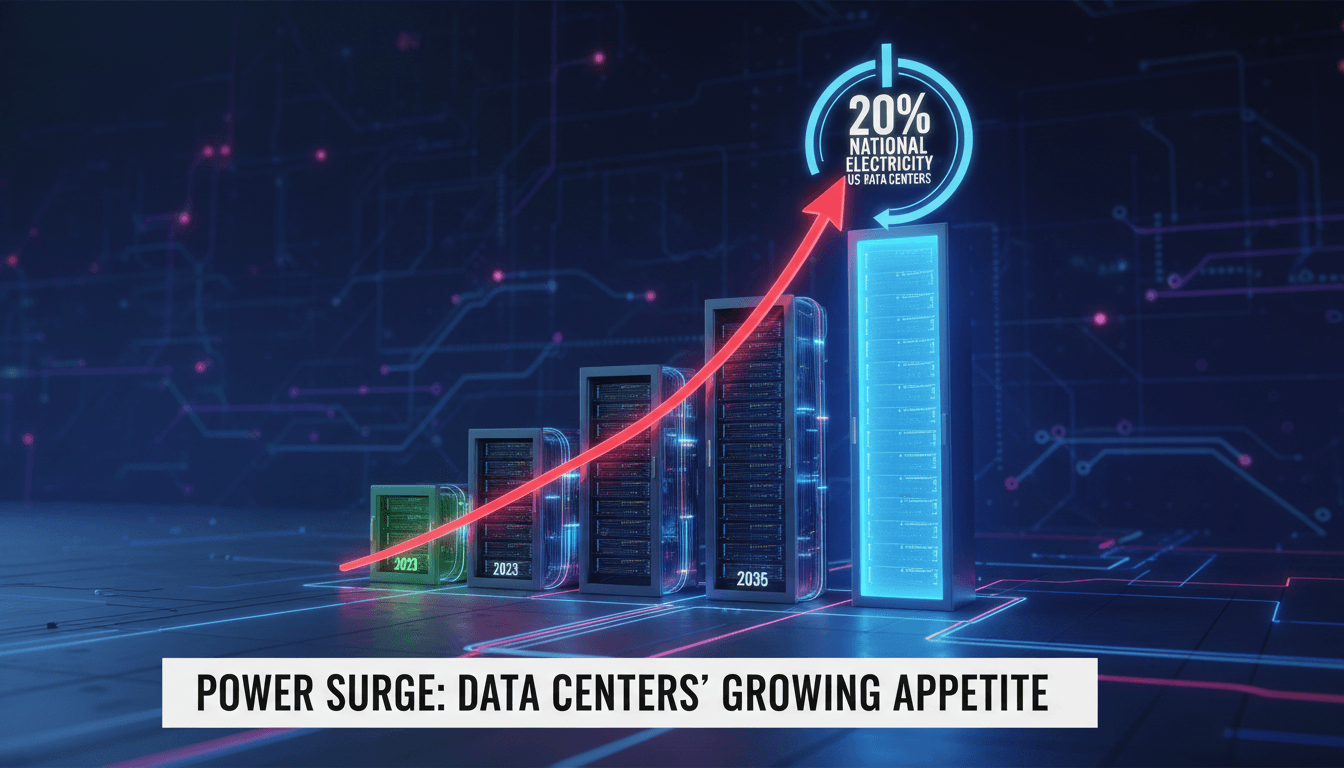
US data centers projected to consume 20% of national electricity by 2035
Here's what it means for you.
The projected increase in electricity consumption by US data centers signifies a critical shift in energy dynamics. As these facilities expand, they will require innovative energy solutions to meet their growing demands. This trend will likely influence energy policies and market strategies, pushing for advancements in sustainable energy production. The implications extend beyond the energy sector, affecting businesses and consumers alike. Stakeholders must prepare for potential changes in energy costs and availability as the demand for electricity escalates.
What happened
Research indicates that US data centers are on track to dramatically increase their electricity consumption by 2035. Currently, these centers account for 5.9% of the nation's total electricity use, but this figure is expected to rise to 20%. This surge in demand translates to an estimated requirement of 194 gigawatts of electricity, comparable to the output of numerous nuclear reactors.
The rapid growth of data centers is driving this significant increase in power consumption. As technology continues to evolve, the energy needs of these facilities will expand, raising concerns about sustainability and energy management.
The Context
The backdrop to this development involves the ongoing proliferation of data centers across the United States. As they grow, their energy requirements will rival those of entire countries, such as India. This shift poses challenges for energy production and consumption strategies, necessitating a reevaluation of how electricity is generated and distributed.
Stakeholders, including energy producers and policymakers, must address the implications of this rising demand. The timeline for these changes is pressing, with the 2035 target approaching rapidly, underscoring the urgency for innovative solutions in energy efficiency and sustainability.
Takeaway
The increasing energy demands of data centers will necessitate significant changes in energy production and consumption strategies in the coming years. As the sector evolves, advancements in energy-efficient technologies will be crucial to managing this growth.
Monitoring policy changes aimed at regulating electricity consumption will also be essential. The energy sector must adapt to balance supply and demand effectively, paving the way for a more sustainable future.
Tech news, hardware, and AI tools coverage.
"PC/tech site increasingly covering AI hardware and apps."
— A47 Editor
Data centers on track to consume 20% of US power by 2035
A recent report indicates that U.S. data centers are projected to consume 20% of the nation's electricity by 2035, a significant increase from the current 5.9%. This represents an 83% rise in the forecasted energy demand, equating to approximately 19...
Startup news with frequent AI coverage.
"Covers launches, funding, and product updates in AI."
— A47 Editor
Data centers expected to use 4x more electricity by 2035
Data centers are projected to quadruple their electricity consumption by 2035, with new facilities expected to consume as much energy as India does today. This significant increase highlights the growing demand for data processing capabilities, parti...
Technology business and AI-related headlines.
"Data-driven tech newsroom with global scope."
— A47 Editor
Data Centers on Track to Suck Up a Fifth of US Power Use by 2035
Data centers in the United States are projected to account for approximately 20% of the nation's electricity consumption by 2035, a significant increase from the current 5.9%, according to a report by BloombergNEF.
Technology business news, market impacts, and innovation trends.
"Bloomberg is a premier financial and tech news provider, respected for its in-depth reporting and analytical rigor."
— A47 Editor
Data Centers on Track to Suck Up a Fifth of US Power Use by 2035
Data centers in the United States are projected to account for approximately 20% of the nation's electricity consumption by 2035, a significant increase from the current 5.9%, according to a report by BloombergNEF.