
Turkey's central bank holds interest rate steady at 37% amid geopolitical tensions
Here's what it means for you.
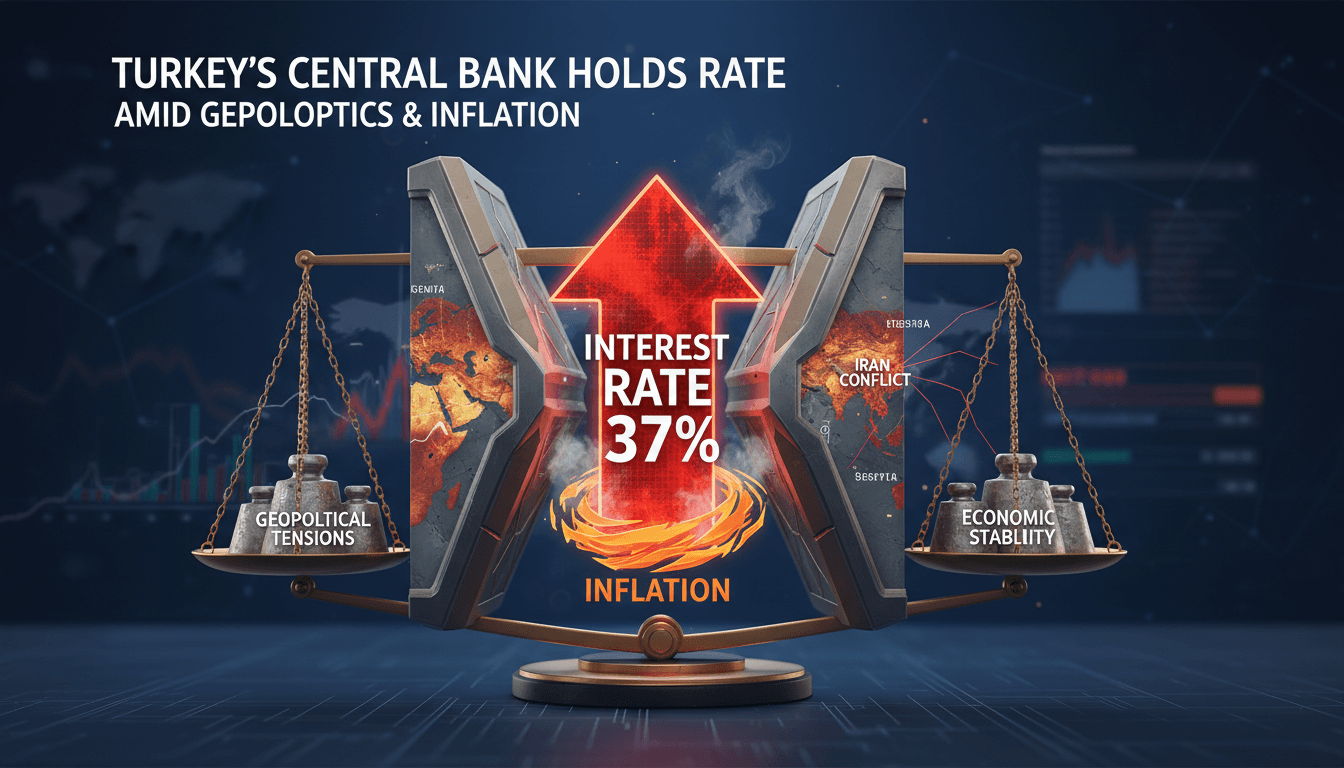
Turkey's decision to maintain its key interest rate at 37% signals a cautious approach to monetary policy amid ongoing geopolitical tensions and persistent inflation. This stability may provide some reassurance to investors and markets, as the central bank seeks to navigate external pressures while managing domestic economic challenges. Stakeholders should remain vigilant, as future rate decisions will be influenced by evolving inflation trends and geopolitical developments.
What happened
The Türkiye Central Bank has decided to keep its key interest rate unchanged at 37% for the fourth consecutive time. This decision reflects the central bank's strategy to combat inflation while responding to external pressures, particularly the ongoing conflict in Iran. The rate has remained steady since the last monetary policy meeting, indicating a consistent approach in the face of economic challenges.
This move underscores the central bank's commitment to stabilizing the economy amid fluctuating geopolitical dynamics. By holding the rate steady, the bank aims to provide a predictable environment for economic activity and investment.
The Context
The decision to maintain the interest rate at 37% is influenced by ongoing geopolitical tensions, especially those related to Iran. These external factors have significant implications for Turkey's economy, as they can affect trade, investment, and overall economic stability. Additionally, persistent inflation indicators continue to play a crucial role in shaping the central bank's monetary policy decisions.
This marks the fourth consecutive meeting where the central bank has opted for a steady rate, highlighting its cautious approach in a complex economic landscape. The interplay between inflation and geopolitical developments will be critical for stakeholders as they assess the future trajectory of Turkey's economy.
Takeaway
Looking ahead, it will be essential to monitor inflation trends in Turkey and their potential impact on future rate decisions. As geopolitical tensions evolve, particularly regarding Iran, the central bank's actions will be closely scrutinized. The current rate decision reflects a careful balancing act, and any shifts in external pressures could prompt a reevaluation of monetary policy.
Stakeholders should remain alert to how these factors may influence Turkey's economic landscape in the coming months. The central bank's cautious stance suggests that it will continue to prioritize stability while navigating the challenges posed by both inflation and geopolitical dynamics.
Regional and international reporting focused on Middle Eastern politics, diplomacy, and economics.
"Asharq Al-Awsat is a Saudi-owned international newspaper reflecting mainstream Gulf political perspectives."
— A47 Editor
Türkiye Central Bank Keeps Key Interest Rate at 37%
The Türkiye Central Bank has decided to maintain its key interest rate at 37%, a move that reflects its ongoing monetary policy strategy. This decision comes amid various economic pressures and aims to stabilize the financial environment in the count...
Pan-Arab news coverage spanning politics, business, sports, and regional affairs.
"Asharq Al-Awsat reflects a broad Arab editorial perspective with strong attention to regional geopolitics."
— A47 Editor
تركيا: «المركزي» يثبّت سعر الفائدة عند 37 % مدفوعاً بتطورات حرب إيران
The Central Bank of Turkey has maintained the interest rate at 37% for the fourth consecutive time, influenced by geopolitical developments and inflation indicators related to the ongoing conflict in Iran. This decision reflects the bank's strategy t...
Macro commentary, policy analysis, growth/inflation themes, and global outlooks.
"Contextual macro coverage that complements day-to-day market headlines."
— A47 Editor
Turkey’s central bank keeps key rate at 37%
Turkey's central bank has decided to maintain its key interest rate at 37%, reflecting a cautious approach amid a cooling economy and persistent inflationary pressures. This decision underscores the bank's strategy to stabilize the economy while navi...