
World Bank Projects Global Economic Growth to Drop to 1.3% Amid Middle East Conflict
What happened
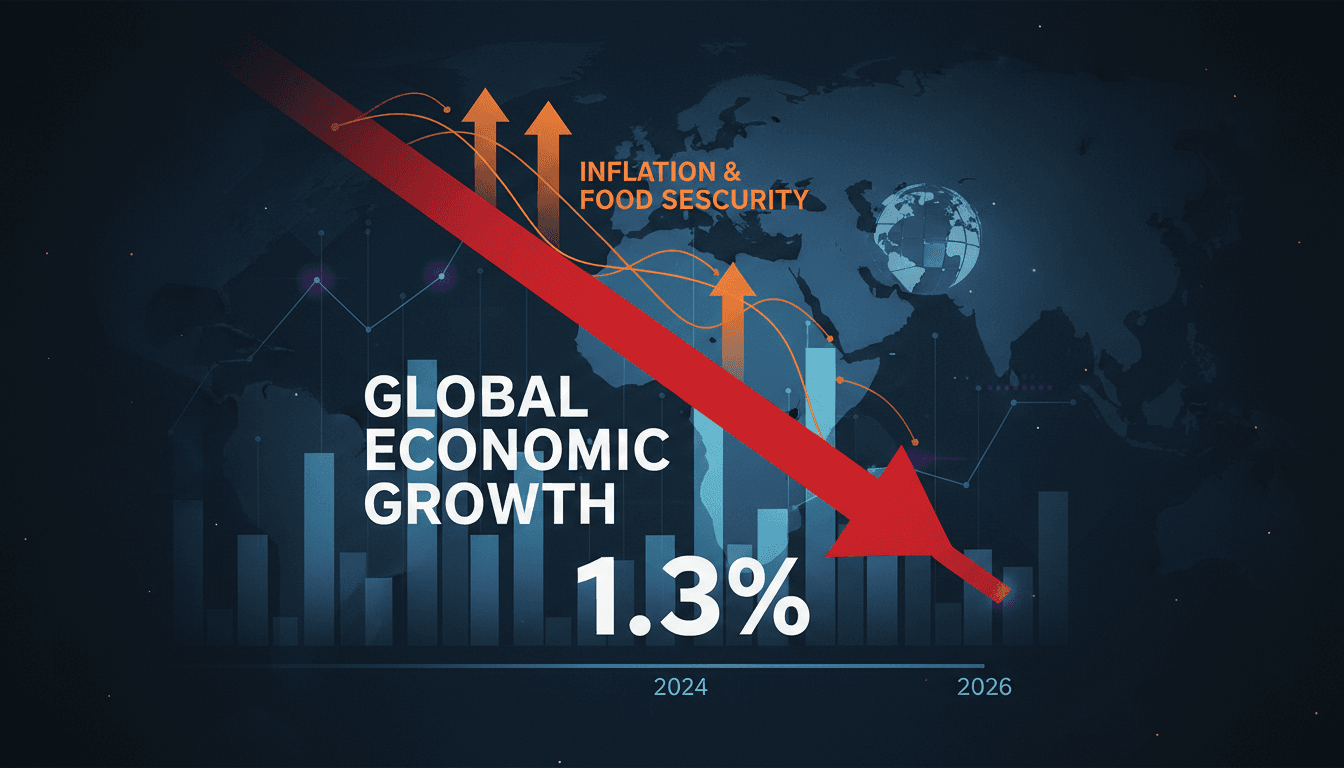
The World Bank has issued a stark warning regarding the potential decline in global economic growth, projecting it could fall to 1.3% by 2026 due to the escalating conflict in the Middle East. Chief Economist Indermit Gill emphasized that if the war continues for another six months, the economic outlook will worsen, leading to increased inflation and food insecurity. Current growth projections for 2026 stand at 2.5%, but the ongoing conflict poses a significant threat to this forecast.
The war is expected to reignite inflation, potentially pushing global rates up to 4.5%. This situation is particularly concerning for poorer nations that are still recovering from the impacts of the COVID-19 pandemic, as they are likely to face heightened food insecurity. The World Bank's analysis highlights the interconnectedness of geopolitical events and global economic health.
The Context
The ongoing conflict in the Middle East has far-reaching implications for global economic stability. As the situation escalates, the potential for increased borrowing costs for debt-laden countries becomes a pressing concern. Disruptions in the region may also affect agricultural supply chains, exacerbating food security issues for vulnerable populations.
The World Bank's forecast serves as a critical reminder of how geopolitical instability can ripple through the global economy. Stakeholders, including governments and international organizations, must consider the broader implications of the conflict and the need for proactive measures to mitigate its impact. The timeline for these developments is crucial, with the World Bank set to release updated economic forecasts in June 2026.
Takeaway
Looking ahead, it is essential to monitor developments in the Middle East for potential escalations that could further impact global economic growth. Economic policy responses from major economies will be critical in counteracting the predicted downturn. The international community must address the ramifications of the conflict to stabilize the global economy and support humanitarian needs.
As the situation unfolds, stakeholders should remain alert to shifts in economic indicators and policy measures that may arise in response to the ongoing crisis. The interconnected nature of global economies means that actions taken now will have lasting effects on future growth and stability.
Global business headlines with AI angles.
"General business outlet that frequently covers AI."
— A47 Editor
Middle East Clashes Could Hit The World Economy. Growth Could Be Slashed to 1.3%, World Bank Says
World Bank Chief Economist Indermit Gill warned that ongoing conflicts in the Middle East could significantly impact global economic growth, potentially reducing it from an anticipated 2.5% to as low as 1.3% if the situation persists for another six ...
Sports reporting with a focus on Saudi and regional competitions.
"Okaz sports coverage is broad and audience-friendly, with strong attention to Saudi teams and leagues."
— A47 Editor
«البنك الدولي»: 1.3% انخفاض لنمو اقتصاد العالم بسبب حرب الشرق الأوسط
The World Bank's chief economist, Indermit Gill, has warned that the escalation of the Middle East conflict could slow global economic growth to 1.3% by 2026, down from 2.9% in 2025. He noted that ongoing military exchanges and damage to oil infrastr...
Macro commentary, policy analysis, growth/inflation themes, and global outlooks.
"Contextual macro coverage that complements day-to-day market headlines."
— A47 Editor
Escalating Middle East war could slash global growth to 1.3% in 2026, World Bank chief economist says
The World Bank's chief economist has warned that the ongoing conflict in the Middle East could lead to a significant reduction in global economic growth, potentially dropping to just 1.3% by 2026. This alarming forecast is driven by escalating tensio...