
World Bank Projects Global Economic Growth to Drop to 1.3% Due to Middle East Conflict
Here's what it means for you.
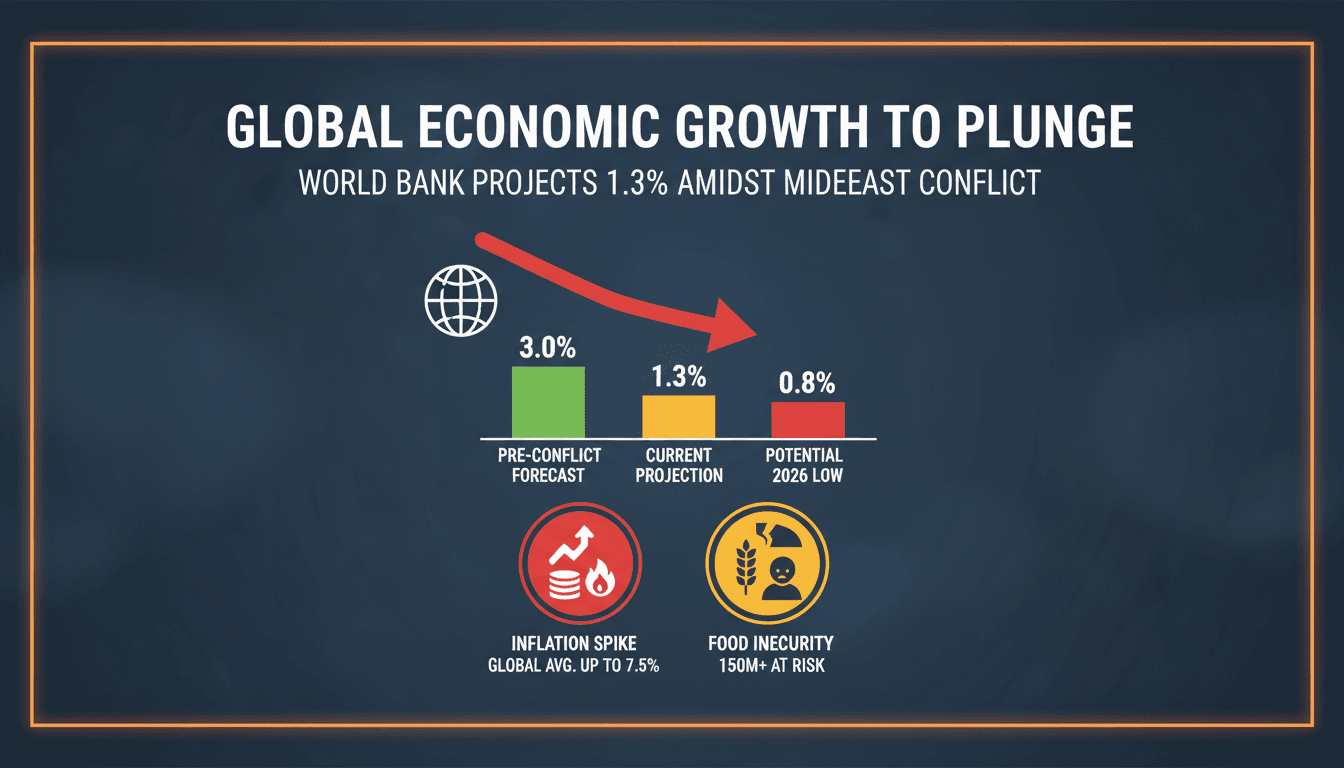
The World Bank's warning about a potential drop in global economic growth highlights the fragility of the current economic landscape. As inflation and food insecurity rise, vulnerable nations may face severe challenges, particularly those still recovering from the COVID-19 pandemic. Policymakers and market stakeholders must remain vigilant as geopolitical tensions can have far-reaching economic implications. The forecasted decline to 1.3% growth by 2026 underscores the interconnectedness of global economies and the impact of regional conflicts. This situation calls for proactive measures to mitigate risks associated with prolonged warfare.
What happened
The World Bank has issued a stark warning that the ongoing conflict in the Middle East could lead to a significant reduction in global economic growth, potentially dropping to 1.3% by 2026. This forecast is contingent on the conflict persisting for six months or longer, as indicated by the World Bank's chief economist, Indermit Gill. The anticipated decline is attributed to the war's impact on inflation and food security worldwide.
Current projections estimate global growth at 2.5% for 2026, making the potential drop a concerning development. The conflict is expected to disrupt oil infrastructure and agricultural supply chains, further exacerbating economic instability.
The Context
The ongoing conflict in the Middle East poses a serious threat to global economic stability, particularly as inflation rates could rise to 4.5%. Poorer nations, still grappling with the aftermath of the COVID-19 pandemic, are likely to experience heightened food insecurity as a result of these developments. The World Bank's analysis emphasizes the critical link between geopolitical stability and economic health.
As the situation unfolds, stakeholders must consider the broader implications of the conflict on global markets. The timing of this warning is crucial, as it coincides with a period of recovery for many economies still affected by the pandemic.
Takeaway
Looking ahead, it is essential to monitor the developments in the Middle East conflict and its potential duration. Changes in global inflation rates and food supply chains will be critical indicators of the economic fallout from this situation. The World Bank's projections serve as a reminder of the interconnected nature of global economies and the need for vigilance in the face of geopolitical tensions.
As the conflict continues, the global economy may face significant challenges that require close attention from policymakers and market analysts alike.
Global business headlines with AI angles.
"General business outlet that frequently covers AI."
— A47 Editor
Middle East Clashes Could Hit The World Economy. Growth Could Be Slashed to 1.3%, World Bank Says
World Bank Chief Economist Indermit Gill warned that ongoing conflicts in the Middle East could significantly impact global economic growth, potentially reducing it from an anticipated 2.5% to as low as 1.3% if the situation persists for another six ...
Sports reporting with a focus on Saudi and regional competitions.
"Okaz sports coverage is broad and audience-friendly, with strong attention to Saudi teams and leagues."
— A47 Editor
«البنك الدولي»: 1.3% انخفاض لنمو اقتصاد العالم بسبب حرب الشرق الأوسط
The World Bank's chief economist, Indermit Gill, has warned that the escalation of the Middle East conflict could slow global economic growth to 1.3% by 2026, down from 2.9% in 2025. He noted that ongoing military exchanges and damage to oil infrastr...
Macro commentary, policy analysis, growth/inflation themes, and global outlooks.
"Contextual macro coverage that complements day-to-day market headlines."
— A47 Editor
Escalating Middle East war could slash global growth to 1.3% in 2026, World Bank chief economist says
The World Bank's chief economist has warned that the ongoing conflict in the Middle East could lead to a significant reduction in global economic growth, potentially dropping to just 1.3% by 2026. This alarming forecast is driven by escalating tensio...